Authentic Galician Caldo Gallego Soup
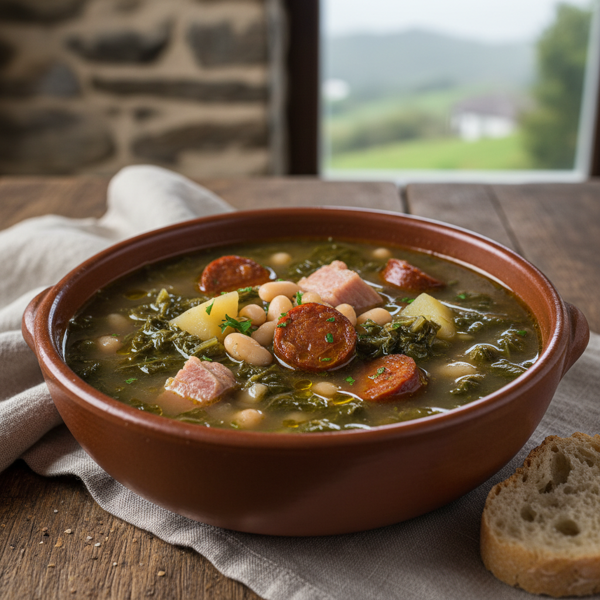
Experience the hearty and comforting flavors of Galicia with this traditional Caldo Gallego soup. A rustic dish brimming with nutrient-rich greens, creamy potatoes, and robust beans, this soup is perfect for warming your soul on chilly days. Traditionally made with a combination of ham and beef bones, it draws out a deep, savory broth that is both nourishing and satisfying. Serve it as a starter or as a light meal, and enjoy a taste of Spanish culinary culture with every spoonful.
N/A
Servings
N/A
Calories
9
Ingredients
Ingredients
Haricot beans
1 lb (Soaked in water for several hours or overnight)
Potatoes
3 (Peeled and quartered)
Ham bone
1 (Use a meaty ham bone for richer flavor)
Lard or dripping
1/2 ounce (Melted for mixing with flour)
Beef bone
1-2 (Meaty bones for added depth to the broth)
Flour
1/2 ounce (Mixed with lard or dripping to create a paste)
Cabbage
1 small (Finely shredded)
Salt
to taste (Added to enhance flavors)
Pepper
to taste (Added for seasoning)
Instructions
1
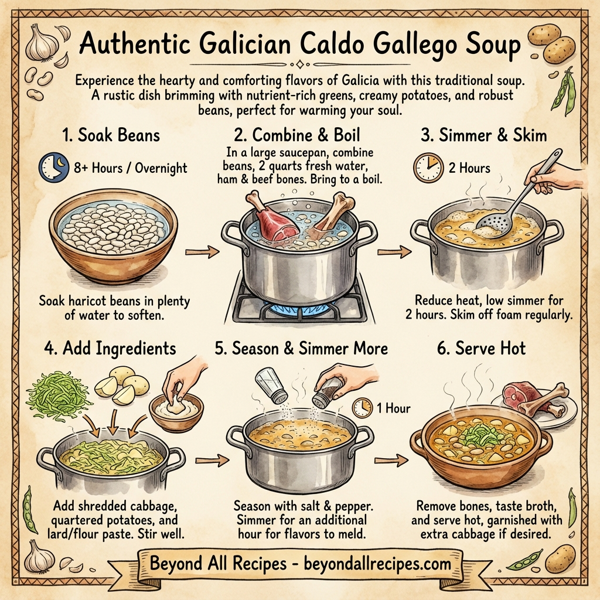
Begin by soaking the haricot beans in plenty of water for at least 8 hours or overnight. This will help soften the beans and reduce cooking time.
2
In a large saucepan, combine the soaked beans with 2 quarts of fresh water and add the ham bone and beef bone. Bring the mixture to a boil over medium-high heat.
3
Once boiling, reduce the heat to a low simmer and let the soup cook gently for about 2 hours, skimming off any foam that appears on the surface.
4
After 2 hours, add the finely shredded cabbage, peeled and quartered potatoes, and the mixture of lard or dripping with flour that has been blended into a smooth paste. Stir to combine.
5
Season the soup with salt and pepper to taste and continue to simmer for an additional hour, allowing the flavors to meld beautifully.
6
Once done, remove the bones, taste the broth again for seasoning, and serve hot, garnished with extra cabbage if desired.
Nutrition Information
Frequently Asked Questions
Frequently Asked Questions
What is Authentic Galician Caldo Gallego?
It is a traditional rustic soup from the Galicia region of Spain, known for its hearty blend of beans, potatoes, and greens.
What type of beans are used in this recipe?
This recipe specifically calls for 1 lb of dried haricot beans.
How long should the beans be soaked?
The haricot beans should be soaked in water for at least 8 hours or overnight to ensure they soften properly.
What kinds of bones are needed for the broth?
The recipe uses one meaty ham bone and one to two meaty beef bones to create a deep, savory broth.
How much water is required for the soup base?
You will need 2 quarts of fresh water to combine with the beans and bones.
How long does the initial simmering process take?
The beans and bones should be simmered gently for approximately 2 hours.
Why should I skim the foam from the boiling soup?
Skimming the foam off the surface helps to remove impurities and results in a clearer, cleaner broth.
What type of cabbage is best for Caldo Gallego?
A small head of cabbage that has been finely shredded is used in this traditional preparation.
How should the potatoes be prepared?
The 3 potatoes should be peeled and cut into quarters before being added to the pot.
When do I add the cabbage and potatoes?
The vegetables are added after the beans and bones have already simmered for 2 hours.
What is the purpose of mixing lard with flour?
Mixing 1/2 ounce of lard or dripping with 1/2 ounce of flour creates a paste that helps thicken the soup and adds a rich mouthfeel.
How long should the soup cook after adding the vegetables?
Once the cabbage, potatoes, and thickener are added, the soup should simmer for an additional hour.
Is Caldo Gallego suitable for cold weather?
Yes, it is a comforting, soul-warming dish specifically recommended for chilly days.
Should the bones be served with the soup?
No, you should remove all ham and beef bones from the pot before serving.
How should I season the soup?
The soup is seasoned with salt and pepper to taste to enhance its robust, savory flavors.
Can I garnish this soup?
Yes, you can garnish the finished soup with extra shredded cabbage if desired.
Is this soup a main course or a starter?
It can be served as a hearty starter or as a light, satisfying meal on its own.
What does the name Caldo Gallego mean?
In Spanish, Caldo Gallego literally translates to 'Galician broth' or 'Galician soup'.
Does this recipe reflect authentic Spanish culture?
Yes, this recipe is designed to offer a taste of traditional Spanish culinary culture through its rustic ingredients.
What texture do the potatoes add to the dish?
The potatoes become creamy when cooked, adding substance and a smooth texture to the broth.
Is there a vegetarian option for this soup?
While the traditional recipe uses meat bones for flavor, you could substitute them with vegetable stock to create a vegetarian version.
How many potatoes are used in this specific version?
This recipe requires 3 potatoes.
Can I use dripping instead of lard?
Yes, you can use 1/2 ounce of either lard or meat dripping for the thickening paste.
Are the beans used in this recipe fresh or dried?
The recipe calls for dried haricot beans which require a long soaking period.
What is the total estimated cooking time?
The total simmering time is about 3 hours, plus the initial time to bring the water to a boil.
How finely should the cabbage be cut?
The cabbage should be finely shredded to ensure it integrates well into the broth.
Why are meaty bones preferred over plain bones?
Using meaty bones ensures a richer flavor and provides extra bits of protein for the broth.
Should the water be hot or cold when starting the soup?
The beans and bones are combined with fresh water and then brought to a boil from room temperature.
What is the overall flavor profile of this soup?
It is a savory, robust, and nutrient-rich soup with earthy tones from the beans and cabbage.
What should I do if the broth needs more flavor at the end?
You should taste the broth after removing the bones and adjust the salt and pepper as needed before serving.