Authentic Ethiopian Injera Flatbread
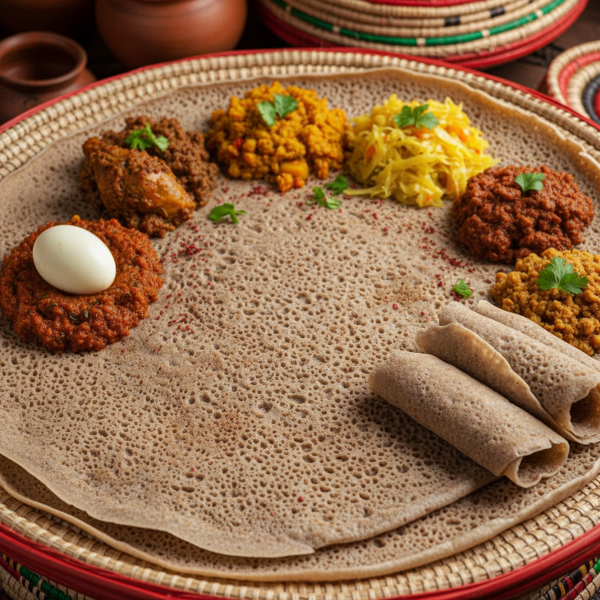
Dive into the rich culinary tradition of Ethiopia with this delightful Injera, a spongy flatbread that's both versatile and fun to eat. This American adaptation of the traditional recipe is easy to follow and yields a deliciously unique bread. Perfect for serving alongside your favorite stews or as a unique appetizer, Injera can elevate any meal to a new level. For an extra authentic taste, consider substituting half of the self-rising flour with teff flour. The preparation includes a resting period to allow the batter to become stretchy and fluffy, making it an inviting addition to any gathering. Embrace the communal spirit of Ethiopian dining by using pieces of Injera to scoop up hearty, flavorful dishes. Enjoy the hands-on experience of exploring Ethiopian cuisine while also indulging your taste buds with this delightful bread.
N/A
Servings
N/A
Calories
5
Ingredients
Ingredients
self-rising flour
3 cups (n/a)
whole wheat flour
1/2 cup (n/a)
cornmeal or masa harina
1/2 cup (n/a)
active dry yeast
1 tablespoon (or 1 pkg.)
water
3 1/2 cups (room temperature)
Instructions
1
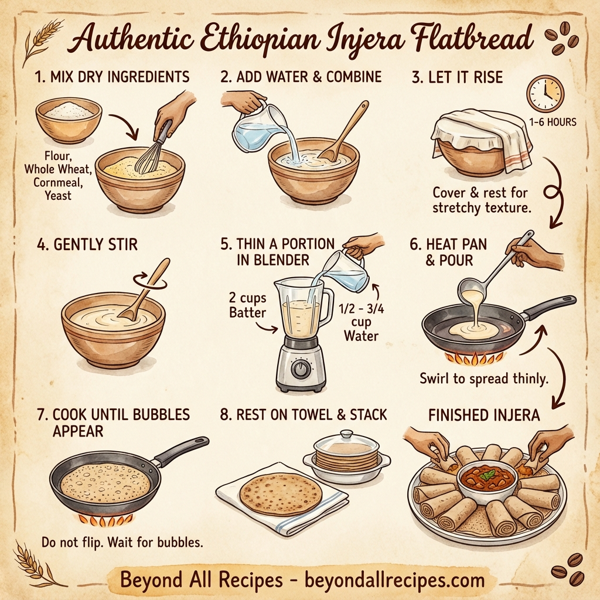
In a large mixing bowl, combine the self-rising flour, whole wheat flour, cornmeal (or masa harina), and active dry yeast. Gradually add the water, mixing until well combined.
2
Cover the bowl with a clean towel or plastic wrap and let it sit for at least 1 hour, allowing the batter to rise and develop a stretchy texture. For best results, you can let it rest for 3-6 hours.
3
Before cooking, stir the batter gently if any liquid has settled at the bottom.
4
In a blender, pour in 2 cups of the batter and thin it with 1/2 to 3/4 cup of additional water until the batter is thin and pourable.
5
Heat a non-stick frying pan (10-inch or 12-inch) over medium to medium-high heat. For optimal results, use multiple pans to speed up the cooking process.
6
Pour approximately 1/2 cup of batter into the center of a heated 12-inch pan or 1/3 cup for a 10-inch pan. Quickly swirl the pan in a circular motion to spread the batter evenly and thinly, ensuring it is no thicker than 1/8 inch.
7
Do not flip the Injera; it is cooked when bubbles appear all over the surface.
8
Transfer each Injera to a clean towel to rest for a minute or two. Then stack them in a covered dish to keep warm.
9
Important: Allow each Injera to rest on the towel before stacking to maintain its texture and prevent sticking.
Nutrition Information
Frequently Asked Questions
Frequently Asked Questions
What is Authentic Ethiopian Injera Flatbread?
Injera is a spongy Ethiopian flatbread that is versatile, fun to eat, and traditionally used to scoop up hearty stews and flavorful dishes.
What are the main ingredients in this Injera recipe?
The base recipe consists of self-rising flour, whole wheat flour, cornmeal or masa harina, active dry yeast, and room temperature water.
Can I make this recipe more authentic?
Yes, for a more authentic taste, you can substitute half of the self-rising flour with teff flour.
How long should the Injera batter rest?
The batter should rest for at least 1 hour, but for the best results, it is recommended to let it rest for 3 to 6 hours.
Why is the resting period important for the batter?
The resting period allows the batter to develop a stretchy and fluffy texture, which is essential for the bread's characteristic feel.
Do I need to flip the Injera while cooking?
No, Injera is not flipped; it is fully cooked when bubbles appear all over the surface.
How do I know when the Injera is finished cooking?
The bread is done when the surface is covered in small bubbles and the batter has set.
What is the purpose of using a blender in this recipe?
A blender is used to mix a portion of the batter with additional water to ensure it is thin and pourable before cooking.
How thin should the Injera batter be?
The batter should be thin enough to be easily pourable, achieved by thinning 2 cups of batter with 1/2 to 3/4 cup of water.
What size frying pan is best for cooking Injera?
A 10-inch or 12-inch non-stick frying pan is ideal for this recipe.
How much batter should I use for a 12-inch pan?
Approximately 1/2 cup of batter is recommended for a 12-inch pan.
How much batter should I use for a 10-inch pan?
Approximately 1/3 cup of batter is recommended for a 10-inch pan.
How thick should the Injera be?
The batter should be spread evenly and thinly so that the resulting bread is no thicker than 1/8 inch.
How do I spread the batter evenly in the pan?
Quickly swirl the heated pan in a circular motion immediately after pouring the batter in the center.
What heat setting should I use for cooking?
Cook the Injera over medium to medium-high heat.
Can I use multiple pans at once?
Yes, using multiple pans is recommended to speed up the cooking process.
How should I handle the Injera after it is cooked?
Transfer each piece to a clean towel to rest for a minute or two before stacking.
Why shouldn't I stack Injera immediately?
Resting the bread on a towel first helps maintain its texture and prevents the pieces from sticking together.
How should I store the finished Injera?
Stack the rested pieces in a covered dish to keep them warm until serving.
What can I substitute for cornmeal?
Masa harina can be used as a direct substitute for cornmeal in this recipe.
Is this recipe gluten-free?
The base recipe contains wheat flour, but it includes notes for a gluten-free option if appropriate flour substitutions are made.
What type of yeast is required?
The recipe calls for 1 tablespoon (or 1 package) of active dry yeast.
What should I do if the batter settles?
Stir the batter gently before cooking if any liquid has settled at the bottom of the bowl.
How is Injera traditionally eaten?
It is eaten by hand, using pieces of the bread to scoop up various stews and side dishes.
What is the texture of Injera?
Injera has a unique spongy and stretchy texture with many small holes on the surface.
Can Injera be served as an appetizer?
Yes, it makes a unique and inviting appetizer for gatherings.
What is the significance of Injera in Ethiopian culture?
Injera represents the communal spirit of Ethiopian dining, where meals are shared from a common plate.
Does this recipe use traditional teff?
This is an American adaptation using self-rising flour, though teff is noted as a substitution for more authenticity.
What is the total number of ingredients?
This recipe requires 5 main ingredients: self-rising flour, whole wheat flour, cornmeal, yeast, and water.
Can I use whole wheat flour?
Yes, 1/2 cup of whole wheat flour is used in this recipe to add depth and flavor.