Authentic Costa Rican Gallo Pinto (Black Beans & Rice)

Experience the vibrant flavors of Costa Rica with this Authentic Gallo Pinto recipe, a beloved dish that perfectly combines the richness of black beans and the heartiness of rice. Traditionally served for breakfast, this simple yet flavorful meal is quick to prepare and filled with nutritious ingredients. The balance of sautéed onions and sweet bell pepper enhances the dish's depth, while the addition of Worcestershire and Tabasco sauces brings a touch of spice. Garnished with crispy bacon bits and fresh coriander, Gallo Pinto is not just a meal but a taste of Costa Rican culture that you can now enjoy at home. Share this delightful dish with family and friends for an unforgettable lunch or snack experience.
6
Servings
200
Calories
9
Ingredients
Ingredients
Day-old cooked rice
3 cups (Use leftover rice for better texture.)
Cooked black beans
2 cups (Canned black beans are acceptable; drain and rinse if using.)
Onions
2 tablespoons (Finely chopped.)
Sweet bell pepper
1 tablespoon (Finely chopped.)
Coriander
2 tablespoons (Fresh, finely chopped.)
Bacon
3 strips (Cooked, drained, and crumbled.)
Oil
1 tablespoon (For sautéing.)
Worcestershire sauce
1/2 tablespoon (For added flavor.)
Tabasco sauce
1/2 tablespoon (Adjust to taste.)
Instructions
1
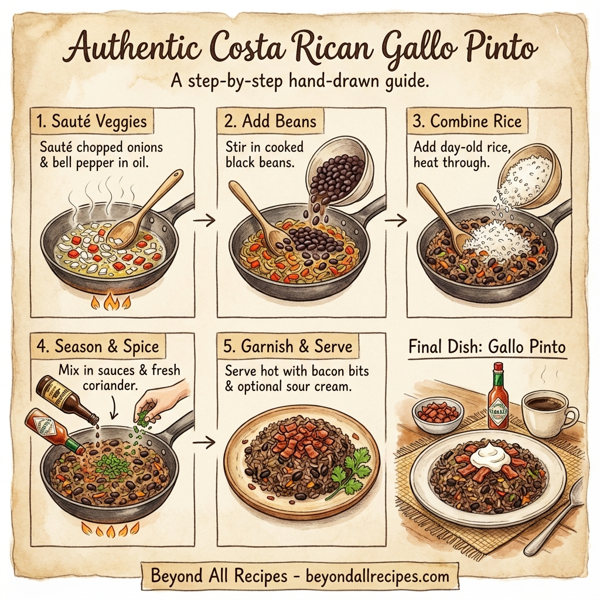
In a large skillet, heat the oil over medium heat. Add the finely chopped onions and sweet bell pepper, sautéing until softened, about 3-4 minutes.
2
Stir in the cooked black beans and continue to cook for an additional 2 minutes, allowing the flavors to meld.
3
Add the day-old rice to the bean mixture, stirring well to combine. Cook for about 3 minutes, ensuring the rice is heated through.
4
Mix in the Worcestershire sauce, Tabasco sauce, and finely chopped coriander. Stir until well incorporated.
5
Remove from heat and serve hot, garnished with crumbled bacon bits. Optionally, you can add a dollop of sour cream for extra creaminess.
Nutrition Information
4g
Fat
33g
Carbs
6g
Protein
Frequently Asked Questions
Frequently Asked Questions
What is Gallo Pinto?
Gallo Pinto is a traditional Costa Rican dish made from a flavorful combination of black beans and rice, often seasoned with onions, peppers, and sauces.
What does the name 'Gallo Pinto' mean?
The name 'Gallo Pinto' literally translates to 'spotted rooster' in Spanish, referring to the speckled appearance of the rice and beans mixed together.
Why should I use day-old rice for this recipe?
Day-old rice is drier and firmer than freshly cooked rice, which prevents the dish from becoming mushy and ensures a better texture.
Can I use canned black beans?
Yes, canned black beans are acceptable for this recipe. Be sure to drain and rinse them before adding them to the skillet.
Is Gallo Pinto a breakfast or lunch dish?
While traditionally served for breakfast in Costa Rica, it is versatile enough to be enjoyed as a lunch or a hearty snack.
What gives this Gallo Pinto its authentic flavor?
The combination of sautéed onions, sweet bell pepper, Worcestershire sauce, and Tabasco provides the deep, savory profile characteristic of the dish.
How many calories are in one serving?
Each serving of this Gallo Pinto contains approximately 200 calories.
How much protein is in this recipe?
Each serving provides 6 grams of protein.
Is this Gallo Pinto recipe vegetarian?
As written, this recipe includes bacon bits, so it is not vegetarian. However, you can omit the bacon to make it a vegetarian dish.
What is the serving size for this recipe?
This recipe yields 6 servings.
Can I make this dish spicy?
Yes, you can adjust the amount of Tabasco sauce or add chopped chili peppers to increase the heat levels to your preference.
What can I substitute for Worcestershire sauce?
For a truly authentic Costa Rican taste, you can use Salsa Lizano. If unavailable, soy sauce with a pinch of sugar is a common substitute.
How long does it take to prepare?
The cooking process takes about 10 to 15 minutes once your rice and beans are ready.
What kind of oil should I use for sautéing?
A neutral vegetable oil or canola oil is recommended for sautéing the onions and peppers.
Should the coriander be fresh or dried?
Fresh coriander (cilantro) is highly recommended for the best flavor and a vibrant garnish.
What are common side dishes for Gallo Pinto?
It is frequently served with fried eggs, avocado, fried plantains, or a slice of local white cheese.
How do I store leftovers?
Leftovers should be stored in an airtight container in the refrigerator for up to 3 to 4 days.
Can I freeze Gallo Pinto?
Yes, Gallo Pinto freezes well. Store it in a freezer-safe bag or container for up to 2 months.
What is the fat content per serving?
There are 4 grams of fat per serving in this recipe.
How many carbohydrates are in a serving?
Each serving contains 33 grams of carbohydrates.
Can I use red beans instead of black beans?
While black beans are traditional for Costa Rican Gallo Pinto, red beans are often used in the Nicaraguan version and can be used as a substitute.
Is it necessary to rinse the beans?
Rinsing canned beans helps remove excess sodium and the starchy liquid, resulting in a cleaner flavor for the dish.
What type of rice is best?
Long-grain white rice is the standard choice for achieving the desired texture in Gallo Pinto.
How do I prepare the bacon?
The bacon should be cooked until crispy, drained of excess fat, and then crumbled into small bits for garnishing.
Can I add sour cream to this dish?
Yes, adding a dollop of sour cream (or Natilla in Costa Rica) adds a delicious creaminess that balances the spices.
What is the purpose of the sweet bell pepper?
Sweet bell pepper adds a mild sweetness and a pop of color to the mixture, enhancing both flavor and presentation.
Is this recipe gluten-free?
The main ingredients are gluten-free, but you should check your Worcestershire sauce label, as some brands contain gluten.
How much onion is used?
The recipe calls for 2 tablespoons of finely chopped onions.
Can I use brown rice?
Yes, you can use brown rice for a higher fiber content, though the texture and flavor will be slightly different from the traditional version.
Should I serve Gallo Pinto hot or cold?
Gallo Pinto is best served hot, immediately after the rice and beans have been sautéed together.