Authentic Chinese Pork Lo Mein
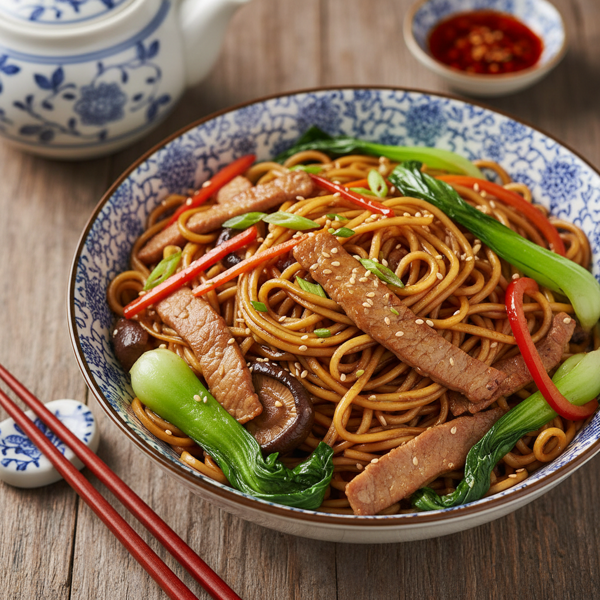
Immerse yourself in the comforting flavors of this Authentic Chinese Pork Lo Mein recipe, inspired by a family heirloom from Hong Kong. This dish brings together tender slices of pork tenderloin and a vibrant medley of fresh vegetables tossed in rich sauces that embody the essence of traditional Chinese cuisine. Perfect for a cozy weeknight dinner or entertaining friends, this recipe is both satisfying and deeply flavorful. Serve over freshly cooked Chinese egg noodles, and enjoy a delightful balance of textures and tastes. Feel free to switch up the protein with shrimp, chicken, or beef, according to your preference. Discover the authentic taste of these beloved Chinese noodles right from your kitchen!
4
Servings
300
Calories
22
Ingredients
Ingredients
pork tenderloin
1/2 lb (cut into thin strips)
cornstarch
2 teaspoons (for marinating)
sugar
1 teaspoon (for marinating)
soy sauce
1 teaspoon (for marinating)
rice wine
1 teaspoon (for marinating)
fresh ginger
1 tablespoon (cut very fine)
large mixed mushrooms
5-6 (sliced)
bamboo shoot
1/2 cup (sliced)
red bell pepper or carrot
1 (cut into thin strips)
onion
1 small (cut into wedges)
green onions
2 (shredded)
medium zucchini or celery
1 (cut into 1-inch strips)
cornstarch
4 teaspoons (for sauce thickening)
chicken broth
1 cup (for sauce)
oyster sauce
2 tablespoons (for sauce)
garlic cloves
2 (crushed)
ginger
1/4 teaspoon (ground)
peanut oil
4 tablespoons (for cooking)
fresh Chinese egg noodles
1 lb (parboiled)
sesame oil
1 tablespoon (for flavoring)
soy sauce
1 1/2 tablespoons (for noodles)
rice vinegar
1 1/2 teaspoons (for sauce)
Instructions
1
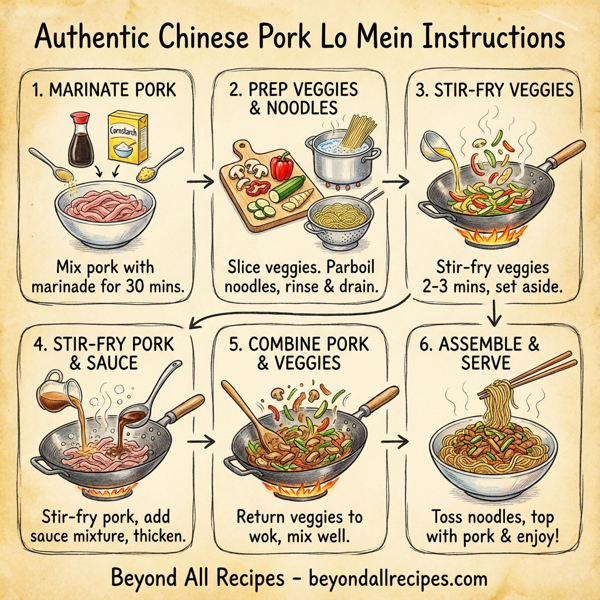
Begin by cutting the pork tenderloin into thin strips and then into bite-sized pieces. In a mixing bowl, combine the pork with cornstarch, sugar, soy sauce, rice wine, and minced ginger. Allow the pork to marinate for at least 30 minutes.
2
While the pork is marinating, prepare the vegetables. Slice the mushrooms and bamboo shoots, and cut the red bell pepper and zucchini into thin strips.
3
Parboil the Chinese egg noodles in boiling water for about 3 minutes, then rinse under cold water and drain. Set them aside.
4
In a separate pot, bring water to a boil and keep it hot for later use.
5
Heat 2 tablespoons of peanut oil in a wok over medium-high heat. Add all the prepared vegetables and stir-fry for 2-3 minutes until they begin to soften. Season with a pinch of salt and 1 teaspoon of sugar, then remove the vegetables from the wok and set them aside.
6
In the same wok, add the remaining 2 tablespoons of peanut oil. Stir-fry the marinated pork until fully cooked, about 4-5 minutes.
7
Introduce the sauce mixture – combining the chicken broth, oyster sauce, crushed garlic, ginger, sesame oil, soy sauce, and rice vinegar – to the pork in the wok. Cook until the sauce thickens, stirring constantly.
8
Return the stir-fried vegetables to the wok and mix until they are evenly distributed with the pork and sauce.
9
Quickly place the drained noodles into the hot pot of water for 10-15 seconds to heat them through. Drain and return the noodles to their pot.
10
Toss the hot noodles with the remaining seasonings, ensuring they are evenly coated.
11
Serve the delicious pork and vegetables on top of the noodles, garnished with shredded green onions if desired, and enjoy!
Nutrition Information
10g
Fat
50g
Carbs
20g
Protein
1.5g
Fiber
Frequently Asked Questions
Frequently Asked Questions
What is Authentic Chinese Pork Lo Mein?
Authentic Chinese Pork Lo Mein is a comforting noodle dish inspired by a Hong Kong family heirloom, featuring tender pork tenderloin and fresh vegetables tossed in a rich, traditional sauce.
What type of pork is used in this recipe?
This recipe specifically calls for pork tenderloin, cut into thin strips and then into bite-sized pieces.
How long should the pork marinate?
The pork should marinate for at least 30 minutes to absorb the flavors of the cornstarch, sugar, soy sauce, rice wine, and ginger.
What ingredients are needed for the pork marinade?
The marinade consists of cornstarch, sugar, soy sauce, rice wine, and finely cut fresh ginger.
What kind of noodles are best for this lo mein?
Fresh Chinese egg noodles are the traditional choice for this authentic recipe.
Can I substitute the pork with another protein?
Yes, you can easily switch the pork for shrimp, chicken, or beef according to your preference.
How do you prepare the Chinese egg noodles?
Parboil the noodles in boiling water for about 3 minutes, then rinse them under cold water and drain before the final toss.
What vegetables are included in this lo mein recipe?
The dish includes large mixed mushrooms, bamboo shoots, red bell pepper (or carrot), onion, and zucchini (or celery).
How do I cut the zucchini or celery for this dish?
The zucchini or celery should be cut into 1-inch strips for the best texture.
How long should the vegetables be stir-fried?
The vegetables should be stir-fried in a wok for 2-3 minutes until they begin to soften.
What oil is recommended for cooking the lo mein?
Peanut oil is recommended for stir-frying as it handles the medium-high heat well.
How long does it take to cook the marinated pork?
The marinated pork strips should be stir-fried for about 4-5 minutes until fully cooked.
What ingredients are in the lo mein sauce mixture?
The sauce is a savory blend of chicken broth, oyster sauce, crushed garlic, ground ginger, sesame oil, soy sauce, and rice vinegar.
How is the sauce thickened?
The sauce thickens as it cooks with the pork, aided by the cornstarch used in the recipe.
Why are the noodles dipped back into hot water before serving?
The drained noodles are placed in hot water for 10-15 seconds just to heat them through before tossing with the seasonings.
What seasonings are used for the noodles themselves?
The hot noodles are tossed with sesame oil and soy sauce to ensure they are evenly coated and flavorful.
How many servings does this recipe yield?
This recipe makes 4 satisfying servings.
How many calories are in one serving of this pork lo mein?
Each serving contains approximately 300 calories.
What is the protein content per serving?
There are 20 grams of protein in each serving of this dish.
How many carbohydrates are in a serving?
Each serving provides about 50 grams of carbohydrates.
What is the fat content per serving?
There are 10 grams of fat in one serving of this lo mein.
How much fiber does this dish provide?
This recipe contains approximately 1.5 grams of fiber per serving.
What is the best way to garnish this dish?
It is recommended to garnish the lo mein with shredded green onions for a fresh finish.
Can I use carrots instead of red bell pepper?
Yes, you can use either a red bell pepper or a carrot, cut into thin strips.
What type of ginger is used in the sauce?
While fresh ginger is used in the marinade, the sauce specifically calls for 1/4 teaspoon of ground ginger.
Is this recipe considered easy to make?
Yes, with its simple stir-fry technique and clear instructions, it is perfect for a cozy weeknight dinner.
Where did the inspiration for this recipe come from?
The recipe is inspired by a family heirloom from Hong Kong, ensuring an authentic taste.
How many mushrooms are needed?
The recipe calls for 5 to 6 large mixed mushrooms, sliced.
Can I use bamboo shoots from a can?
Yes, 1/2 cup of sliced bamboo shoots can be used to add a traditional crunch.
What equipment is best for cooking lo mein?
A wok is ideal for this recipe as it allows for the high-heat stir-frying required for both vegetables and meat.