Authentic Chicago-Style Deep Dish Pizza Dough
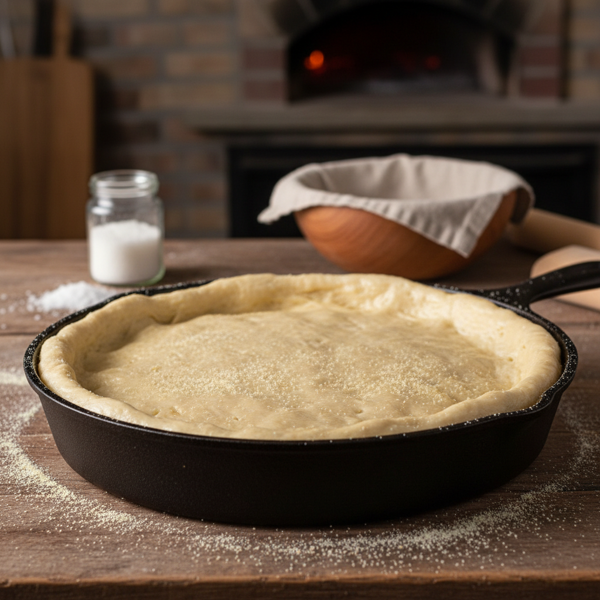
Discover the true essence of Chicago-style deep dish pizza with this authentic dough recipe. Unlike traditional pizza dough, this flaky, buttery crust is created using corn oil to achieve that uniquely tender texture, reminiscent of a savory pastry. With a lead time of only six hours, your dough will be ready to showcase your favorite toppings, layered beneath a robust sauce made with the best quality tomatoes. This recipe encourages minimal handling to maintain the lightness of the dough, resulting in a pizza experience that's authentically Chicago. Impress your friends and family with a slice of this delicious deep dish, complete with cheese and the freshest toppings, all baked to perfection. Remember, for sauce, always choose high-quality tomatoes like 6-in-1 for an unbeatable flavor!
N/A
Servings
N/A
Calories
6
Ingredients
Ingredients
All-purpose flour
3 cups (measured)
Warm water
1 1/8 cups (heated to 105-115°F)
Corn oil
1/2 cup (measured)
Yeast
2 1/4 teaspoons (or 1 packet)
Sugar
1 1/2 teaspoons (measured)
Kosher salt
1 1/2 teaspoons (measured)
Instructions
1
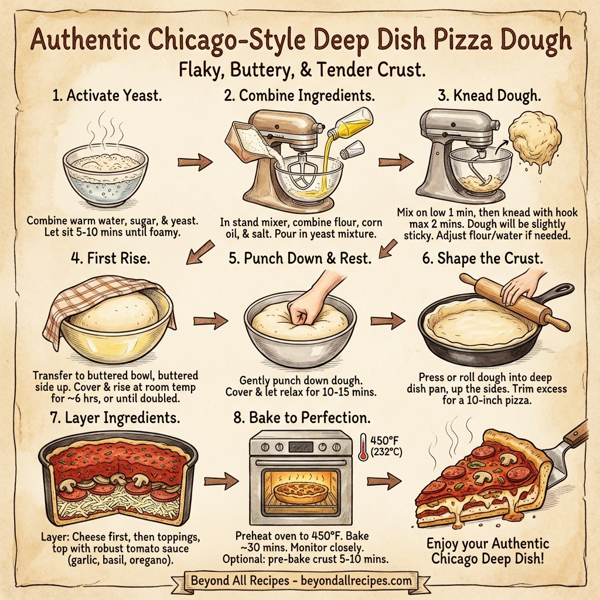
In a small bowl, combine warm water and sugar, then sprinkle the yeast on top. Allow it to sit for 5-10 minutes until it becomes foamy.
2
In a stand mixer fitted with a paddle attachment, combine the flour, corn oil, and salt. Pour in the activated yeast mixture.
3
Mix the dough on a low speed for one minute, then change to the dough hook attachment and knead on low speed for no more than two minutes. The dough will be slightly sticky. If it is too sticky to handle, gradually add more flour. If too dry, add a teaspoon of water at a time until it reaches a slightly tacky but manageable consistency.
4
Transfer the dough to a buttered bowl, turning it so the buttered side is facing up. Cover it with plastic wrap or a clean kitchen towel and let it rise at room temperature for about 6 hours, or until doubled in size.
5
Once risen, punch the dough down gently, then cover it again and let it relax for 10-15 minutes to allow the gluten to settle.
6
Press or roll out the dough into a deep dish pizza pan or a well-seasoned cast iron skillet, ensuring the dough extends up the sides. For a 10-inch pizza, shape it to your desired thickness and trim off any excess.
7
Layer your ingredients: start with cheese on the bottom, followed by your chosen toppings, and finally, top with a robust tomato sauce seasoned with garlic, basil, oregano, and any other desired spices.
8
Preheat your oven to 450°F (232°C) and bake for about 30 minutes, monitoring closely as baking times may vary based on your oven. For a crisper crust, consider pre-baking the crust for 5-10 minutes before adding your toppings.
Nutrition Information
Frequently Asked Questions
Frequently Asked Questions
What is authentic Chicago-style deep dish pizza dough?
Authentic Chicago-style deep dish dough is a flaky, buttery crust made with corn oil to achieve a tender, pastry-like texture rather than a traditional chewy bread texture.
What makes this dough different from regular pizza dough?
Unlike regular pizza dough, this recipe uses corn oil and minimal kneading to create a crumbly, savory pastry-like crust that is characteristic of Chicago deep dish.
Why is corn oil used in this recipe?
Corn oil is used to provide the signature yellow color and the tender, flaky texture that makes the crust taste like a savory pastry.
How long should the dough rise?
The dough should rise at room temperature for approximately 6 hours or until it has doubled in size.
What temperature should the water be for the yeast?
The water should be heated to between 105 and 115 degrees Fahrenheit to properly activate the yeast.
How long does it take to activate the yeast?
Allow the yeast, water, and sugar mixture to sit for 5 to 10 minutes until it becomes foamy.
Can I use a stand mixer for this recipe?
Yes, a stand mixer is recommended. Use the paddle attachment for initial mixing and the dough hook for kneading.
How long should I knead the Chicago-style dough?
Knead the dough on low speed for no more than two minutes. Over-kneading can make the crust tough rather than flaky.
What should I do if the dough is too sticky?
If the dough is too sticky to handle, gradually add more flour until it reaches a manageable consistency.
What should I do if the dough is too dry?
If the dough is too dry, add a teaspoon of water at a time until it reaches a slightly tacky but manageable consistency.
How do I prepare the bowl for the dough rise?
Place the dough in a buttered bowl and turn it once so the buttered side is facing up to prevent it from sticking.
Should the dough be covered while rising?
Yes, cover the bowl with plastic wrap or a clean kitchen towel while it rises at room temperature.
What is the benefit of minimal handling?
Minimal handling ensures the dough remains light and maintains its flaky, pastry-like structure.
What do I do after the 6-hour rise?
Gently punch the dough down, then cover it and let it relax for 10 to 15 minutes before shaping.
Why must the dough relax after being punched down?
Allowing the dough to relax for 10 to 15 minutes lets the gluten settle, making it easier to press into the pan.
What type of pan is best for this pizza?
A dedicated deep dish pizza pan or a well-seasoned cast iron skillet is ideal for this recipe.
How should I shape the dough in the pan?
Press or roll the dough into the pan, ensuring it extends up the sides to hold the layers of cheese and sauce.
In what order should I layer the ingredients?
Layer the cheese directly on the bottom, followed by your chosen toppings, and finish with the tomato sauce on top.
Why is the cheese placed on the bottom?
Placing cheese on the bottom protects it from burning during the long bake time and creates a barrier for the crust.
What kind of tomatoes are best for the sauce?
High-quality tomatoes, such as 6-in-1 brand, are recommended for an unbeatable, robust flavor.
What seasonings go into the tomato sauce?
A robust sauce for Chicago-style pizza is typically seasoned with garlic, basil, oregano, and other desired spices.
At what temperature should the pizza be baked?
The pizza should be baked in a preheated oven at 450 degrees Fahrenheit (232 degrees Celsius).
How long does the pizza need to bake?
The baking time is approximately 30 minutes, but you should monitor it closely as oven temperatures vary.
Can I pre-bake the crust?
Yes, for a crisper crust, you can consider pre-baking the dough for 5 to 10 minutes before adding any toppings.
What type of flour is used in this recipe?
This recipe calls for 3 cups of all-purpose flour.
How many teaspoons of yeast are required?
You will need 2 1/4 teaspoons of yeast, which is equivalent to one standard packet.
Is sugar necessary for the dough?
Yes, 1 1/2 teaspoons of sugar are used to help feed the yeast and assist in browning the crust.
What size pizza does this dough recipe make?
This recipe is sufficient for a 10-inch deep dish pizza, though thickness can be adjusted to preference.
Can I use olive oil instead of corn oil?
While you can use olive oil, corn oil is the key to achieving the specific texture and flavor of an authentic Chicago deep dish.
Is kosher salt different from table salt in this recipe?
The recipe specifies 1 1/2 teaspoons of kosher salt; if using table salt, you may want to use slightly less as the grains are finer.