Authentic Cajun Roux
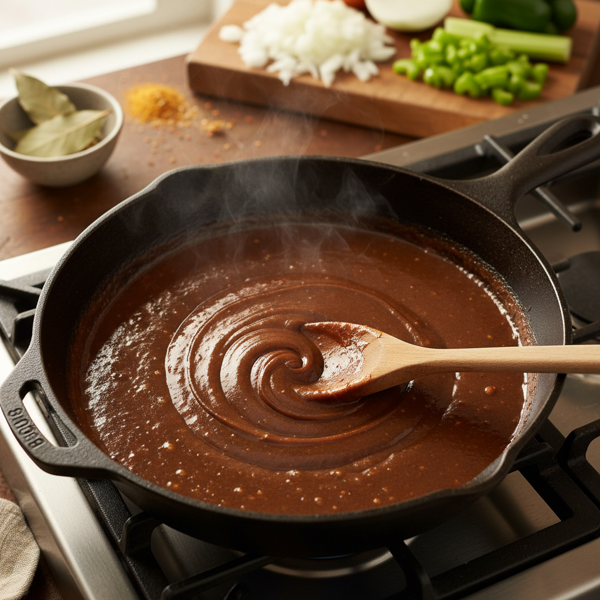
Cajun Roux forms the foundation of many beloved Louisiana dishes like gumbo and etouffee. It's a time-honored technique, turning simple ingredients into a rich, flavorful base that defines Creole and Cajun cuisine. In Louisiana, roux-making is often humorously timed by the number of beers a cook can drink while stirring. A perfectly executed dark roux demands patience and vigilance, as its depth of color translates directly to the depth of flavor in the dish it supports. This recipe makes a generous amount, perfect for a large family gathering. Tread lightly; a single burnt fleck can ruin the entire batch, but when done right, it is nothing short of culinary alchemy.
1
Servings
N/A
Calories
2
Ingredients
Ingredients
flour
3/4 cup (sifted)
butter
3/4 cup (unsalted, melted)
Instructions
1
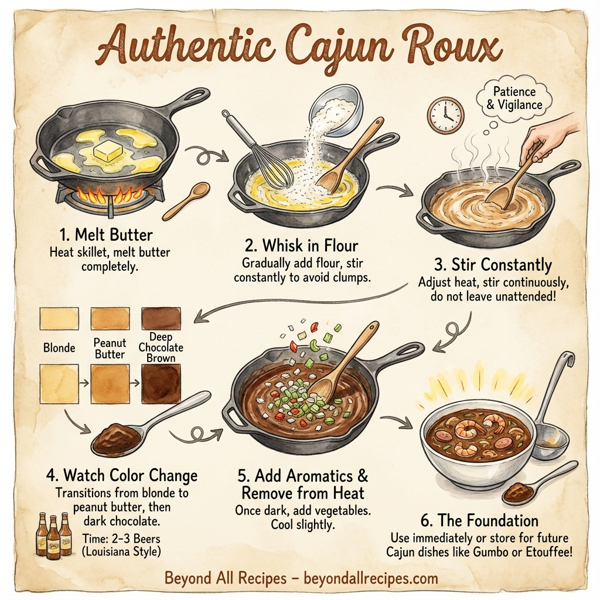
Heat a heavy-bottomed skillet over medium to medium-high heat.
2
Add the butter to the skillet, allowing it to melt completely.
3
Gradually sprinkle in the flour, one small portion at a time, constantly stirring with a wooden spoon or whisk to avoid clumping.
4
Continue to stir continuously, adjusting the heat as needed to maintain a steady, gentle browning without burning.
5
Do not leave the roux unattended; it requires constant attention.
6
Watch as the roux transitions from a blonde color to a peanut butter shade, and then to the ultimate deep chocolate brown.
7
Once it reaches a dark chocolate hue, remove from heat. This is the perfect time to incorporate aromatic vegetables like onion, garlic, bell pepper, and celery according to your gumbo or dish requirements.
8
Allow to cool slightly before using immediately, or store in a tightly sealed container in the refrigerator or freezer for future use.
Nutrition Information
Frequently Asked Questions
Frequently Asked Questions
What is the basic definition of an Authentic Cajun Roux?
An Authentic Cajun Roux is a slow-cooked base made from flour and fat, serving as the foundation for Louisiana dishes like gumbo and etouffee.
What are the primary ingredients needed for this recipe?
The recipe requires 3/4 cup of sifted flour and 3/4 cup of unsalted, melted butter.
What is the ratio of flour to butter in this roux?
This recipe uses a 1:1 ratio, specifically 3/4 cup of flour to 3/4 cup of butter.
Why is a heavy-bottomed skillet recommended for making roux?
A heavy-bottomed skillet provides even heat distribution, which is essential to prevent hot spots that can burn the flour.
What heat setting should be used for cooking the roux?
The heat should be set to medium to medium-high, but adjusted as necessary to maintain a steady, gentle browning.
Is it necessary to sift the flour for this recipe?
Yes, the recipe specifies using sifted flour to help ensure a smooth texture and avoid clumping.
How should the flour be added to the melted butter?
The flour should be sprinkled in gradually, one small portion at a time, while stirring constantly.
Why is constant stirring required during the process?
Constant stirring ensures the flour browns evenly and prevents it from sticking to the pan and burning.
Can I leave the roux unattended while it cooks?
No, the roux requires undivided attention and should never be left unattended to avoid a ruined batch.
What are the three main color stages mentioned for the roux?
The roux transitions from a blonde color to a peanut butter shade, and finally to a deep chocolate brown.
How does the depth of color affect the final dish?
The depth of the roux's color translates directly to the depth of flavor in the gumbo or etouffee it supports.
What is the final target color for this specific recipe?
The target color is a dark chocolate hue, which provides the most intense and authentic flavor.
What happens if even a single fleck of flour burns?
A single burnt fleck can impart a bitter taste that ruins the entire batch of roux.
When should vegetables be added to the roux?
Aromatic vegetables should be incorporated once the roux reaches a dark chocolate hue and is removed from the heat.
Which aromatic vegetables are typically used with roux?
Common aromatics include onion, garlic, bell pepper, and celery, often referred to as the 'Holy Trinity' in Cajun cooking.
What is the 'beer rule' mentioned in the recipe description?
It is a humorous Louisiana tradition where the cooking time is measured by the number of beers a cook consumes while stirring.
Can this roux be made in advance?
Yes, it can be cooled slightly and then stored for future use rather than being used immediately.
What is the best way to store leftover roux?
Store the roux in a tightly sealed container in the refrigerator or freezer.
How many servings does this recipe provide?
This specific recipe is listed as 1 serving, though it produces a generous amount of base for a large family meal.
Is unsalted butter required?
Yes, the recipe specifically calls for unsalted, melted butter to better control the sodium levels of the final dish.
What tools are best for stirring the roux?
A wooden spoon or a whisk is recommended to effectively incorporate the flour and scrape the bottom of the pan.
What makes this roux 'Authentic'?
It is considered authentic because it follows time-honored Louisiana techniques focused on patience and specific color stages.
Why is the process described as 'culinary alchemy'?
Because it transforms two simple, plain ingredients into a complex, rich, and flavorful foundation for gourmet meals.
Can I speed up the browning process with high heat?
While high heat is faster, it significantly increases the risk of burning; a steady medium heat is safer for a dark roux.
What should I do if the roux starts to smoke?
If it smokes, the heat is too high; immediately lower the temperature and stir faster to prevent the butter from scorching.
Does the flour have to be all-purpose?
While not explicitly stated, standard all-purpose flour is the traditional choice for creating a stable Cajun roux.
Is this roux gluten-free?
No, this recipe uses standard flour which contains gluten.
Can I use this roux for dishes other than gumbo?
Yes, it is excellent for etouffee, stews, or any Creole-style gravy that requires a dark, flavorful base.
How long does it take for roux to reach the chocolate stage?
Depending on the heat, it can take anywhere from 20 to 45 minutes of constant stirring.
Is the roux used as a thickener or a flavor base?
In Cajun cooking, a dark roux like this is primarily used for flavor depth, as it loses some thickening power the darker it gets.