Auntie Irene's Easy and Reliable Pie Crust
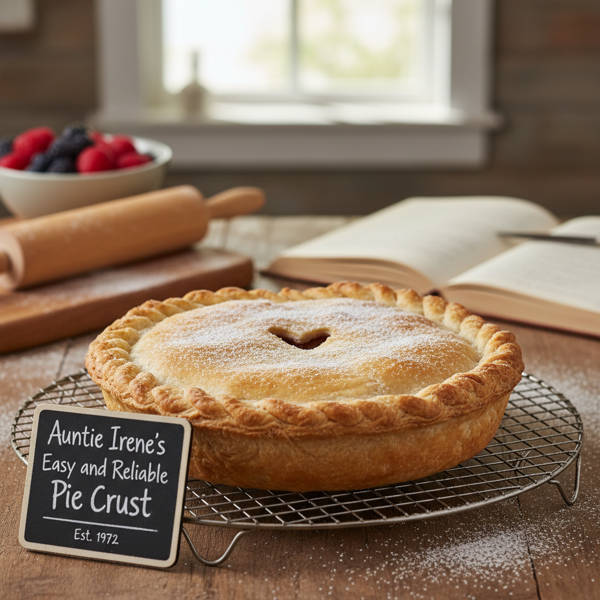
After countless attempts and failures with traditional pie crusts, I finally discovered Auntie Irene's recipe, which has become my go-to. This pie crust is not only foolproof but also remarkably tender thanks to the vinegar, which works its magic without leaving any aftertaste in your baked goods. This recipe yields enough dough for 4-6 individual pies, making it perfect for smaller baking sessions, yet it's rooted in a family tradition of baking hundreds of award-winning pies for county fairs and local community events. Whether you're a novice or an experienced baker, this pie crust will impress your family and friends with its delightful flakiness and flavor. For larger baking needs, check out our large batch recipe #100351.
N/A
Servings
N/A
Calories
7
Ingredients

Ingredients
flour
3 cups (all-purpose)
salt
1 teaspoon (fine)
sugar
2 tablespoons (granulated)
Butter Flavor Crisco
1 1/2 cups (chilled)
white vinegar
1 tablespoon
cold water
1/2 cup
egg
1 (beaten)
Instructions
1
In a large mixing bowl, combine flour, salt, and sugar. Cut in the chilled Butter Flavor Crisco (or your preferred shortening) using a pastry cutter or your fingers until the mixture resembles coarse crumbs.
2
In a 2-cup liquid measuring cup, combine the white vinegar and cold water until you reach the 1/2 cup mark.
3
Crack the egg into the vinegar-water mixture and beat it with a fork until well combined.
4
Drizzle the wet mixture over the dry ingredients, gently tossing with a fork until the dough comes together. Be careful not to overmix.
5
Turn the dough out onto a lightly floured surface and knead it gently about 5 times, or just until it becomes smooth and no longer sticky.
6
Divide the dough into portions of approximately 1/2 to 3/4 cup each. Flatten each piece into a disk for easier rolling.
7
On a lightly floured surface, roll each disk out to your desired thickness, using minimal flour to prevent sticking. Handle the dough as little as possible for a flakier crust.
8
To bake the empty pie shells, preheat your oven to 400°F and place the crusts on the bottom rack. Bake for 10-12 minutes, keeping an eye on them to prevent over-browning.
9
For better pie results, always bake your filled pies on the bottom rack of the oven to avoid soggy bottoms and overly browned tops.
10
If you have leftover dough, it freezes beautifully. Shape the remaining dough into disks, wrap them in plastic or place them in Ziploc bags, removing all air. Thaw in the refrigerator when you're ready to use.
Nutrition Information
Frequently Asked Questions
Frequently Asked Questions
What is Auntie Irene's Easy and Reliable Pie Crust?
This is a foolproof, tender, and flaky family recipe that yields enough dough for 4 to 6 individual pies.
Why is vinegar used in this pie crust recipe?
Vinegar helps make the crust remarkably tender by working its magic on the gluten, without leaving any aftertaste in the baked goods.
How many pies does one batch of this recipe make?
This recipe yields enough dough to make approximately 4 to 6 individual pies, making it ideal for small batch baking.
What ingredients are required for the dry mixture?
You will need 3 cups of all-purpose flour, 1 teaspoon of fine salt, and 2 tablespoons of granulated sugar.
What type of shortening is recommended?
The recipe calls for 1 1/2 cups of chilled Butter Flavor Crisco, though you can use your preferred shortening.
How do I incorporate the shortening into the flour?
Cut the chilled shortening into the dry ingredients using a pastry cutter or your fingers until the mixture looks like coarse crumbs.
How do I prepare the liquid mixture for the dough?
In a liquid measuring cup, combine 1 tablespoon of white vinegar with enough cold water to reach the 1/2 cup mark, then add one beaten egg.
Is there a specific way to add the egg?
Yes, crack the egg into the vinegar-water mixture and beat it with a fork until it is well combined before adding it to the dry ingredients.
How should I combine the wet and dry ingredients?
Drizzle the wet mixture over the dry ingredients and gently toss with a fork until the dough comes together, taking care not to overmix.
How much should I knead the pie dough?
Turn the dough onto a floured surface and knead it gently about 5 times, or just until it is smooth and no longer sticky.
How do I portion the dough for individual pies?
Divide the dough into portions of approximately 1/2 to 3/4 cup each and flatten them into disks.
What is the best way to roll out the dough?
Roll each disk on a lightly floured surface to your desired thickness, using as little flour as possible and handling the dough minimally.
How do I bake empty pie shells?
Preheat your oven to 400°F and bake the crusts on the bottom rack for 10-12 minutes.
Which oven rack should I use for filled pies?
Always bake filled pies on the bottom rack of the oven for the best results.
Why is it important to bake pies on the bottom rack?
Baking on the bottom rack helps prevent soggy bottoms and ensures the tops do not become overly browned.
Can the leftover pie dough be frozen?
Yes, the leftover dough freezes beautifully if wrapped properly.
How do I prepare the dough for the freezer?
Shape the dough into disks, wrap them tightly in plastic or place them in Ziploc bags while removing all the air.
How do I thaw frozen pie dough?
Thaw the frozen dough in the refrigerator when you are ready to use it for your next baking project.
Is this recipe suitable for beginning bakers?
Absolutely; it is specifically described as foolproof and designed to work even for those who have failed with traditional crusts.
Can I use this recipe for large events?
This specific recipe is for a smaller batch, but there is a large batch version available as recipe #100351.
What is the secret to a flaky crust in this recipe?
The key to flakiness is using chilled shortening and handling the dough as little as possible during the rolling process.
Should the water used be room temperature or cold?
The recipe specifies using cold water to help keep the shortening from melting prematurely.
What kind of sugar should I use?
Use granulated sugar for this recipe to add a touch of sweetness to the dough.
What kind of salt should I use?
Fine salt is recommended to ensure it distributes evenly throughout the flour.
How do I avoid a 'soggy bottom' on my pie?
By baking the pie on the bottom rack of the oven, you ensure the bottom crust gets enough heat to crisp up.
Is there an aftertaste from the vinegar?
No, the vinegar performs its chemical function for tenderness without leaving any noticeable flavor.
What should the dough look like after cutting in the shortening?
The mixture should resemble coarse crumbs before the liquid ingredients are added.
What is the total amount of liquid used in the recipe?
The total volume is 1/2 cup of a vinegar and water mixture, plus one beaten egg.
Does this recipe have a history?
Yes, it is rooted in a family tradition of baking hundreds of award-winning pies for county fairs and local events.
How much flour is needed for one batch?
One batch of Auntie Irene's pie crust requires 3 cups of all-purpose flour.