Artisanal Crusty Bread with Flavorful Variations
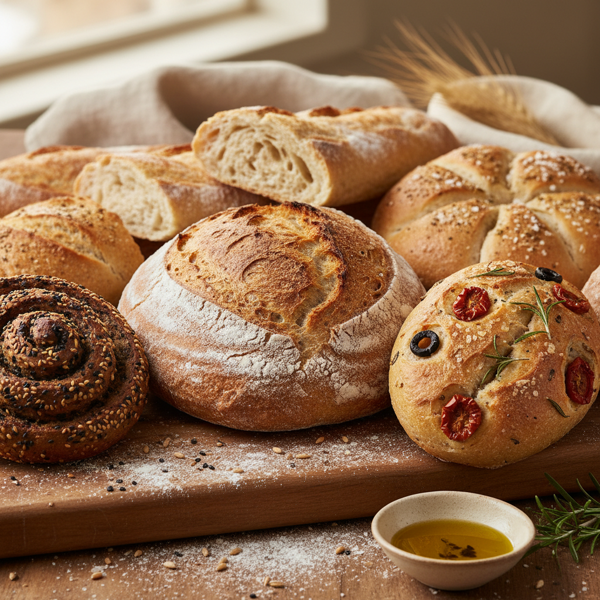
Indulge in the delightful aroma and taste of freshly baked bread with this simple yet versatile recipe. Originating from a favorite TOH magazine, this artisanal bread features just five key ingredients that come together to create a beautifully crusty exterior while remaining soft, fluffy, and airy on the inside. The bread rises overnight in your refrigerator, allowing the flavors to develop without much fuss. Perfect for breakfast, dinner, or as a delectable accompaniment to soups and salads, you can enjoy it plain or experiment with delightful variations like gooey cheddar cheese or a zesty cranberry-orange infusion. Whether for a family gathering or a cozy night in, this bread is sure to impress and satisfy. Prepare yourself for tempting aromas and warm smiles as this gorgeous loaf bakes in your oven!
N/A
Servings
N/A
Calories
5
Ingredients

Ingredients
active dry yeast
1 1/2 teaspoons (Dissolve in water.)
water
1 1/3 cups (Warm water for dissolving yeast.)
all-purpose flour
3 1/2 cups (Plus an additional tablespoon for dusting.)
salt
2 teaspoons (Mix with the flour.)
cornmeal
1 tablespoon (For dusting the pan.)
Instructions
1
In a small bowl, dissolve the yeast into 1 1/3 cups of warm water and let it sit for about 5 minutes until frothy.
2
In a large mixing bowl, combine 3 1/2 cups of all-purpose flour with 2 teaspoons of salt, mixing well.
3
Add the yeast mixture to the flour and salt mixture, using a rubber spatula to stir until a smooth, sticky dough forms. Avoid kneading the dough.
4
Cover the bowl with plastic wrap and let the dough rise at room temperature for 1 hour.
5
After an hour, punch down the dough gently to remove excess air.
6
Turn the dough out onto a lightly floured surface. Pat it into a 9-inch square shape.
7
Fold the dough into thirds, creating a 3-inch square, then turn it over and place it into a greased bowl.
8
Cover the bowl again with plastic wrap and let it rise until it nearly doubles in size, about 1 additional hour.
9
Repeat the punching down and folding process, returning the dough to the bowl and refrigerating it overnight.
10
The next day, preheat your oven to 500°F (260°C) and line the bottom of a disposable foil roasting pan with parchment paper. Dust with cornmeal.
11
Turn the cold dough onto a floured surface and knead it gently 8 times. Shape it into a 6-inch round loaf.
12
Place the shaped loaf into the prepared pan and dust the top with the remaining tablespoon of flour. Cover loosely with plastic wrap and let it rise at room temperature until it expands to a size of about 7 1/2 inches, approximately 1 1/4 hours.
13
Once risen, make a shallow slash across the top of the loaf using a sharp knife.
14
Cover the pan tightly with foil and bake on the lowest oven rack for 25 minutes.
15
Lower the oven setting to 450°F (232°C), remove the foil, and continue to bake for an additional 25-30 minutes, or until the bread is deep golden brown.
16
Once baked, remove the loaf from the oven and allow it to cool on a wire rack.
Nutrition Information
Frequently Asked Questions
Frequently Asked Questions
What is Artisanal Crusty Bread?
It is a simple 5-ingredient bread featuring a crusty exterior and a soft, airy interior.
How many ingredients are needed for this recipe?
The recipe requires five key ingredients: active dry yeast, warm water, all-purpose flour, salt, and cornmeal.
What type of yeast should I use?
This recipe calls for 1 1/2 teaspoons of active dry yeast.
Does this bread require a lot of kneading?
No, it is a low-knead recipe that only requires being kneaded gently 8 times on the second day.
How long does the initial room temperature rise take?
The dough should rise at room temperature for approximately 1 hour initially.
Why must the dough be refrigerated overnight?
Refrigerating the dough overnight allows the flavors to develop fully without much effort.
What is the initial oven temperature for baking?
The oven should be preheated to 500 degrees Fahrenheit (260 degrees Celsius).
What kind of pan is recommended for baking?
A disposable foil roasting pan lined with parchment paper is used for this recipe.
What is the purpose of cornmeal in this recipe?
Cornmeal is used to dust the bottom of the pan to provide texture and prevent sticking.
How long should the bread bake while covered?
The bread should be baked covered with foil for 25 minutes on the lowest oven rack.
What temperature should the oven be for the final baking stage?
After removing the foil, lower the oven temperature to 450 degrees Fahrenheit (232 degrees Celsius).
Can I add cheese to this bread?
Yes, you can experiment with variations like adding gooey cheddar cheese.
Is there a sweet variation for this bread?
Yes, the recipe suggests a zesty cranberry-orange infusion as a flavorful variation.
What is the texture of the bread once baked?
The bread has a beautifully crusty exterior and stays soft, fluffy, and airy on the inside.
How do I know the bread is done?
The bread is finished when it has reached a deep golden brown color.
Why do I need to slash the top of the loaf?
Making a shallow slash across the top allows the bread to expand evenly while baking.
What type of flour is used in this recipe?
The recipe specifically uses 3 1/2 cups of all-purpose flour, plus an extra tablespoon for dusting.
Should I grease the bowl for the second rise?
Yes, after folding the dough, place it into a greased bowl to rise.
How many times should I knead the cold dough on the second day?
You should knead the cold dough gently exactly 8 times.
What shape should I form the dough into before the final rise?
Shape the dough into a 6-inch round loaf.
How long is the final rise before baking?
The shaped loaf should rise at room temperature for approximately 1 1/4 hours.
What should the water temperature be for the yeast?
The water should be warm to help the yeast dissolve and become frothy.
Why is the dough punched down?
The dough is punched down gently to remove excess air bubbles.
How is the dough folded during the first day?
The dough is patted into a 9-inch square and then folded into thirds.
What tool is best for mixing the dough?
A rubber spatula is recommended for stirring the flour and yeast mixture until a sticky dough forms.
How large should the dough be after the final rise?
The loaf should expand to a size of about 7 1/2 inches during the final rise.
How much salt is included in the dough?
The recipe calls for 2 teaspoons of salt to be mixed with the flour.
What are the best serving suggestions for this bread?
It is perfect for breakfast, dinner, or as an accompaniment to soups and salads.
Where does this recipe originate from?
This recipe originated from a favorite Taste of Home (TOH) magazine.
Is this recipe suitable for beginner bakers?
Yes, it is described as a simple, no-fuss recipe that is easy for casual baking.