Artisanal Country French Bread
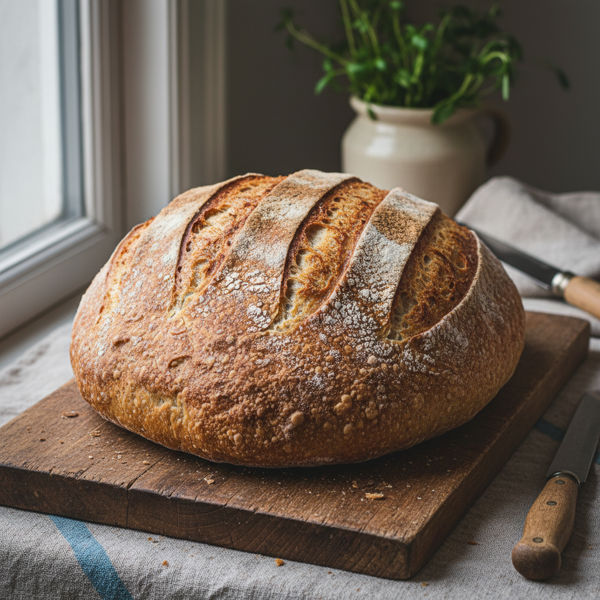
This delightful Artisanal Country French Bread recipe is inspired by traditional methods, offering an authentic rustic flavor and a crispy crust. Utilizing a sponge starter adds depth and character to the bread, resulting in a soft, airy interior that's perfect for sandwiches or serving alongside soups. With only a few simple ingredients, this bread is not only easy to make but also incredibly rewarding. After successfully baking it twice, I can confidently say that it will impress friends and family alike. This recipe yields two beautiful loaves, perfect for sharing or stocking your pantry.
N/A
Servings
N/A
Calories
6
Ingredients
Ingredients
White flour
3/4 cup (None)
Warm water
1/2 cup (None)
Active dry yeast
1/2 teaspoon (Proof with warm water)
All-purpose flour
4 1/2 cups (Measure and use, may substitute with whole wheat flour)
Warm water
2 cups (None)
Salt
1 teaspoon (None)
Instructions
1
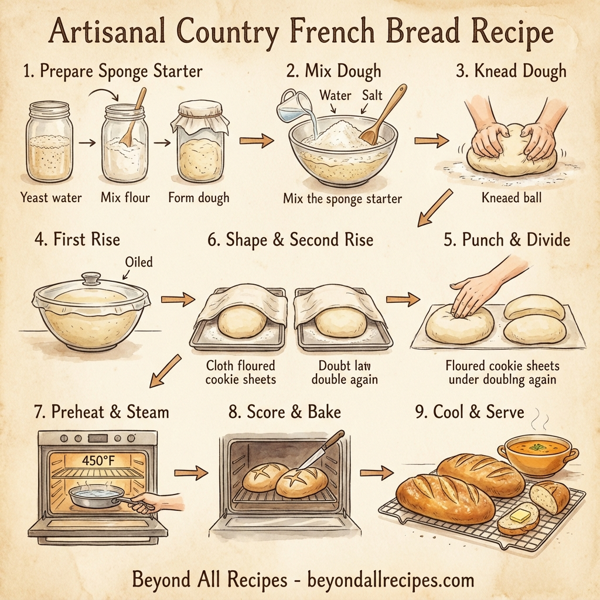
Prepare the sponge starter by mixing together the active yeast with warm water in a bowl. Let it sit for about 5 minutes until frothy.
2
Gradually mix in 3/4 cup of white flour until the mixture pulls away from the sides of the bowl. Transfer to a glass jar with a lid and allow it to sit in a warm environment for at least 6 hours, or until it triples in size. If not using immediately, refrigerate the starter and bring it to room temperature an hour before proceeding with the recipe.
3
In a large mixing bowl, combine the sponge starter, 4 1/2 cups of flour (using a mix of whole wheat and white flour, if desired), 2 cups of warm water, and 1 teaspoon of salt. Mix until well combined.
4
Knead the dough on a lightly floured surface for about 10 minutes, ensuring it's slightly sticky but manageable. Form the dough into a ball and place it in a lightly oiled bowl, turning it once to coat.
5
Cover the bowl with a cloth and let the dough rise in a warm place for about 2-3 hours or until it has doubled in size.
6
Once risen, punch down the dough gently to release the gases and divide it in half. Shape each half into a loaf and place them on two floured cookie sheets.
7
Cover the loaves again and let them rise in a warm location until they double in size, about 1-2 hours.
8
Preheat your oven to 450°F (232°C) and place a small pan on the lower shelf of the oven to hold 2 cups of boiling water.
9
Score the tops of the loaves with a sharp knife, making an 'X' for a classic look. Place the boiling water into the pan on the lower shelf, then place the loaves on the center rack.
10
Bake the bread for about 30-40 minutes, or until the crust is golden brown and the bottom sounds hollow when tapped. If necessary, turn off the oven and allow the loaves to sit inside for an additional 10 minutes for a crunchier crust.
11
Remove the loaves from the oven and cool them on a wire rack before slicing. Enjoy your rustic bread with your favorite spreads or pair it with roasted garlic for a delightful experience.
Nutrition Information
Frequently Asked Questions
Frequently Asked Questions
What is Artisanal Country French Bread?
It is a traditional rustic-style bread known for its crispy crust, soft airy interior, and authentic flavor developed through a sponge starter.
How many loaves does this recipe yield?
This recipe yields two beautiful loaves of bread.
What are the primary ingredients needed?
The main ingredients include white flour, all-purpose flour (or whole wheat), warm water, active dry yeast, and salt.
How do I prepare the sponge starter?
Mix active yeast with warm water, let it sit for 5 minutes until frothy, then gradually mix in 3/4 cup of white flour until the mixture pulls away from the bowl sides.
How long should the sponge starter sit?
The starter should sit in a warm environment for at least 6 hours, or until it triples in size.
Can the sponge starter be refrigerated?
Yes, you can refrigerate the starter in a glass jar; just bring it to room temperature an hour before using it in the recipe.
What type of flour is best for the dough?
The recipe calls for all-purpose flour, but you can use a mix of whole wheat and white flour if desired.
How long do I need to knead the dough?
You should knead the dough on a lightly floured surface for about 10 minutes.
What should the dough consistency be after kneading?
The dough should be slightly sticky but manageable.
How long is the first rise?
The dough needs to rise in a warm place for about 2-3 hours until it has doubled in size.
How do I prepare the dough for its second rise?
Punch down the dough gently, divide it in half, shape each half into a loaf, and place them on floured cookie sheets.
How long is the second rise?
The loaves should rise in a warm location for about 1-2 hours until they double in size.
What temperature should the oven be preheated to?
Preheat your oven to 450°F (232°C).
How do I create steam in the oven for a better crust?
Place a small pan on the lower shelf of the oven and fill it with 2 cups of boiling water just before baking.
How should I score the bread?
Score the tops of the loaves with a sharp knife by making an 'X' for a classic look.
Where should the loaves be placed in the oven?
The loaves should be placed on the center rack of the oven.
How long does the bread take to bake?
The bread typically bakes for 30-40 minutes.
How can I tell if the bread is fully cooked?
The crust should be golden brown and the bottom of the loaf should sound hollow when tapped.
How can I achieve a crunchier crust?
After the initial baking time, turn off the oven and allow the loaves to sit inside for an additional 10 minutes.
What is the best way to cool the bread?
Remove the loaves from the oven and let them cool on a wire rack before slicing.
What are some serving suggestions for this bread?
It is perfect for sandwiches, serving alongside soups, or pairing with roasted garlic and favorite spreads.
How much yeast is required?
The recipe requires 1/2 teaspoon of active dry yeast.
How much salt is used in the dough?
The recipe calls for 1 teaspoon of salt.
What is the total amount of water used for the whole recipe?
The recipe uses 1/2 cup for the starter and 2 cups for the dough, totaling 2 1/2 cups of warm water (plus 2 cups of boiling water for the oven pan).
What is the purpose of the sponge starter?
The sponge starter adds depth, character, and a traditional rustic flavor to the bread.
Do I need to grease the bowl for the first rise?
Yes, place the dough in a lightly oiled bowl and turn it once to coat the surface.
Can I substitute all the flour with whole wheat?
The recipe suggests a mix of whole wheat and white flour can be used for the 4 1/2 cups of dough flour.
Does the starter need to be covered?
Yes, the starter should be placed in a glass jar with a lid while it sits.
What kind of surface should I use for kneading?
Use a lightly floured surface to prevent sticking while kneading for 10 minutes.
What should I use to cover the dough during the rising phases?
Cover the bowl or the shaped loaves with a cloth to keep them warm and protected.