Artisan Style Hamburger and Hotdog Buns
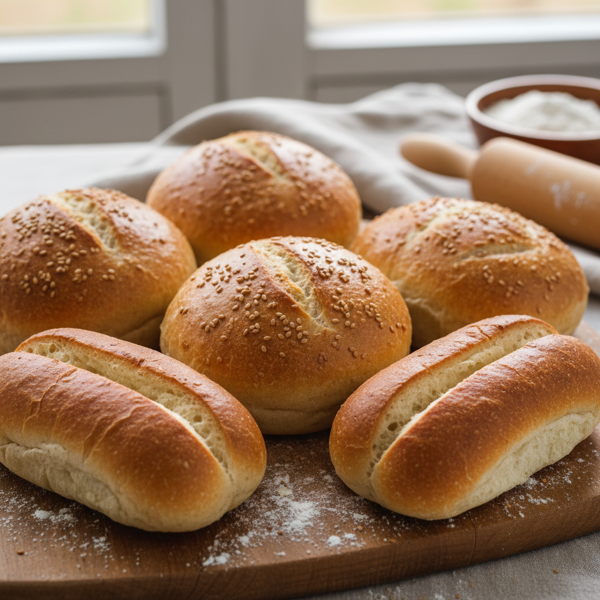
Create restaurant-quality hamburger and hotdog buns at home with this delicious artisan recipe! These gourmet-style buns are characterized by a lovely crisp crust and a soft, chewy interior, making them the perfect base for towering burgers or tasty sandwiches. Whether you're grilling up juicy patties, assembling gourmet hotdogs, or crafting the ultimate ham and cheese sandwich, these buns are versatile enough to handle it all. Family-approved and easy to make, they will quickly become a staple at your dining table. This recipe is inspired by the classic French bread technique, delivering fantastic results every time.
N/A
Servings
167
Calories
5
Ingredients
Ingredients
Bread Flour
500 g (approximately 4 cups, measured)
Salt
5 g (1 teaspoon)
Yeast
7 g (1 packet (1/4 ounce))
Warm Water
325 g (approximately 1 1/2 cups, heated to about 110°F)
Hot Water
8 ounces (for spritzing in the oven)
Instructions
1
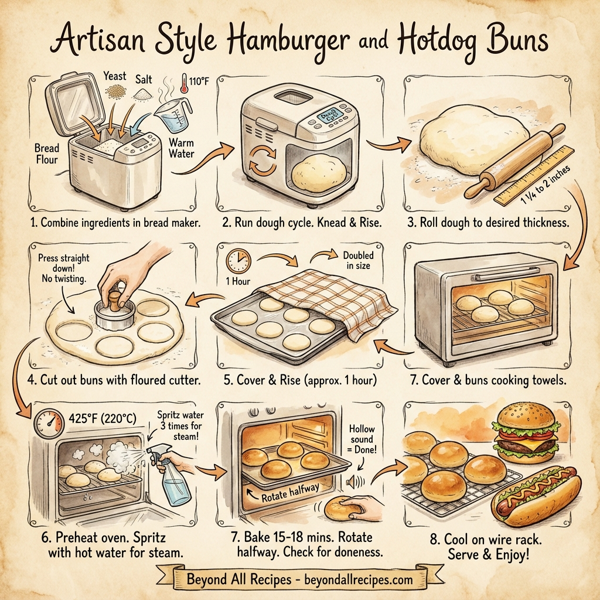
In a bread maker, combine the bread flour, salt, and yeast. Pour in the warm water, ensuring it is approximately 110°F for optimal yeast activation.
2
Select the dough cycle on your bread maker and start the machine. Allow it to knead and rise until the cycle is complete.
3
Once the dough has finished, lightly flour a clean surface and turn the dough out onto it. Gently roll the dough to a thickness of 1 1/4 to 2 inches, depending on your desired bun height.
4
Using a floured 3 1/2-inch round cutter, press straight down to cut out the buns, being careful not to twist the cutter.
5
Transfer the cut buns onto a greased baking sheet, spacing them evenly. Cover the buns with a tea towel and allow them to rise for about 1 hour, or until they have doubled in size.
6
Preheat your oven to 425°F (220°C). Once the buns are ready, place them in the oven.
7
Before closing the oven door, spritz the interior with hot water using a spray bottle (avoiding the light bulb) to create steam. Repeat this process two more times, waiting about 30 seconds between sprays.
8
Bake the buns for 15 to 18 minutes, rotating the pan halfway through for an even bake. Check for a golden-brown color and a hollow sound when tapped on the bottom.
9
Once cooked, remove the buns from the oven and let them cool on a wire rack before serving. Enjoy them with your favorite fillings!
Nutrition Information
1.3 g
Fat
33 g
Carbs
3 g
Protein
0.9 g
Fiber
Frequently Asked Questions
Frequently Asked Questions
What type of flour is best for these artisan buns?
Bread flour is recommended for this recipe to achieve the desired chewy texture and structure.
Can I use a bread maker for this recipe?
Yes, the recipe specifically uses a bread maker on the dough cycle to knead and perform the initial rise.
What is the ideal water temperature for yeast activation?
The water should be approximately 110°F (43°C) for optimal yeast activation.
How thick should I roll the dough before cutting the buns?
Roll the dough to a thickness of 1 1/4 to 2 inches, depending on how tall you want your buns to be.
What size cutter should I use for hamburger buns?
A floured 3 1/2-inch round cutter is recommended for standard-sized buns.
What is the best way to cut the dough shapes?
Press the cutter straight down into the dough without twisting it to ensure an even rise.
How long do the buns need to rise after being shaped?
The shaped buns should rise for about 1 hour, or until they have doubled in size.
What should I use to cover the buns while they rise?
Cover the buns with a clean tea towel to keep them from drying out during the rise.
What temperature should the oven be preheated to?
The oven should be preheated to 425°F (220°C).
How do I create a crisp artisan crust?
Spritz the interior of the oven with hot water using a spray bottle to create steam right after putting the buns in.
How many times should I spray water into the oven?
You should spritz the oven three times in total, waiting about 30 seconds between each spray.
What safety precaution should I take when spraying water in the oven?
Avoid spraying the water directly onto the oven light bulb to prevent it from shattering.
How long do the artisan buns need to bake?
Bake the buns for 15 to 18 minutes until they are golden-brown.
Should I move the baking pan during the cooking process?
Yes, rotate the pan halfway through the baking time to ensure an even bake.
How can I tell if the buns are fully cooked?
The buns are done when they are golden-brown and produce a hollow sound when tapped on the bottom.
Where should the buns cool after baking?
Transfer the buns to a wire rack to cool completely before serving.
What is the characteristic texture of these buns?
These buns feature a lovely crisp crust and a soft, chewy interior.
What inspiration was used for this bun recipe?
This recipe is inspired by classic French bread techniques.
How many calories are in one artisan bun?
Each bun contains approximately 167 calories.
How much fat is in these buns?
There is approximately 1.3 grams of fat per bun.
What is the carbohydrate content of a bun?
Each bun contains about 33 grams of carbohydrates.
How much protein does each bun provide?
There are 3 grams of protein in each bun.
Is there any fiber in these artisan buns?
Yes, each bun contains approximately 0.9 grams of fiber.
Does this recipe require any sugar?
No, this specific recipe does not list sugar as an ingredient.
How many ingredients are required for this recipe?
There are 5 main ingredients: bread flour, salt, yeast, warm water, and hot water for steam.
What amount of yeast is needed?
You will need 7 grams of yeast, which is equivalent to one 1/4 ounce packet.
How much salt is used in the dough?
The recipe calls for 5 grams or 1 teaspoon of salt.
Can these buns be used for hotdogs?
Yes, though the instructions mention a round cutter, the dough is versatile enough to be shaped into hotdog buns.
Is the baking sheet greased?
Yes, the buns should be placed on a greased baking sheet to prevent sticking.
What can I serve with these buns?
They are perfect for hamburgers, hotdogs, or gourmet sandwiches like ham and cheese.