Artisan Sourdough Bread with Whole Wheat Infusion
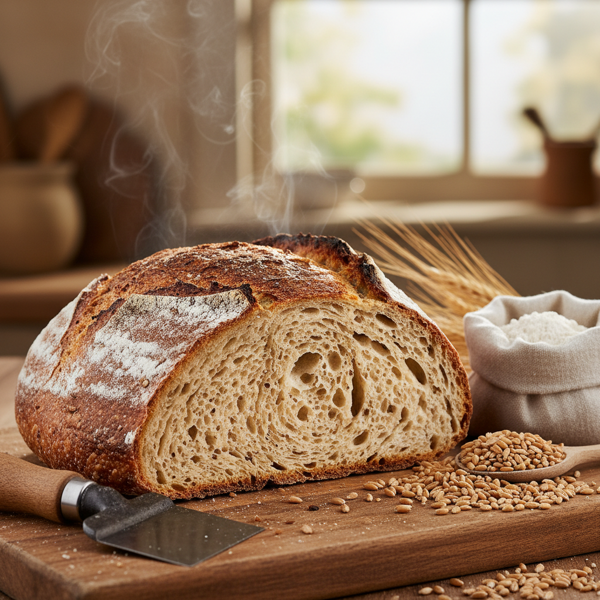
Elevate your baking skills with this Artisan Sourdough Bread, a delightful blend of traditional techniques and modern twists. This recipe captures the essence of sourdough fermentation, resulting in a rich, tangy flavor that is complemented by the subtle nutty undertones of white whole wheat flour. This bread is not only perfect for sandwiches and toast but can also stand alone as a gourmet accompaniment to soups and salads. Experiment by replacing up to 50% of the bread flour with whole wheat flour to deepen the flavor and enhance the nutritional profile. With each loaf, you'll develop a deeper appreciation for the art of baking sourdough.
24
Servings
N/A
Calories
10
Ingredients

Ingredients
Sourdough Starter (Proofed)
1 1/4 cups (Stir 2 tablespoons of your starter into 1 cup of water and then stir in 1 cup of flour. Let it prove overnight.)
Water
1 cup (Use lukewarm water for better fermentation.)
Powdered Milk
3 tablespoons (Add directly to the dry ingredients.)
Lemon Juice
1 tablespoon (Freshly squeezed for optimal flavor.)
Instant Potato Flakes
1/4 cup (Used to enhance moisture retention in the bread.)
Bread Flour
3 3/4 cups (Measured and sifted for aeration.)
White Whole Wheat Flour
1/4 cup (Substitutable up to 50% of the bread flour.)
Sugar
2 tablespoons (Helps with browning and flavor.)
Butter
3 tablespoons (Melted for incorporation.)
Salt
2 teaspoons (Add towards the end of mixing.)
Instructions
1
Prepare the proofed sourdough starter: Mix 2 tablespoons of your existing starter into 1 cup of lukewarm water, then add 1 cup of flour. Stir well and cover. Let it sit at room temperature overnight, 8 to 14 hours.
2
In a large mixing bowl, combine the proofed sourdough starter, water, powdered milk, lemon juice, and potato flakes. Stir until well combined.
3
Gradually add the bread flour and white whole wheat flour, mixing just until you achieve a shaggy mass. Avoid overmixing.
4
Cover the bowl with a damp cloth and let the mixture rest for 30 minutes to allow the flour to hydrate.
5
Once rested, incorporate the sugar, melted butter, and salt into the dough. Mix until all ingredients are thoroughly combined.
6
Knead the dough by hand on a lightly floured surface or use a stand mixer fitted with a dough hook for about 10 minutes until the dough is smooth and elastic.
7
Optionally, you may mix the dough in a bread machine but remove it 10 minutes before the end of the kneading cycle to maintain the dough's integrity.
8
Place the dough back in the bowl, cover it, and allow it to rest for approximately 45 minutes.
9
After the resting period, divide the dough into two equal portions. Flatten each portion into a large circle and perform a letter fold by bringing the sides into the center, then repeat with the top and bottom edges. Shape into loaves with the seams hidden underneath.
10
Transfer the shaped loaves onto parchment paper and lightly spray with cooking oil. Cover with plastic wrap and refrigerate overnight.
11
The next day, remove the loaves from the refrigerator and let them rise at room temperature until they have doubled in size, ensuring they feel light to the touch.
12
Preheat your oven to 400°F (200°C) with a baking stone inside, if available, for 30 minutes prior to baking. Place a shallow pan of hot water on the bottom rack to create steam.
13
Once risen, use a sharp knife to slash the tops of the loaves before carefully placing them on the hot stone or a baking sheet.
14
Bake for 10 minutes at 400°F, then lower the oven temperature to 375°F (190°C) while continuing to bake until the loaves are golden brown and sound hollow when tapped.
15
Once baked, transfer the loaves to a wire rack to cool. Optionally, brush the crust with melted butter for a soft finish.
Nutrition Information
Frequently Asked Questions
Frequently Asked Questions
How do I prepare the proofed sourdough starter for this recipe?
Mix 2 tablespoons of your existing starter into 1 cup of lukewarm water, then add 1 cup of flour. Stir well, cover, and let it sit at room temperature for 8 to 14 hours.
What is the purpose of adding lemon juice to the sourdough?
Lemon juice is added for optimal flavor, contributing to the tangy profile of the artisan bread.
Why are instant potato flakes used in this bread recipe?
Instant potato flakes are used to enhance moisture retention in the bread, keeping it fresher for longer.
Can I substitute more whole wheat flour for the bread flour?
Yes, you can experiment by replacing up to 50% of the bread flour with whole wheat flour to deepen the flavor and enhance the nutritional profile.
Why does the dough need to rest for 30 minutes after initial mixing?
The 30-minute rest period allows the flour to fully hydrate before the sugar, butter, and salt are incorporated.
How long should I knead the sourdough dough?
Knead the dough for about 10 minutes until it becomes smooth and elastic.
Can I use a bread machine for this artisan recipe?
Yes, you can mix the dough in a bread machine, but you should remove it 10 minutes before the end of the kneading cycle to maintain its integrity.
What is the 'letter fold' technique mentioned in the instructions?
To perform a letter fold, flatten the dough into a circle, bring the sides into the center, and then repeat with the top and bottom edges before shaping into a loaf.
Why is the dough refrigerated overnight?
Cold fermentation overnight helps develop the complex flavors and makes the dough easier to score before baking.
How do I know when the loaves have risen enough at room temperature?
The loaves are ready when they have doubled in size and feel light to the touch.
What oven temperature is used for baking this sourdough?
Start baking at 400°F (200°C) for the first 10 minutes, then lower the temperature to 375°F (190°C) for the remainder of the bake.
How do I create steam in the oven for a better crust?
Place a shallow pan of hot water on the bottom rack of the oven during the preheating process and while baking.
How can I tell if the bread is finished baking?
The loaves are done when they are golden brown and sound hollow when tapped on the bottom.
What is the benefit of using white whole wheat flour?
White whole wheat flour provides subtle nutty undertones and nutritional benefits without the heavy bitterness of traditional red whole wheat.
Should I add the salt at the beginning of the mixing process?
No, salt should be added after the 30-minute hydration rest period along with the sugar and melted butter.
How many loaves does this recipe make?
This recipe is designed to produce two equal-sized loaves.
How long should the baking stone preheat?
The baking stone should be preheated inside the oven for at least 30 minutes before baking.
Can I make this bread without a baking stone?
Yes, if a baking stone is unavailable, you can place the loaves directly on a baking sheet.
How do I get a soft crust on my sourdough?
Optional: Brush the crust with melted butter immediately after removing the loaves from the oven for a soft finish.
Why do I need to slash the tops of the loaves?
Slashing the tops (scoring) with a sharp knife allows the bread to expand predictably in the oven without bursting at the seams.
How many servings does this recipe provide?
The recipe yields approximately 24 servings.
What role does powdered milk play in this recipe?
Powdered milk enriches the dough, contributing to a softer crumb and aiding in the browning of the crust.
What is the recommended cooling process?
Transfer the baked loaves to a wire rack to cool completely, which prevents the bottom from becoming soggy.
Is lukewarm water necessary for the dough?
Yes, lukewarm water is recommended to facilitate better and more consistent fermentation.
What should the dough look like before the first rest?
It should be a 'shaggy mass,' meaning the flour is mostly incorporated but the dough hasn't been smoothed out through kneading yet.
Can I use this bread for sandwiches?
Absolutely; the texture and flavor make it perfect for sandwiches, toast, or as an accompaniment to soups.
How long does the final rise take after refrigeration?
The duration varies depending on room temperature, but you must wait until the loaves have doubled in size.
What is the 'shaggy mass' stage?
It is the initial stage of mixing where the wet and dry ingredients are combined just enough to hold together before autolyse and kneading.
What should I do if my dough is too sticky to handle?
You can use a lightly floured surface for kneading, but be careful not to add too much extra flour which can toughen the bread.
How long is the bulk rest after kneading?
After kneading, place the dough in a bowl, cover it, and allow it to rest for approximately 45 minutes.