Artisan Sourdough Bread Using the 1-2-3 Method
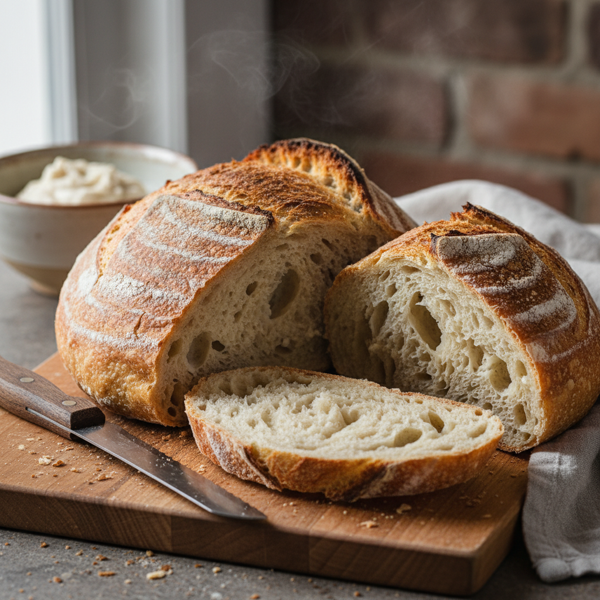
Unlock the magic of homemade sourdough with this straightforward 1-2-3 method that ensures success every time. This recipe requires just a simple ratio of ingredients: 1 part sourdough starter, 2 parts water, and 3 parts flour, making it easy to remember and to prepare. It's a delightful way to enjoy freshly baked sourdough bread without the fuss. With the option to enrich the dough for delicious sandwich bread or fluffy buns by substituting milk for water and adding a touch of sugar and oil, this versatile recipe yields two delightful 1 lb loaves. For larger loaves, simply increase the quantities by 50%. Ease into the art of sourdough baking with this approach that captures the essence of rustic bread and fills your home with the aroma of freshly baked goodness.
N/A
Servings
80
Calories
5
Ingredients

Ingredients
Sourdough starter
2 tablespoons ((1 oz))
Room temperature water
1 1/4 cups ((10.5 oz))
All-purpose unbleached flour
2/3 cup ((3 oz))
Unbleached bread flour
3 1/2 cups ((15.75 oz))
Table salt
1 1/2 teaspoons ((0.32 oz))
Instructions
1
1. Prepare the Starter Sponge: In a mixing bowl, add the sourdough starter to the room temperature water and whisk until combined. Gradually incorporate the flour and mix until smooth. Cover the bowl and let it rest at room temperature, ideally between 70°F to 75°F, until it doubles in volume, which can take anywhere from 6 hours to overnight.
2
2. Mix the Dough: Once the starter sponge is ready, whisk it into the remaining water in a larger bowl. Slowly add enough flour to create a thin batter, whisking to aerate the mixture and create bubbles. Gradually add the remaining flour, stirring until fully incorporated and a shaggy dough forms.
3
3. Rest the Dough: Cover the bowl and allow the dough to rest for 20 to 30 minutes, letting the gluten begin to develop.
4
4. Knead & Incorporate Salt: After the resting period, sprinkle the salt over the dough and knead for about 8 minutes until smooth and elastic. Cover and let it rest for another 5 minutes.
5
5. Stretch and Fold: Perform a stretch and fold by stretching the dough into a rectangle and folding it like a letter. Cover and let it rest again.
6
6. First Rise: Transfer the dough to an oiled container, marking the level of the dough. Let it rise in a warm, draft-free environment (75°F to 80°F) for about 1 hour until doubled in size.
7
7. Repeat Stretch and Fold: After the first rise, stretch and fold the dough again for the second time. Cover and allow it to rise for an additional hour or until it has doubled in volume (the total rising time may take up to 3 hours).
8
8. Portion and Pre-shape: Gently remove the dough from the container and divide it into 2 equal pieces weighing approximately 1 lb each. You'll have a small piece left (size of a ping-pong ball). Pre-shape each piece into a ball and let them rest, covered, for about 10 minutes.
9
9. Final Shaping: Shape the dough into your desired style—be it batards, boules, or torpedos. If the dough resists stretching, allow it to rest for 5 to 10 minutes before shaping again.
10
10. Second Rise: Place the shaped loaves on a cloth-lined baking surface, supporting them with a folded parchment paper to retain their shape. Cover with oiled plastic. For the small piece, place it in a straight-sided glass, marking the doubled volume with tape or a marker. Let the loaves rise until they are 1.5 times their original size.
11
11. Preheat the Oven: While the loaves are rising, preheat your oven to 425°F, placing a cast iron skillet on the bottom rack to heat as well.
12
12. Steam the Oven: Once the loaves have risen adequately, carefully pour 1 cup of hot water into the hot skillet to create steam—a crucial step for crust development.
13
13. Score and Bake: Using a double-edged razor blade, score the tops of the loaves. Transfer the loaves to the oven using parchment paper and a flat baking sheet or pizza peel. Bake for 12 minutes, then rotate the pan to ensure even browning.
14
14. Final Bake: Continue baking for an additional 15 to 20 minutes, or until the loaves are nicely browned and register an internal temperature of 205°F.
15
15. Cool: Once baked, remove the loaves from the oven and let them cool on a rack before slicing.
Nutrition Information
0.5g
Fat
16g
Carbs
3g
Protein
1g
Fiber
0.06g
Sugar
39mg
Sodium
Frequently Asked Questions
Frequently Asked Questions
What is the 1-2-3 method for sourdough bread?
The 1-2-3 method is a simple ratio for making sourdough consisting of 1 part sourdough starter, 2 parts water, and 3 parts flour by weight.
What ingredients are required for this artisan sourdough?
You will need 2 tablespoons of sourdough starter, 1 1/4 cups of room temperature water, 2/3 cup of all-purpose unbleached flour, 3 1/2 cups of unbleached bread flour, and 1 1/2 teaspoons of table salt.
How many loaves does this recipe yield?
This recipe makes two 1 lb loaves of bread.
How can I make larger loaves with this recipe?
To make larger loaves, simply increase all ingredient quantities by 50%.
How do I prepare the sourdough starter sponge?
Whisk the starter into room temperature water, gradually incorporate the flour until smooth, and let it rest at 70°F to 75°F until it doubles in volume.
How long does the starter sponge take to double?
Depending on the environment, it can take anywhere from 6 hours to overnight.
What is the purpose of resting the dough for 20 to 30 minutes after mixing?
Resting the dough, also known as autolyse, allows the gluten to begin developing naturally before kneading.
When should I add the salt to the dough?
The salt should be sprinkled over the dough and kneaded in after the initial 20 to 30-minute rest period.
How long should the sourdough be kneaded?
The dough should be kneaded for approximately 8 minutes until it becomes smooth and elastic.
What is the stretch and fold technique?
It involves stretching the dough into a rectangle and folding it over itself like a letter to build structure.
What is the ideal temperature for the first rise?
The dough should rise in a warm, draft-free environment between 75°F and 80°F.
How many times is the stretch and fold process repeated?
The process is performed once after the initial kneading and again after the first hour of rising.
How do I portion the dough for loaves?
Gently divide the dough into two equal pieces weighing about 1 lb each, leaving a small ping-pong ball sized piece for volume tracking.
What is the small piece of dough used for?
It is placed in a straight-sided glass to accurately track when the dough has doubled or reached the desired volume.
What shapes can I create with this dough?
This versatile dough can be shaped into batards, boules, or torpedos.
What should I do if the dough resists stretching during shaping?
If the dough is too tight, let it rest for 5 to 10 minutes to allow the gluten to relax before trying to shape it again.
How do I support the loaves during the second rise?
Place them on a cloth-lined surface and use folded parchment paper to help them retain their shape.
How much should the bread rise during the second rise?
The loaves should rise until they are approximately 1.5 times their original size.
At what temperature should the oven be preheated?
The oven should be preheated to 425°F.
Why is a cast iron skillet placed in the oven?
The skillet is used to hold hot water, which creates the steam necessary for proper crust development.
How do I create steam in the oven?
Carefully pour 1 cup of hot water into the preheated cast iron skillet on the bottom rack just before baking.
What tool is used to score the bread?
A double-edged razor blade (bread lame) is used to score the tops of the loaves.
How long does the baking process take?
Bake for 12 minutes, rotate the pan, and then bake for another 15 to 20 minutes.
What is the target internal temperature for the bread?
The bread is fully baked when it reaches an internal temperature of 205°F.
Can I turn this recipe into sandwich bread?
Yes, substitute milk for water and add a small amount of sugar and oil for a softer sandwich loaf.
What kind of flour is best for this recipe?
A combination of all-purpose unbleached flour and unbleached bread flour is used.
How long should the bread cool before slicing?
The loaves should cool completely on a wire rack before slicing to ensure the crumb sets properly.
What is the total rising time for the first rise?
The total rising time for the first stage can take up to 3 hours including the stretch and fold intervals.
Is this recipe suitable for beginners?
Yes, the 1-2-3 method is designed to be a straightforward and easy-to-remember approach for sourdough beginners.
What are the nutritional facts per serving?
Each serving contains approximately 80 calories, 16g of carbohydrates, 3g of protein, and 0.5g of fat.