Artisan Soft Sourdough Bread
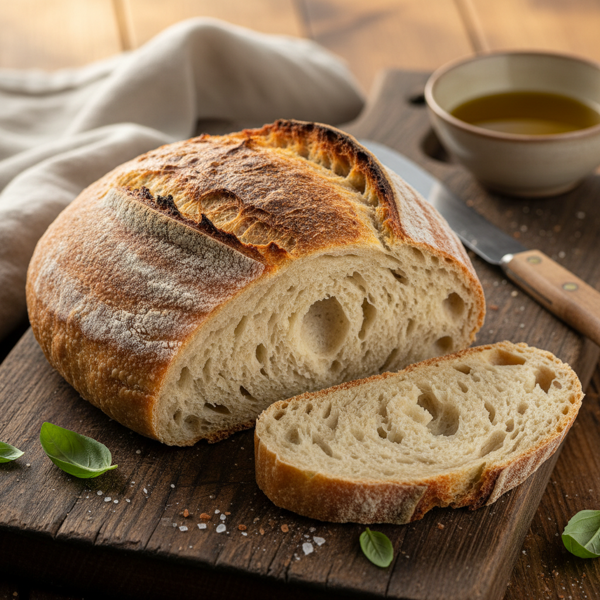
This Artisan Soft Sourdough Bread combines the delightful tang of a well-cultivated sourdough starter with a tender, pillowy crust. Adapted from a classic recipe by renowned New Zealand chefs Alison and Simon Holst, this bread can be made with a mix of white and wholemeal flours to enhance both flavor and nutrition. The lengthy fermentation process not only improves the taste but also promotes easier digestion. Perfect for making sandwiches, toasting, or simply enjoying with butter, this recipe is designed for home bakers looking to elevate their sourdough game. Start in the morning for a relaxed baking experience before dinner, and enjoy the enticing aroma of freshly baked sourdough wafting through your home.
N/A
Servings
N/A
Calories
6
Ingredients
Ingredients
active sourdough starter
1 cup (Ensure it is bubbly and active.)
milk
2/3 cup (Use room temperature milk.)
sugar
2 teaspoons (Regular granulated sugar.)
salt
1 1/2 teaspoons (Use sea salt or kosher salt.)
oil
2 tablespoons (Olive oil or any neutral oil.)
high-grade flour
2 1/3 cups (All-purpose or bread flour. Can substitute with up to half wholemeal for added nutrition.)
Instructions
1
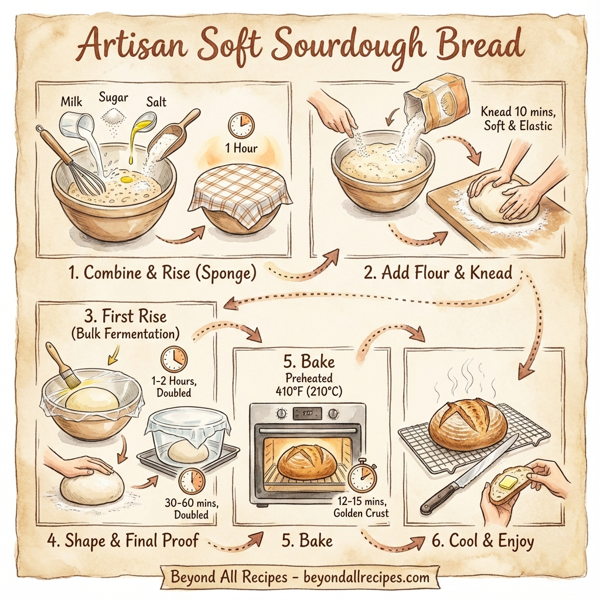
In a large mixing bowl, combine the active sourdough starter, milk, sugar, salt, and oil. Gradually incorporate 1 cup of high-grade flour until fully combined. Cover the bowl with a clean kitchen towel or cling film and place it in a warm spot for at least 1 hour, allowing it to rise slightly.
2
After the dough has risen, stir in the remaining 1 1/3 cups of flour, kneading for about 10 minutes until a soft and elastic dough forms that springs back when gently pressed with your finger. If the dough is too sticky, add a little more flour as needed.
3
Lightly oil a clean bowl and place the kneaded dough inside, turning it to coat all sides with oil. Cover again with cling film and let it rise in a warm place for 1 to 2 hours, or until it has doubled in size.
4
Once the dough has risen, lightly flour a clean surface and gently shape the dough into a rounded loaf. Transfer the loaf onto a lightly oiled tray. Cover it with a large container or a damp kitchen cloth, ensuring there is enough space for the dough to rise without touching the sides. Allow it to rise again in a warm area until it has doubled in size, approximately 30 minutes to 1 hour.
5
Preheat your oven to 410°F (210°C). Once the dough has finished its final rise, place it in the oven and bake for 12-15 minutes, or until the crust is golden and the internal temperature of the bread reaches 190°F (88°C).
6
Remove the loaf from the oven and let it cool on a wire rack for at least 30 minutes before slicing. Enjoy your homemade Artisan Soft Sourdough Bread!
Nutrition Information
Frequently Asked Questions
Frequently Asked Questions
What is Artisan Soft Sourdough Bread?
It is a homemade sourdough bread that features a tangy flavor and a tender, pillowy crust, unlike the typically hard crust of traditional artisan breads.
Who inspired this sourdough recipe?
This recipe is adapted from a classic bread recipe by the famous New Zealand chefs Alison and Simon Holst.
Can I use wholemeal flour in this recipe?
Yes, you can substitute up to half of the high-grade flour with wholemeal flour to improve the bread's nutrition and flavor.
What are the benefits of the long fermentation process?
The lengthy fermentation improves the overall flavor of the bread and makes it easier to digest.
What are the best uses for this bread?
It is perfect for making sandwiches, toasting, or simply eating fresh with a spread of butter.
How much sourdough starter is required?
You will need 1 cup of active, bubbly sourdough starter for this recipe.
Why is milk included in the ingredients?
Milk contributes to the bread's soft texture and helps create a tender, pillowy crust.
What temperature should the milk be?
The milk should be at room temperature to properly activate the sourdough starter.
What type of sugar is used?
The recipe calls for 2 teaspoons of regular granulated sugar.
What kind of oil should I use for this bread?
You can use 2 tablespoons of olive oil or any neutral cooking oil.
What is 'high-grade' flour?
High-grade flour refers to bread flour or all-purpose flour that has a higher protein content suitable for bread making.
How long is the initial rise after mixing the first cup of flour?
The dough should rise in a warm spot for at least 1 hour until it has risen slightly.
How long should the dough be kneaded?
After adding the remaining flour, knead the dough for approximately 10 minutes.
How do I know when the kneading is finished?
The dough should be soft and elastic, springing back when you gently press it with a finger.
What should I do if the dough is too sticky during kneading?
You can gradually add a small amount of extra flour until the dough reaches the right consistency.
How long is the second rise?
The second rise should take 1 to 2 hours, or until the dough has doubled in size.
How do I prepare the dough for the final rise?
Gently shape the dough into a rounded loaf on a floured surface and place it on a lightly oiled tray.
What should I cover the loaf with during the final rise?
Cover the loaf with a large container or a damp kitchen cloth, ensuring there is room for the dough to grow.
How long is the final rise after shaping the loaf?
The final rise takes approximately 30 minutes to 1 hour, or until the loaf has doubled in size.
What temperature should the oven be set to?
Preheat the oven to 410 degrees Fahrenheit (210 degrees Celsius).
How long does the baking process take?
The bread takes about 12 to 15 minutes to bake fully.
What is the target internal temperature for the baked bread?
The internal temperature of the bread should reach 190 degrees Fahrenheit (88 degrees Celsius).
How do I know the bread is done if I don't have a thermometer?
The crust should be golden brown and the loaf should sound hollow when tapped on the bottom.
How long should I let the bread cool?
Let the loaf cool on a wire rack for at least 30 minutes before you slice it.
Can I start this recipe in the morning for dinner?
Yes, starting in the morning allows for a relaxed fermentation and rising process so it is ready by dinner time.
Is this bread suitable for breakfast?
Absolutely, its soft texture makes it excellent for breakfast toast or sandwiches.
Why is the dough turned in an oiled bowl?
Turning the dough in oil ensures it is fully coated, which prevents it from drying out or sticking as it rises.
How much salt is included?
The recipe requires 1 1/2 teaspoons of sea salt or kosher salt.
Is the sourdough starter active?
Yes, ensure your sourdough starter is bubbly and active before you begin the mixing process.
Can I make this bread if I am a beginner?
Yes, this recipe is designed to be accessible for home bakers looking to improve their sourdough skills.