Artisan Rustic Italian Bread
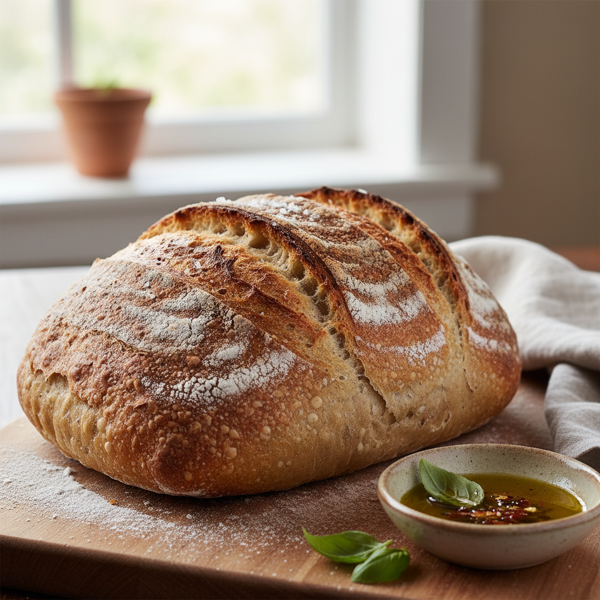
This Artisan Rustic Italian Bread is a staple in my kitchen, ideal for those who adore the crusty, flavorful loaves found in traditional Italian bakeries. Crafted using a bread machine for the dough and finished in the oven, this bread showcases a beautiful rustic appearance with a crispy crust and a soft, airy interior that’s perfect for sandwiches or served alongside your favorite pasta dishes. Experience the wonderful aroma of freshly baked bread wafting through your home as it rises to perfection. The prep time includes not just the mixing and kneading but also the rising time, ensuring you have a well-developed flavor and texture. Give it a try, and you’ll find yourself baking this warm, comforting loaf time and time again.
N/A
Servings
N/A
Calories
8
Ingredients
Ingredients
warm water
1 cup (heated to about 110°F (43°C))
olive oil
2 tablespoons (measured)
bread flour or all-purpose flour
3 cups (measured)
granulated sugar
2 teaspoons (measured)
salt
3/4 teaspoon (measured)
active dry yeast
2 teaspoons (measured)
cornmeal
for baking sheet (sprinkled)
egg white
1 (slightly beaten)
Instructions
1
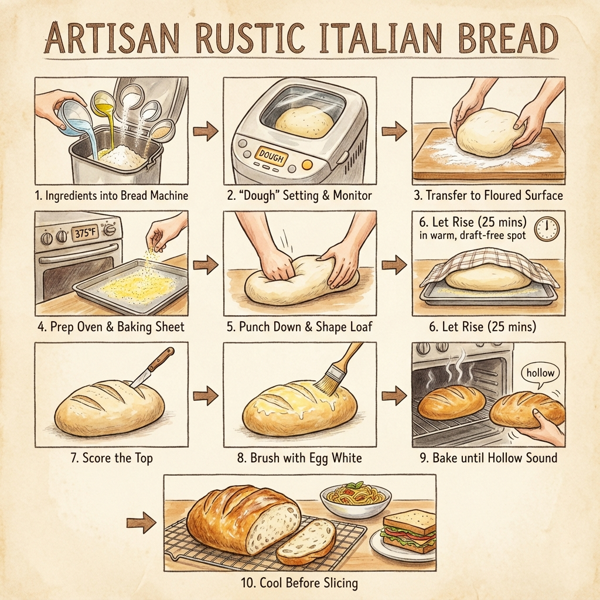
In your bread machine, add the warm water, olive oil, bread flour (or all-purpose flour), sugar, salt, and active dry yeast according to the machine's instructions.
2
Select the 'Dough' setting on your bread machine. Monitor the dough as it mixes, opening the lid occasionally to check its consistency. The dough should form a smooth, soft, slightly sticky ball. If it appears too dry or wet, adjust by adding a small amount of water or flour as needed.
3
Once the machine signals that the dough cycle is complete, gently remove the dough from the pan and transfer it to a lightly floured surface.
4
Preheat your oven to 375°F (190°C). Meanwhile, sprinkle cornmeal onto a baking sheet to prevent sticking.
5
Punch down the dough to release any trapped air and shape it into a long or oval loaf, depending on your preference.
6
Place the shaped loaf onto the prepared baking sheet, cover it lightly with a clean kitchen towel or plastic wrap, and let it rise in a draft-free spot for about 25 minutes or until it has doubled in size.
7
Once the loaf has risen, uncover it and use a sharp knife or razor blade to make a few shallow slashes on the top. This allows for better expansion during baking.
8
Brush the entire surface of the loaf with the slightly beaten egg white to enhance browning and create a beautiful finish.
9
Bake in the preheated oven for 25 to 35 minutes. The bread is done when it sounds hollow when tapped on the bottom.
10
Remove the bread from the oven and allow it to cool on a wire rack before slicing.
Nutrition Information
Frequently Asked Questions
Frequently Asked Questions
What is Artisan Rustic Italian Bread?
Artisan Rustic Italian Bread is a crusty, flavorful loaf with a soft, airy interior, typically found in traditional Italian bakeries.
What is the primary method for making this bread dough?
The dough is primarily prepared using a bread machine on the dough setting and finished in the oven.
What temperature should the warm water be for the yeast?
The water should be heated to approximately 110°F (43°C).
Can I use all-purpose flour for this recipe?
Yes, you can use either bread flour or all-purpose flour.
What type of yeast is required?
This recipe requires active dry yeast.
Which bread machine setting should I use?
You should select the 'Dough' setting on your bread machine.
How do I know if the dough consistency is correct during mixing?
The dough should form a smooth, soft, and slightly sticky ball.
What should I do if the dough appears too dry in the machine?
If the dough is too dry, adjust by adding a small amount of water.
What should I do if the dough appears too wet?
If the dough is too wet, adjust by adding a small amount of flour.
How do I prevent the bread from sticking to the baking sheet?
Sprinkle cornmeal onto the baking sheet before placing the shaped loaf on it.
What temperature should the oven be set to?
Preheat your oven to 375°F (190°C).
How should the dough be shaped?
The dough can be shaped into either a long or oval loaf depending on your preference.
Why do I need to punch down the dough?
Punching down the dough releases trapped air before you shape the final loaf.
How long is the second rise period?
The shaped loaf should rise for about 25 minutes.
Where is the best place for the dough to rise?
Let the dough rise in a draft-free spot.
How do I know when the second rise is finished?
The rise is complete when the loaf has doubled in size.
Why are slashes made on the top of the bread?
Shallow slashes allow for better expansion of the dough during the baking process.
What tool is best for slashing the dough?
Use a sharp knife or a razor blade to make the slashes.
What is the purpose of brushing the loaf with egg white?
Brushing with egg white enhances browning and creates a beautiful, professional finish.
How long does the bread need to bake?
Bake the bread in the oven for 25 to 35 minutes.
How can I tell if the bread is fully cooked?
The bread is done when it sounds hollow when tapped on the bottom.
Why should the bread cool on a wire rack?
Cooling on a wire rack allows air to circulate, preventing the bottom from becoming soggy.
How many ingredients are in this recipe?
The recipe consists of 8 ingredients: water, olive oil, flour, sugar, salt, yeast, cornmeal, and egg white.
Is this bread suitable for sandwiches?
Yes, its soft and airy interior makes it perfect for sandwiches.
Does the prep time include the rising time?
Yes, the preparation time includes mixing, kneading, and the necessary rising stages.
What role does olive oil play in the dough?
Olive oil contributes to the flavor and the tender texture of the bread's interior.
Can this bread be served with pasta?
Yes, it is an ideal side for your favorite pasta dishes.
How much sugar is used in the recipe?
The recipe calls for 2 teaspoons of granulated sugar.
What is the texture of the crust?
The bread has a crispy, rustic crust.
Is the egg white beaten before application?
Yes, the egg white should be slightly beaten before being brushed onto the loaf.