Artisan Panera-Style Sourdough Bread
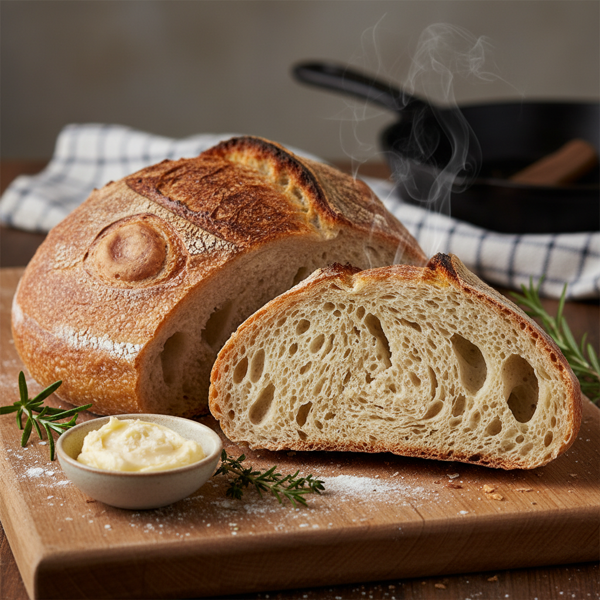
Experience the delightful tang of homemade sourdough bread with this Artisan Panera-Style Sourdough Bread recipe. Crafted with a slow fermentation process that incorporates a homemade sourdough starter and paired with wholesome flours, this bread boasts a crisp crust and an airy, chewy interior. Perfect for sandwiches, toasting, or simply enjoying with butter, this recipe yields two stunning loaves that are sure to impress family and friends. Follow this detailed guide to create an authentic artisanal loaf in your own kitchen. Ideal for sharing at gatherings or as a special homemade gift for loved ones.
N/A
Servings
N/A
Calories
17
Ingredients
Ingredients
Warm water
3/4 cup (Warm to 95-105°F)
Fresh yeast
3/4 teaspoon (Dissolved in warm water)
Sourdough starter
1 1/2 cups (At room temperature)
All-purpose flour
1 1/2 cups (For dough)
Whole wheat flour
1 1/4 cups (For dough)
Salt
1 tablespoon (For dough)
Warm water
1 cup (Warm to 95-105°F)
Fresh yeast
1/2 teaspoon (Dissolved in warm water)
Buttermilk
1 cup (For sourdough starter)
Plain yogurt
1 1/2 cups (For sourdough starter)
All-purpose flour
2 cups (For sourdough starter)
Semolina flour
1/3 cup (For sourdough starter)
Unwashed medium red grapes
1 cup (For sourdough starter)
All-purpose flour
2 cups (For sourdough starter)
Semolina flour
1 cup (For sourdough starter)
Fresh yeast
1/2 teaspoon (Dissolved in warm water)
Warm water
2 cups (Warm to 95-105°F)
Instructions
1
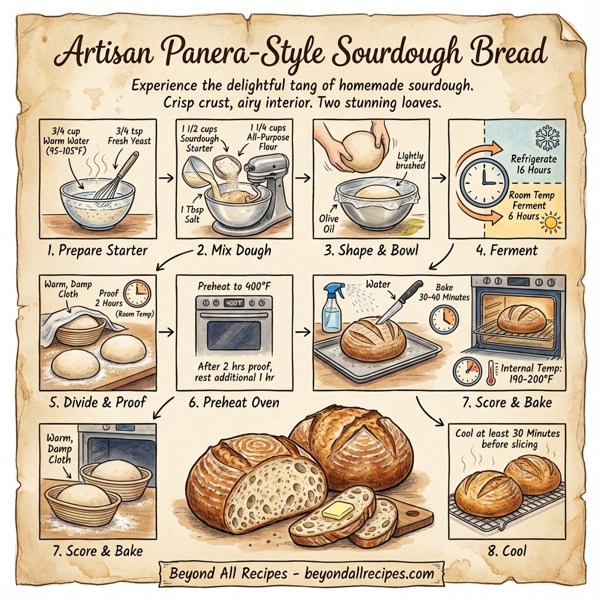
Begin by preparing the sourdough starter. In a medium mixing bowl, combine 3/4 cup warm water (95-105°F) with 3/4 teaspoon fresh yeast. Stir until the yeast is dissolved.
2
Add 1 1/2 cups sourdough starter, 1 1/2 cups all-purpose flour, 1 1/4 cups whole wheat flour, and 1 tablespoon salt to the mixture. If your starter is refrigerated, allow it to come to room temperature first.
3
Using a stand mixer fitted with a dough hook, mix the ingredients on low speed until a smooth dough forms. Remove the dough from the bowl, roll it into a ball, and place it in a medium mixing bowl lightly brushed with olive oil.
4
Cover the bowl with plastic wrap and refrigerate the dough for 16 hours. After refrigerating, remove the bowl and let the dough ferment at room temperature for 6 hours.
5
Once the fermentation is complete, divide the dough into two equal pieces. Shape each piece into a loaf and place them on the counter or into proofing baskets. Cover with a warm, damp cloth and let them proof at room temperature for 2 hours.
6
Preheat your oven to 400°F. After the first 2 hours of proofing, continue to let the loaves rest for an additional hour.
7
Score the tops of the loaves with a sharp knife, spray them lightly with water, and bake in the preheated oven for 30 to 40 minutes, or until the loaves are a deep golden brown and register an internal temperature of 190-200°F.
8
Remove the loaves from the oven and place them on a cooling rack. Allow them to cool for at least 30 minutes before slicing. If baked in loaf pans, be sure to remove them from the pans before cooling.
9
For a more intense sour flavor, consider extending refrigerating time by an additional 6 to 8 hours.
Nutrition Information
Frequently Asked Questions
Frequently Asked Questions
What defines Artisan Panera-Style Sourdough Bread?
This bread is characterized by a long, slow fermentation process, a crisp crust, and an airy, chewy interior with a distinctive tangy flavor similar to the sourdough served at Panera Bread.
What is the total fermentation time for this recipe?
The recipe requires a 16-hour refrigeration period followed by a 6-hour room temperature fermentation and a 3-hour proofing stage.
What temperature should the water be for the yeast?
The water should be warmed to between 95-105 degrees Fahrenheit to properly activate the yeast without killing it.
Can I use cold sourdough starter directly from the fridge?
No, if your sourdough starter is refrigerated, you should allow it to come to room temperature before mixing it into the dough.
What types of flour are used in the main dough?
The main dough uses a combination of 1 1/2 cups of all-purpose flour and 1 1/4 cups of whole wheat flour.
Why is the dough refrigerated for 16 hours?
Refrigeration slows down the yeast activity, allowing the sourdough flavors to develop more deeply and improving the final texture of the crumb.
How many loaves does this recipe produce?
This recipe yields two artisanal-sized sourdough loaves.
What is the purpose of scoring the bread?
Scoring or cutting the top of the dough with a sharp knife allows the bread to expand predictably in the oven and creates a professional artisan look.
At what temperature should the oven be preheated?
The oven should be preheated to 400 degrees Fahrenheit before baking the loaves.
How long does the bread need to bake?
Bake the loaves for 30 to 40 minutes until they reach a deep golden brown color.
What internal temperature indicates the bread is done?
The bread is fully baked when it reaches an internal temperature of 190 to 200 degrees Fahrenheit.
Why is water sprayed on the loaves before baking?
Spraying the loaves with water creates steam in the oven, which helps the crust stay flexible longer for maximum expansion and results in a crispier finish.
How long should I wait before slicing the bread?
It is recommended to let the loaves cool on a rack for at least 30 minutes to allow the internal structure to set.
Can I make the flavor more sour?
Yes, you can extend the refrigeration time by an additional 6 to 8 hours to achieve a more intense sour flavor.
What is the role of grapes in the sourdough starter instructions?
Unwashed medium red grapes are used in some starter methods because their skins carry natural wild yeast which helps kickstart the fermentation process.
Why are buttermilk and yogurt included in the starter ingredients?
These dairy products introduce specific lactic acid bacteria which help create the signature 'tang' and complex flavor profile found in Panera-style bread.
What is semolina flour used for in this recipe?
Semolina flour is used in the sourdough starter preparation to provide a unique texture and flavor foundation.
Do I need a stand mixer for this recipe?
While a stand mixer with a dough hook is recommended for ease in achieving a smooth dough, it can also be mixed by hand.
Should I use a specific oil for the mixing bowl?
The recipe suggests using olive oil to lightly brush the bowl before placing the dough inside for fermentation.
Is fresh yeast necessary or can I use dry yeast?
The recipe specifies fresh yeast; if substituting with active dry yeast, you generally use about 1/3 the amount by weight of fresh yeast.
What should I cover the dough with while proofing?
Cover the dough with a warm, damp cloth to prevent the surface from drying out and forming a skin during the final proof.
Can I bake this bread in a loaf pan?
Yes, you can use loaf pans. Just ensure you remove the bread from the pans before cooling to keep the crust from getting soggy.
What makes the crust 'artisan' style?
The combination of high-heat baking, water misting, and scoring creates the thick, crunchy, 'artisan' crust typical of specialty bakeries.
How do I shape the loaves?
After fermentation, divide the dough equally and gently roll or fold into your desired loaf shape, being careful not to deflate all the air bubbles.
What is a proofing basket?
Also known as a banneton, a proofing basket supports the dough's shape and can leave a decorative spiral pattern on the crust.
Is this bread suitable for sandwiches?
Absolutely, its sturdy crust and chewy interior make it ideal for hearty sandwiches, paninis, or dipping in soup.
How much salt is in the recipe?
The recipe calls for 1 tablespoon of salt, which regulates yeast activity and enhances the overall flavor of the flour.
Can I use this recipe for gifting?
Yes, because the recipe yields two loaves, it is perfect for keeping one and sharing the other as a homemade artisanal gift.
What is the texture of the bread's interior?
The interior is airy and chewy, thanks to the high hydration and the long fermentation process.
Does the sourdough starter need to be fed before use?
For best results, your sourdough starter should be active and bubbly, which usually means it was fed within the last 4-12 hours before mixing the dough.