Artisan No-Knead Sourdough Bread
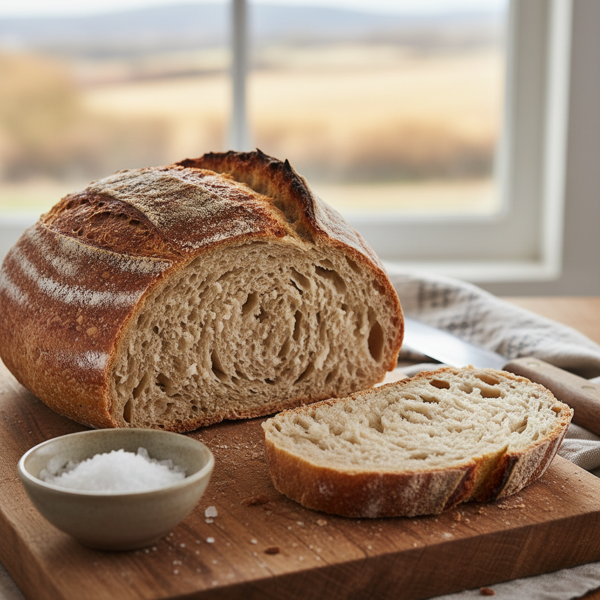
Experience the joy of baking with this easy-to-follow recipe for Artisan No-Knead Sourdough Bread. This recipe yields a beautifully crusty, rustic loaf that showcases the deep, tangy flavor of sourdough without the need for intensive kneading. Inspired by the legendary techniques of Jim Lahey and further refined, this method utilizes a long fermentation process that develops incredible taste and texture. Best enjoyed fresh from the oven, this bread is perfect for pairing with soups, stews, or simply slathered with butter. Please note that while it has a fantastic crust, this bread is not ideal for sandwiches. With the use of parchment paper or proofing baskets, shaping the dough becomes effortless. Plan ahead: proof your sourdough starter in the morning, prepare the sponge in the evening, and bake the next day for best results.
N/A
Servings
N/A
Calories
6
Ingredients
Ingredients
whole wheat flour
1 cup (5 oz)
white bread flour
2 1/2 cups (11 oz)
salt
1 1/2 teaspoons
purified water
1 1/2 cups
sourdough starter
1/4 cup (proofed)
wheat bran
as needed (for dusting)
Instructions
1
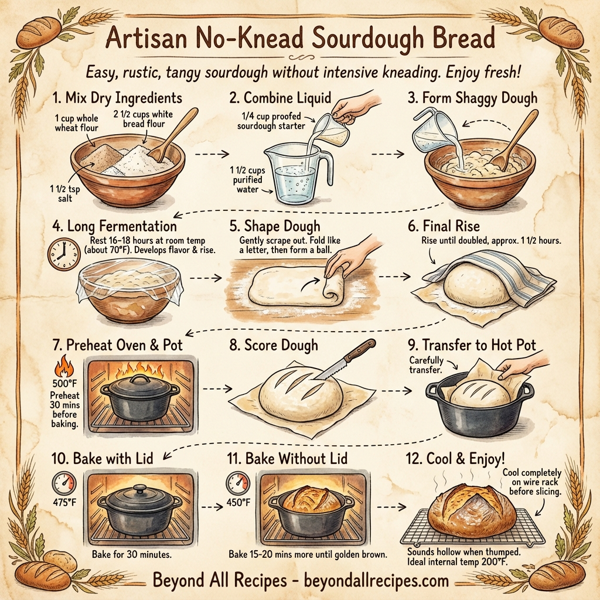
In a large non-metallic bowl, combine 1 cup of whole wheat flour, 2 1/2 cups of white bread flour, and 1 1/2 teaspoons of salt.
2
In a measuring cup, mix together 1 1/2 cups of purified water and 1/4 cup of proofed sourdough starter.
3
Pour the liquid mixture into the dry ingredients, stirring until the flour is fully incorporated; the dough should appear firm and shaggy.
4
Cover the bowl with plastic wrap and let it rest at room temperature (about 70°F) for 16-18 hours, allowing the dough to develop flavor and rise.
5
After resting, gently scrape the dough out onto a floured surface. Flatten the dough into a rectangle and fold in the ends inward like a letter, then fold the sides to form a ball.
6
Place the dough seam-side down on parchment paper or a floured bowl, cover loosely with a towel, and let it rise until doubled in size, approximately 1 1/2 hours.
7
If using a proofing basket, spray it with non-stick oil and dust it with flour or wheat bran before placing the dough inside.
8
Thirty minutes before baking, preheat your oven to 500°F with your cast-iron Dutch oven or La Cloche inside.
9
Once the dough has risen adequately, use a serrated knife to make slits in the top.
10
Carefully lift the parchment paper with the dough and transfer it to the hot Dutch oven or La Cloche. Shake gently to distribute evenly.
11
Cover with the lid and bake at 475°F for 30 minutes.
12
After 30 minutes, remove the lid, reduce the heat to 450°F, and bake for an additional 15-20 minutes or until the crust is golden brown, ensuring the interior temperature reaches 200°F and sounds hollow when thumped.
13
Once baked, remove the bread from the pan and allow it to cool completely on a wire rack before slicing.
Nutrition Information
Frequently Asked Questions
Frequently Asked Questions
What is Artisan No-Knead Sourdough Bread?
It is a rustic, crusty loaf with a deep, tangy sourdough flavor that requires a long fermentation process instead of intensive kneading.
Does this sourdough recipe require kneading?
No, this recipe uses a no-knead method inspired by Jim Lahey, relying on time and hydration to develop the gluten structure.
What are the main ingredients for this bread?
The main ingredients are whole wheat flour, white bread flour, salt, purified water, and a proofed sourdough starter.
Can I use this bread for sandwiches?
While the bread has a fantastic crust and flavor, it is not considered ideal for sandwiches due to its rustic nature.
What are the best food pairings for this bread?
This bread is perfect for pairing with soups and stews, or it can be enjoyed simply with a layer of butter.
What is the recommended preparation timeline?
Proof your starter in the morning, prepare the sponge in the evening, and bake the bread the following day.
How much whole wheat flour is needed?
You will need 1 cup or approximately 5 ounces of whole wheat flour.
How much white bread flour is used?
The recipe calls for 2 and 1/2 cups or 11 ounces of white bread flour.
Why is purified water recommended?
Purified water is used to ensure there are no chemicals like chlorine that might inhibit the growth of the sourdough starter's natural yeast.
How much sourdough starter should I use?
The recipe requires 1/4 cup of proofed sourdough starter.
What kind of bowl should I use for mixing?
A large non-metallic bowl is recommended for mixing the dough to avoid any reaction with the acidic sourdough.
What should the dough look like after the initial mixing?
After stirring the liquid into the dry ingredients, the dough should appear firm and shaggy.
How long does the dough need to rest during the first rise?
The dough should rest at room temperature for 16 to 18 hours.
What is the ideal room temperature for fermentation?
A temperature of approximately 70 degrees Fahrenheit is ideal for the 16-18 hour rest period.
How do I shape the dough after the long rest?
Flatten the dough into a rectangle, fold the ends inward like a letter, and then fold the sides to form a ball.
How long is the second rise after shaping?
The dough should rise until it has doubled in size, which typically takes about 1 and 1/2 hours.
How do I prepare a proofing basket for this dough?
Spray the basket with non-stick oil and dust it with flour or wheat bran before placing the dough inside.
What temperature should the oven be preheated to?
Preheat your oven to 500 degrees Fahrenheit with your baking vessel inside.
What type of baking vessel is best for this bread?
A cast-iron Dutch oven or a La Cloche is recommended for the best crust development.
Should I score the dough before baking?
Yes, use a serrated knife to make slits in the top of the dough once it has finished its final rise.
How do I transfer the dough to the hot Dutch oven?
Carefully lift the parchment paper with the dough and lower it into the preheated vessel.
What is the initial baking temperature and time?
Bake at 475 degrees Fahrenheit for 30 minutes with the lid on.
What happens after the first 30 minutes of baking?
Remove the lid and reduce the oven temperature to 450 degrees Fahrenheit.
How long is the final bake without the lid?
Bake for an additional 15 to 20 minutes until the crust is golden brown.
What should the internal temperature of the finished bread be?
The interior temperature of the loaf should reach 200 degrees Fahrenheit.
How can I check if the bread is done without a thermometer?
The bread should sound hollow when thumped on the bottom.
Can I slice the bread as soon as it comes out of the oven?
No, you should allow the bread to cool completely on a wire rack before slicing to ensure the interior set correctly.
What is the purpose of wheat bran in this recipe?
Wheat bran is used as needed for dusting the proofing basket or surface to prevent sticking.
How many ingredients are in this recipe?
There are 6 ingredients: whole wheat flour, white bread flour, salt, purified water, sourdough starter, and wheat bran.
Is parchment paper necessary?
Parchment paper makes shaping and transferring the dough effortless, though a proofed basket can be used instead.