Artisan No-Knead Crusty Bread
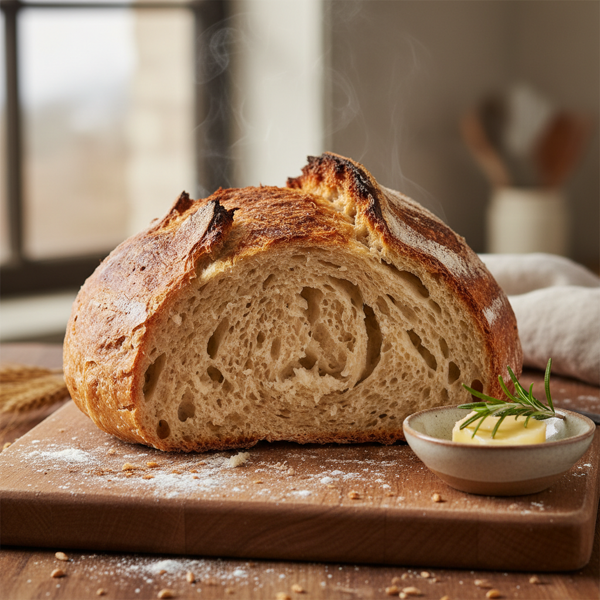
Inspired by the acclaimed Sullivan Street Bakery, this Artisan No-Knead Crusty Bread is a game changer for home bakers. Perfectly simple, this bread requires no kneading, making it accessible for anyone—from kids to seasoned cooks! With its chewy crust and soft, airy interior, this loaf offers an exceptional flavor profile with a hint of saltiness. It's the ideal companion for soups, cheeses, or simply enjoyed on its own with butter. Best of all, it only requires a little bit of patience and a loving touch for a beautifully crafted artisan loaf.
N/A
Servings
N/A
Calories
4
Ingredients
Ingredients
All-purpose flour or bread flour
3 cups (more for dusting)
Instant yeast
1/4 teaspoon
Salt
1 1/4 teaspoons
Cornmeal or wheat bran
as needed (for dusting)
Instructions
1
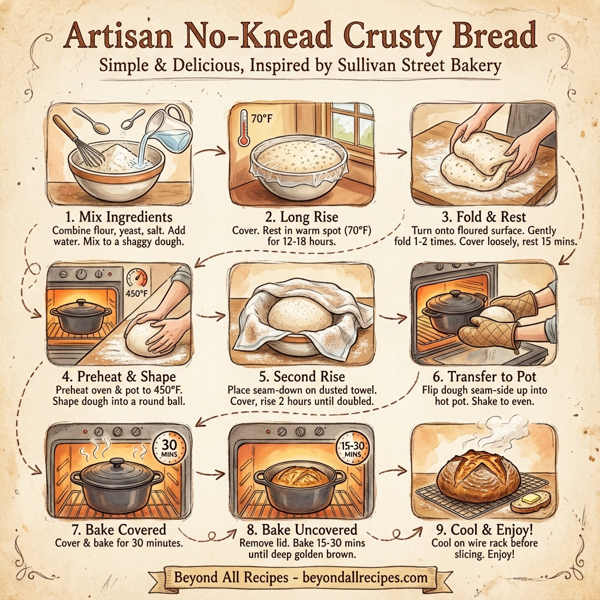
In a large mixing bowl, combine the flour, instant yeast, and salt. Gradually pour in 1 5/8 cups of water, mixing until a shaggy, sticky dough forms.
2
Cover the bowl tightly with plastic wrap and allow the dough to rest in a warm environment (about 70°F) for at least 12 hours, preferably around 18 hours.
3
After the resting period, the surface of the dough should be dotted with bubbles. Lightly flour a clean work surface and carefully turn the dough out onto it. Sprinkle a little flour on top, folding the dough over itself gently 1-2 times.
4
Cover the dough loosely with plastic wrap and let it rest for an additional 15 minutes.
5
While the dough rests, prepare for baking by preheating your oven to 450°F. Place a heavy covered pot (cast iron, enamel, Pyrex, or ceramic) in the oven to preheat as well.
6
Once the dough has rested, use just enough flour to prevent sticking and gently shape it into a round ball. Generously dust a clean cotton towel (preferably not terry cloth) with flour, cornmeal, or wheat bran and place the dough seam-side down on the towel.
7
Dust the top of the dough with additional flour, bran, or cornmeal. Cover it with another cotton towel and let it rise for about 2 hours, or until it has doubled in size and does not spring back when gently poked.
8
When the dough has completed its second rise, carefully take the hot pot out of the oven. Slide your hand under the towel and flip the dough seam-side up into the pot. If the dough is unevenly spread, give the pot a slight shake to even it out.
9
Cover the pot with the lid and place it back in the oven. Bake for 30 minutes with the lid on, then remove the lid and continue baking for an additional 15 to 30 minutes, until the bread is a deep golden brown.
10
Once baked, remove the pot from the oven and carefully transfer the loaf onto a wire rack to cool before slicing.
Nutrition Information
Frequently Asked Questions
Frequently Asked Questions
What is Artisan No-Knead Crusty Bread?
It is a simple, Sullivan Street Bakery-inspired bread that requires no kneading, featuring a chewy crust and soft, airy interior.
How much flour is needed for this recipe?
The recipe requires 3 cups of all-purpose flour or bread flour.
Is kneading required for this dough?
No, this recipe is specifically designed to be no-knead, making it accessible for bakers of all skill levels.
How much yeast should I use?
You will need 1/4 teaspoon of instant yeast.
What is the recommended initial resting time for the dough?
The dough should rest for at least 12 hours, though 18 hours is preferred.
What is the ideal temperature for the dough's first rise?
The dough should rest in a warm environment of about 70 degrees Fahrenheit.
How much water is added to the dry ingredients?
Gradually pour in 1 5/8 cups of water until a shaggy, sticky dough forms.
What should the dough look like after the long resting period?
The surface of the dough should be dotted with bubbles.
How many times should I fold the dough during the first shaping?
You should gently fold the dough over itself 1 to 2 times.
How long should the dough rest after the initial folding?
The dough needs to rest for an additional 15 minutes after folding.
What temperature should the oven be preheated to?
The oven should be preheated to 450 degrees Fahrenheit.
What type of pot is best for baking this bread?
A heavy covered pot made of cast iron, enamel, Pyrex, or ceramic is ideal.
Should the pot be preheated in the oven?
Yes, place the covered pot in the oven while it is preheating so the pot is hot when the dough is added.
What should I use to dust the cotton towel for the second rise?
You can use flour, cornmeal, or wheat bran to generously dust the towel.
Can I use a terry cloth towel for rising the dough?
It is recommended to use a clean cotton towel that is not terry cloth to prevent sticking.
How long is the second rise?
The second rise lasts about 2 hours, or until the dough has doubled in size.
How do I know the dough is finished with its second rise?
The dough is ready when it has doubled in size and does not spring back when gently poked.
How do I transfer the dough into the hot pot?
Slide your hand under the towel and flip the dough seam-side up into the preheated pot.
What should I do if the dough is unevenly spread in the pot?
Give the pot a slight shake to even out the dough.
How long does the bread bake with the lid on?
Bake the bread for 30 minutes with the lid on.
How long does the bread bake with the lid off?
Remove the lid and bake for an additional 15 to 30 minutes.
What color should the finished crust be?
The bread should be baked until it is a deep golden brown.
Where should the loaf cool after baking?
Transfer the loaf onto a wire rack to cool before slicing.
How much salt is included in the recipe?
The recipe calls for 1 1/4 teaspoons of salt.
What is the flavor profile of this bread?
The bread offers an exceptional flavor profile with a hint of saltiness.
What can I serve with this bread?
It is ideal for soups, cheeses, or enjoyed on its own with butter.
How many main ingredients are in this recipe?
There are 4 main ingredients: flour, yeast, salt, and water (plus dusting agents).
Can beginners make this bread?
Yes, it is designed to be accessible for everyone, from kids to seasoned cooks.
What are common tags for this recipe?
Common tags include no-knead bread, artisan bread, crusty loaf, and simple baking.
What is the key to success with this artisan loaf?
A little bit of patience and a loving touch are all that is needed for this beautifully crafted bread.