Artisan No-Knead Ciabatta Bread
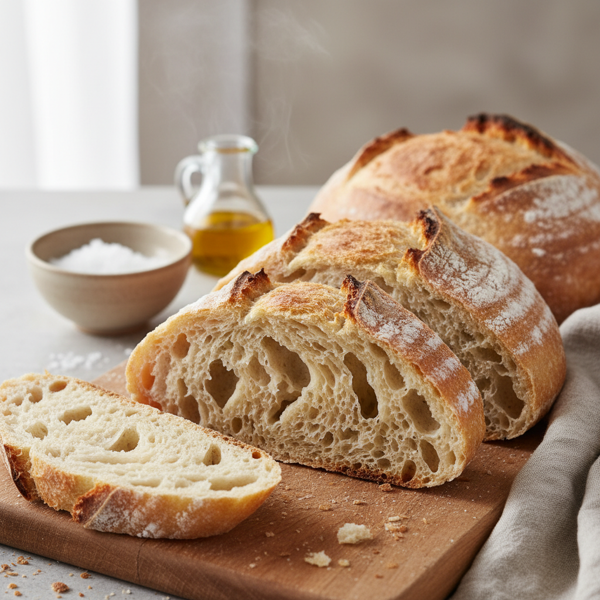
Experience the rustic charm of artisan baking with this no-knead ciabatta bread recipe. Made with simple ingredients, this crispy, golden-brown loaf will fill your kitchen with a mouthwatering aroma. What's more, the crackling crust will enchant you as it cools after emerging from the oven. Perfectly airy and with a delightful chewy texture, this ciabatta is ideal for sandwiches, toasting, or simply enjoying with a drizzle of olive oil. If you prefer whole wheat, you can add a half-cup without compromising the loaf's lightness. Once you master the art of no-knead bread, it will quickly become a staple in your home. Enjoy this bread warm and freshly baked, and experience the joy it brings to your table.
N/A
Servings
N/A
Calories
5
Ingredients
Ingredients
Water
2 cups (Room temperature)
Instant Yeast
1/4 teaspoon (Dry)
Salt
1 1/2 teaspoons (Fine sea salt)
Unbleached All-Purpose Flour
3 1/2 cups (Sifted)
Whole Wheat Flour
1/2 cup (Sifted (optional))
Instructions
1
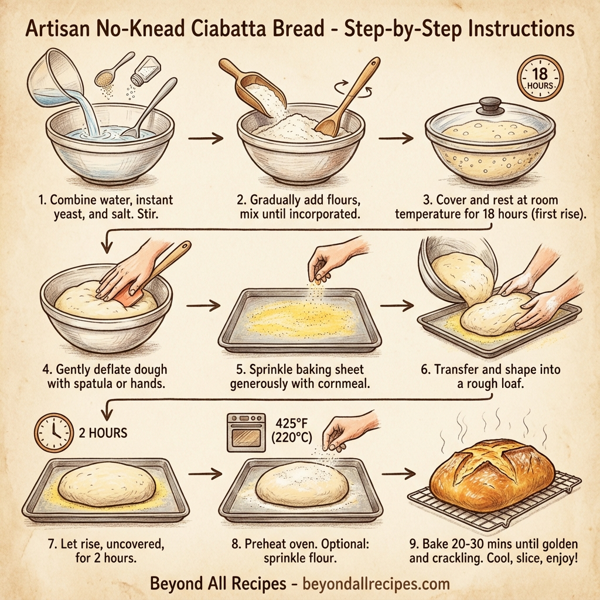
In a large mixing bowl, combine the water, instant yeast, and salt. Stir until dissolved.
2
Gradually add the all-purpose flour and whole wheat flour, one cup at a time, mixing with a wooden spoon until the flour is fully incorporated and no dry bits remain.
3
Cover the bowl tightly with plastic wrap or a kitchen towel. Allow the dough to rest at room temperature for 18 hours or overnight until it has doubled in size and bubbles are visible on the surface.
4
After the resting period, gently deflate the dough using a rubber spatula or your hands. Lightly coat your hands with flour to prevent sticking.
5
Prepare a baking sheet by sprinkling a generous amount of cornmeal evenly across the surface.
6
Transfer the wet dough onto the prepared baking sheet, shaping it into a rough oval or rectangle with floured hands. It’s okay if it looks rustic and messy.
7
Let the shaped dough rise, uncovered, for 2 hours. Keep in mind that it might not rise significantly.
8
Preheat your oven to 425°F (220°C) approximately 1 hour before the second rise is complete.
9
Optional: Sprinkle a little flour on top of the dough just before baking for an artisan appearance.
10
Bake the ciabatta for 20-30 minutes until the crust is deeply golden and crackling. Let it cool slightly before slicing. Enjoy your homemade ciabatta!
Nutrition Information
Frequently Asked Questions
Frequently Asked Questions
What is Artisan No-Knead Ciabatta Bread?
It is a rustic artisan bread with a crispy, golden-brown crust and a perfectly airy, chewy interior texture.
Is kneading required for this recipe?
No, this is a no-knead recipe that uses a long fermentation period to develop the dough's structure.
How long does the dough need to rest initially?
The dough needs to rest at room temperature for 18 hours or overnight until it doubles in size.
What type of yeast is used in this recipe?
This recipe requires 1/4 teaspoon of instant yeast.
Can I add whole wheat flour to this ciabatta?
Yes, you can add half a cup of whole wheat flour without losing the loaf's signature lightness.
What temperature should the water be?
The recipe calls for 2 cups of room temperature water.
What kind of salt is recommended?
Fine sea salt is recommended for this bread recipe.
How long is the second rise?
After shaping, the dough should rise uncovered for approximately 2 hours.
What is the required oven temperature?
The oven should be preheated to 425 degrees Fahrenheit (220 degrees Celsius).
How long does the ciabatta bake?
The bread typically bakes for 20 to 30 minutes until the crust is deeply golden.
How do I know when the bread is finished baking?
The bread is done when the crust is deeply golden and you can hear it crackling.
Do I need to cover the bowl during the long rest?
Yes, cover the bowl tightly with plastic wrap or a kitchen towel during the 18-hour resting period.
How do I prevent the dough from sticking to the baking sheet?
Sprinkle a generous amount of cornmeal evenly across the surface of the baking sheet before placing the dough.
What shape should I make the loaf?
You should shape the dough into a rough oval or rectangle; a rustic appearance is expected.
Should the dough rise significantly during the second rise?
No, the dough might not show a significant increase in size during the final 2-hour rise.
How should I mix the flour?
Gradually add the flour one cup at a time, mixing with a wooden spoon until no dry bits remain.
What is the texture of this bread?
The bread features a crackling crust and a delightfully chewy, airy texture.
Is this bread suitable for sandwiches?
Yes, its texture makes it ideal for sandwiches, toasting, or dipping in olive oil.
What can I serve with this ciabatta?
It is delicious when enjoyed with a drizzle of olive oil or served alongside a meal.
When should I preheat my oven?
Preheat the oven about 1 hour before the second rise is finished.
How many ingredients are required for this recipe?
There are 5 ingredients: water, instant yeast, salt, all-purpose flour, and whole wheat flour.
What should I do if the dough is too sticky for my hands?
Lightly coat your hands with flour to prevent sticking while deflating or shaping the dough.
Can I add flour to the top of the loaf before baking?
Yes, sprinkling a little flour on top before baking can provide a more artisan appearance.
Should I slice the bread right out of the oven?
No, you should let the ciabatta cool slightly before slicing to maintain its interior structure.
What is the purpose of the 18-hour rest?
The long rest allows the yeast to ferment slowly, creating flavor and bubbles on the dough's surface.
Does the crust change as it cools?
Yes, the crust will make an enchanting crackling sound as it cools down.
Is this recipe suitable for beginner bakers?
Yes, this no-knead method is very beginner-friendly and often becomes a household staple.
What should the dough look like after the first resting period?
It should have doubled in size and have visible bubbles across the surface.
What tools are needed to mix the dough?
A large mixing bowl and a wooden spoon are all you need to incorporate the ingredients.
Can I use unbleached all-purpose flour?
Yes, the recipe uses 3 1/2 cups of sifted unbleached all-purpose flour.