Artisan New York-Style Bagels
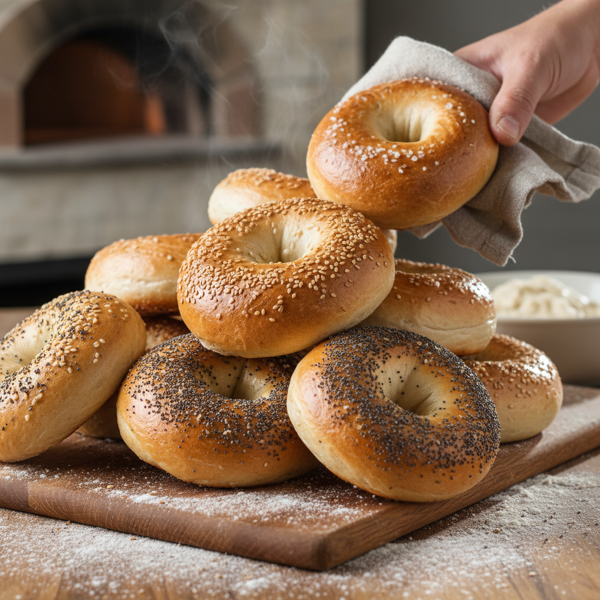
Experience the delightful crunch and chewy texture of homemade Artisan New York-Style Bagels. Nothing compares to the smell of fresh bagels wafting through your kitchen! This recipe yields bagels that are not only delicious but also customizable to suit your taste. From classic varieties topped with poppy seeds to sweet cinnamon raisin options, the possibilities are endless. Perfect for breakfast with a generous layer of cream cheese or as a delightful sandwich base. Prepare for smiles all around, as these bagels tend to disappear quickly—consider doubling the batch!
12
Servings
N/A
Calories
12
Ingredients
Ingredients
water
1 1/2 cups (warm)
yeast
2 packages (active dry)
sugar
1 1/2 ounces (measured using a kitchen scale)
salt
1/2 ounce (measured using a kitchen scale)
bread flour
3 1/2 cups (plus more for kneading)
water for boiling
2 quarts (for boiling the bagels)
egg white
1 (beaten, for brushing)
cinnamon
to taste (optional)
raisins
to taste (optional, for cinnamon raisin bagels)
poppy seeds
to taste (optional)
dried onion or garlic
to taste (optional)
sesame seeds
to taste (optional)
Instructions
1
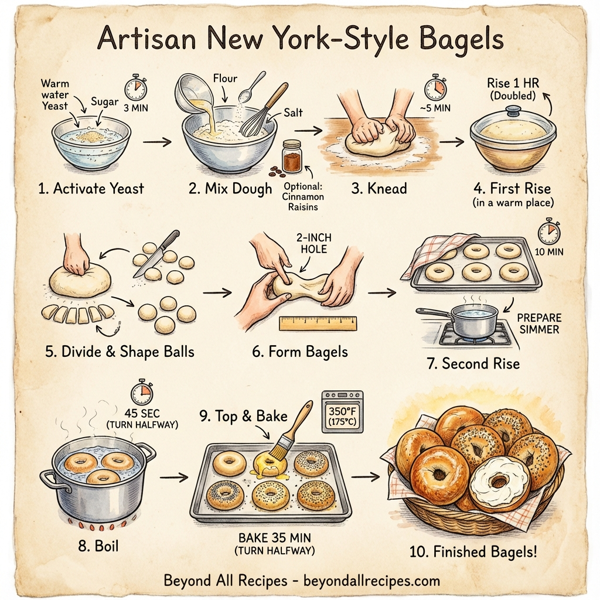
In a mixing bowl, combine warm water, yeast, and sugar. Let sit for 3 minutes until the mixture becomes frothy.
2
In a large bowl, whisk together 2 cups of bread flour and salt. Add the yeast mixture and stir until combined.
3
Gradually incorporate the remaining flour until the dough comes together. If making cinnamon raisin bagels, knead in cinnamon and raisins at this stage.
4
Transfer the dough to a lightly floured surface and knead for about 5 minutes until smooth and elastic. Add more flour as needed to keep it from sticking.
5
Place the kneaded dough in a greased bowl, cover with a damp cloth, and allow it to rise in a warm place until it doubles in size, about 1 hour.
6
Once risen, punch down the dough and divide it into 12 equal portions. Shape each piece into a ball and let them rest for about 4 minutes.
7
In the meantime, heat 2 quarts of water in a large pot until boiling. Once boiling, lower the heat to maintain a gently simmer.
8
To shape each bagel, use your thumb to create a hole in the center of the dough ball, then gently stretch it to about 2 inches wide to form the classic bagel shape.
9
Preheat your oven to 350°F (175°C).
10
Arrange the shaped bagels on a greased cookie sheet, cover with a towel, and let them rise for 10 minutes.
11
Carefully drop 2-3 bagels into the simmering water for 45 seconds, turning them halfway through to ensure even cooking. Remove and drain on a wire rack.
12
Place the boiled bagels on a greased baking sheet, brush the tops with beaten egg white, and sprinkle with your choice of optional toppings.
13
Bake in the preheated oven for 35 minutes, turning them once halfway for even browning. They are done when golden brown and have a shiny crust.
Nutrition Information
Frequently Asked Questions
Frequently Asked Questions
What type of bagels does this recipe make?
This recipe makes Artisan New York-Style Bagels, known for their crunchy exterior and chewy texture.
How many bagels does this recipe yield?
The recipe yields 12 equal-sized bagels.
How long should I let the yeast mixture sit?
Combine the warm water, yeast, and sugar and let it sit for about 3 minutes until it becomes frothy.
What kind of flour is recommended for this recipe?
Bread flour is recommended for this recipe to achieve the traditional bagel texture; you will need about 3 1/2 cups.
How much salt is required for the dough?
The recipe calls for 1/2 ounce of salt, measured using a kitchen scale for accuracy.
How long should the dough rise?
The dough should rise in a warm place for about 1 hour, or until it has doubled in size.
How long do I need to knead the dough?
Knead the dough for approximately 5 minutes on a lightly floured surface until it is smooth and elastic.
How do I shape the bagels?
Create a hole in the center of a dough ball using your thumb, then gently stretch the hole to about 2 inches wide.
What is the oven temperature for baking the bagels?
Preheat your oven to 350°F (175°C) before baking.
How long should the bagels be boiled?
Boil the bagels for 45 seconds in total, turning them halfway through the process.
What should I brush on top of the bagels before baking?
Brush the tops of the boiled bagels with one beaten egg white to achieve a shiny crust.
How long do the bagels bake in the oven?
The bagels should bake for 35 minutes, turning them once halfway through for even browning.
Can I make cinnamon raisin bagels with this recipe?
Yes, you can knead in cinnamon and raisins to taste during the stage where the dough comes together.
What kind of yeast should I use?
This recipe uses 2 packages of active dry yeast.
What toppings can I add to my bagels?
Optional toppings include poppy seeds, sesame seeds, dried onion, or dried garlic.
How much water is needed for the dough and for boiling?
You need 1 1/2 cups of warm water for the dough and 2 quarts of water for boiling.
How long do the dough balls rest after being divided?
Let the shaped dough balls rest for about 4 minutes before forming the bagel shape.
Do I need to let the shaped bagels rise again before boiling?
Yes, once shaped, place them on a greased sheet, cover with a towel, and let them rise for 10 minutes.
How do I know when the bagels are finished baking?
They are done when they are golden brown and have a shiny crust.
Why is it important to use a kitchen scale for sugar and salt?
Using a scale to measure 1 1/2 ounces of sugar and 1/2 ounce of salt ensures professional, consistent results.
What should I do with the bagels immediately after boiling?
Remove them from the water and let them drain briefly on a wire rack before placing them on a baking sheet.
Is the water for boiling kept at a rolling boil?
Once the water reaches a boil, lower the heat to maintain a gentle simmer for cooking the bagels.
Should I grease the baking sheets?
Yes, use a greased cookie sheet or baking sheet to prevent the bagels from sticking.
What is the best way to serve these bagels?
They are perfect for breakfast with a layer of cream cheese or as a base for a sandwich.
Can I double this recipe?
Yes, the recipe suggests doubling the batch because they tend to disappear quickly.
What category does this recipe fall under?
This recipe is categorized under Yeast Breads.
Should the dough be sticky after kneading?
No, you should add more flour as needed during kneading to keep the dough from sticking.
How many bagels can I boil at once?
It is best to drop 2-3 bagels into the simmering water at a time to avoid overcrowding.
Does the recipe require any specific preparation for the yeast?
The yeast should be active dry and mixed with warm water and sugar until frothy.
When do I punch down the dough?
Punch down the dough after it has risen for 1 hour and doubled in size.