Artisan Italian Bread Baked in Oven
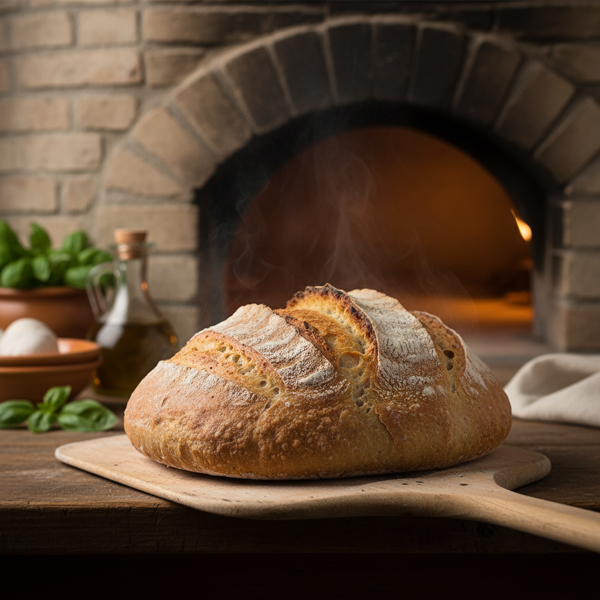
This Artisan Italian Bread recipe allows you to create a deliciously crusty loaf right in your home oven with the help of a bread machine. Perfect for those living in the U.S. using all bread flour or in Canada opting for a blend of bread and all-purpose flour, this versatile recipe can be shaped into two smaller loaves, one large loaf, or even 18-20 delightful rolls. With a golden-brown crust and airy, flavorful inside, this bread is perfect for sandwiches, toast, or served alongside your favorite pasta dishes. Prepare to enjoy the delightful aroma of fresh baked bread, capturing the spirit of Italian cooking right from your kitchen. Note: The prep time includes an estimated 1 hour of rising time, as bread machine dough cycles may vary.
N/A
Servings
N/A
Calories
10
Ingredients
Ingredients
Water
1 1/3 cups (Warm to 110 degrees F)
All-purpose white flour
2 cups (None)
White bread flour
2 cups (None)
Salt
1 teaspoon (Optionally up to 1-1/2 teaspoons for more flavor)
Light brown sugar
1 tablespoon (None)
Olive oil
2 teaspoons (None)
Dry yeast
2 1/2 teaspoons (Alternatively use 2-1/4 teaspoons from a small package)
Small egg
1 (None)
Water (for egg wash)
1 tablespoon (None)
Cornmeal
3-4 tablespoons (For sprinkling on the baking sheet)
Instructions
1
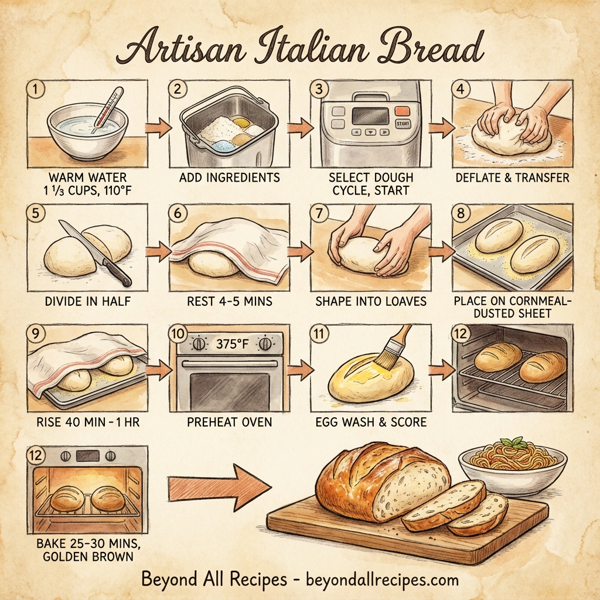
Start by warming 1 1/3 cups of water to 110 degrees F.
2
In your bread machine pan, add the warm water, followed by 2 cups of all-purpose flour, 2 cups of white bread flour, 1 tablespoon of olive oil, 1 teaspoon of salt (up to 1-1/2 teaspoons if desired), 1 tablespoon of light brown sugar, and 2-1/2 teaspoons of dry yeast (or 2-1/4 teaspoons if you prefer using a small package).
3
Select the dough cycle setting on your bread machine and press start.
4
Once the dough cycle has completed, carefully deflate the dough and transfer it to a lightly floured work surface.
5
Divide the dough into two equal halves for smaller loaves, or keep it whole for a large loaf.
6
Cover the dough loosely with a clean tea towel and let it rest for 4-5 minutes to relax the gluten.
7
Shape the dough into loaves by rolling it up and sealing the seams well.
8
Place the shaped loaves seam-side down on a baking sheet measuring 15 x 10 inches, generously sprinkled with cornmeal to prevent sticking.
9
Cover the loaves with a clean tea towel and allow them to rise in a warm place for approximately 40 minutes to 1 hour, keeping a careful eye on them to avoid over-rising which can affect the taste and texture.
10
While the loaves are rising, preheat your oven to 375 degrees F.
11
Once risen, whisk together 1 small egg and 1 tablespoon of water in a small bowl and gently brush the mixture over the surface of the loaves.
12
Using a sharp knife or razor blade, make a single long slit down the center of each loaf to allow for expansion during baking.
13
Bake the loaves in the preheated oven for 25-30 minutes, or until they are golden brown and sound hollow when tapped.
14
If the loaves stick to the pan upon removal, gently slide a spatula underneath to loosen them.
15
Transfer the baked loaves immediately to a wooden cutting board to cool before slicing.
Nutrition Information
Frequently Asked Questions
Frequently Asked Questions
What is Artisan Italian Bread Baked in the Oven?
It is a crusty, flavorful Italian-style loaf made by using a bread machine for the dough cycle and a conventional oven for the final bake.
What temperature should the water be for this recipe?
The water should be warmed to 110 degrees F to properly activate the yeast without killing it.
Can I use different types of flour?
Yes, the recipe uses a blend of 2 cups of all-purpose flour and 2 cups of white bread flour for the best texture.
How much yeast is required for this bread?
You should use 2-1/2 teaspoons of dry yeast, though 2-1/4 teaspoons (the size of a standard small package) will also work.
What is the purpose of the olive oil in the dough?
Olive oil adds flavor and helps create a more tender crumb while contributing to the authentic Italian profile.
Why is brown sugar included in the ingredients?
One tablespoon of light brown sugar provides food for the yeast and adds a very subtle depth of flavor to the dough.
Can I adjust the amount of salt?
The recipe calls for 1 teaspoon of salt, but you can increase it up to 1-1/2 teaspoons if you prefer a more savory loaf.
How many loaves does this recipe make?
This recipe makes two equal-sized smaller loaves or one very large loaf.
Can I use this dough to make rolls?
Yes, this versatile dough can be divided to create approximately 18 to 20 individual rolls.
What should I do after the bread machine dough cycle finishes?
Carefully deflate the dough and transfer it to a lightly floured work surface for shaping.
Why does the dough need to rest for 4-5 minutes after dividing?
Resting the dough allows the gluten to relax, which makes it much easier to shape without it springing back.
What prevents the bread from sticking to the baking sheet?
Sprinkling the baking sheet generously with cornmeal prevents sticking and adds a traditional artisan texture to the bottom crust.
How long should the loaves rise before baking?
The shaped loaves should rise in a warm place for approximately 40 minutes to 1 hour.
What is the risk of letting the dough rise too long?
Over-rising can negatively affect both the taste and the final texture of the bread.
What oven temperature is needed for baking?
Preheat your oven to 375 degrees F for the best results.
How do I make the egg wash?
Whisk together 1 small egg with 1 tablespoon of water in a small bowl.
Why do I brush the loaves with an egg wash?
The egg wash gives the bread a beautiful golden-brown, shiny crust when baked.
Why do I need to slit the top of the bread?
Making a long slit down the center allows the bread to expand evenly during the baking process without cracking unpredictably.
How long does the bread take to bake?
Bake the loaves for 25 to 30 minutes until they are golden brown.
How can I tell if the bread is fully cooked?
The bread is done when it sounds hollow when tapped on the bottom.
What if the bread sticks to the pan after baking?
Gently slide a spatula underneath the loaf to loosen it from the pan.
How should I cool the bread?
Transfer the baked loaves immediately to a wooden cutting board to cool before slicing.
Is this bread good for sandwiches?
Yes, its airy and flavorful interior makes it perfect for sandwiches, toast, or as a side for pasta.
Can I use just bread flour?
Those in the U.S. can use all bread flour, while those in Canada may prefer the blend of bread and all-purpose flour.
Does the preparation time include rising time?
Yes, the estimated prep time includes about 1 hour of rising time, though bread machine cycles can vary.
What size baking sheet should I use?
A baking sheet measuring 15 x 10 inches is recommended for this recipe.
What tool should I use to slit the dough?
A very sharp knife or a razor blade works best to create clean slits.
How much cornmeal is needed?
Approximately 3-4 tablespoons are used to sprinkle on the baking sheet.
Can I make this recipe without a bread machine?
While this recipe is optimized for a bread machine dough cycle, the same ingredients can be mixed and kneaded by hand before following the oven baking steps.
What is the texture of this bread?
It features a deliciously golden-brown crust and an airy, flavorful inside.