Artisan Italian Bread
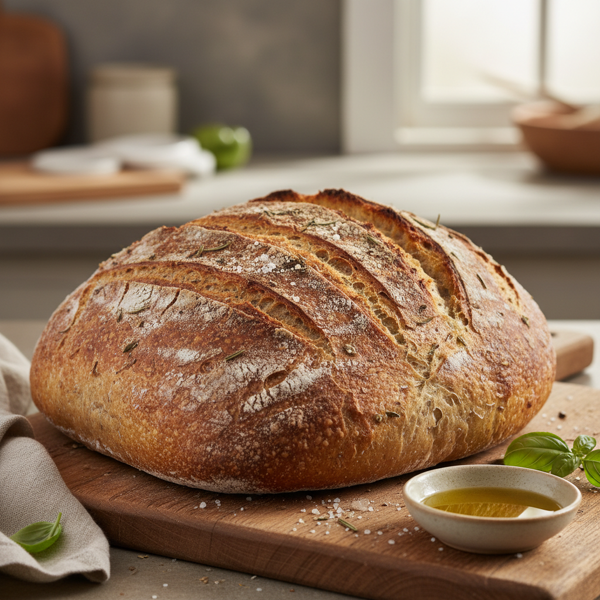
Create your own Artisan Italian Bread with this delightful recipe that captures the essence of traditional Italian baking. This homemade bread is crusty on the outside and soft on the inside, perfect for pairing with soups, salads, or simply enjoyed with olive oil. Gather your loved ones and share the joy of baking as you experience the warm aroma and comforting taste of freshly baked Italian bread. With easy-to-follow steps, you’ll achieve a bread that can be the centerpiece of any meal.
21
Servings
200
Calories
5
Ingredients
Ingredients
warm water
3 cups (dissolved with sugar)
yeast
1 tablespoon (sprinkled)
sugar
1/2 teaspoon (dissolved in warm water)
salt
1 tablespoon (added to the mixture)
unbleached flour
6-8 cups (gradually added to make stiff dough)
Instructions
1
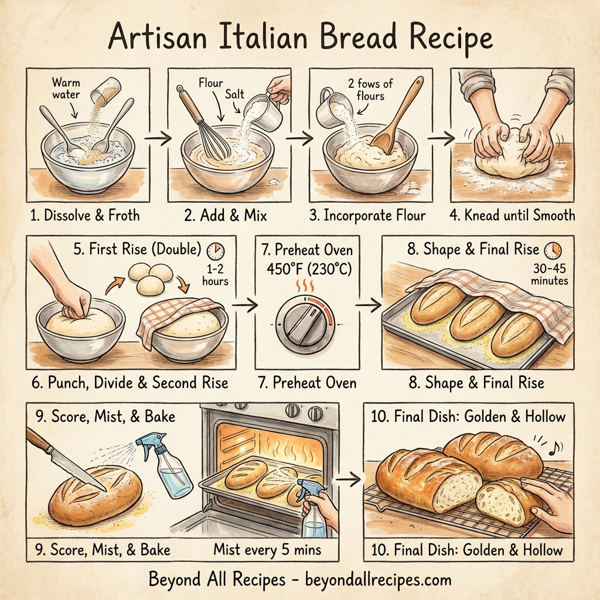
In a large mixing bowl, dissolve the sugar in 3 cups of warm water. Sprinkle the yeast on top, stir gently, and let it sit for 10 minutes until it becomes frothy.
2
Add 1 tablespoon of salt and 4 cups of unbleached flour to the yeast mixture. Use a whisk or an electric mixer to beat the mixture for about 3 minutes until smooth.
3
Gradually incorporate an additional 2-3 cups of flour, stirring with a wooden spoon or kneading by hand until the dough starts to come together.
4
Continue adding more flour, a little at a time, until the dough is stiff but elastic and not sticky to the touch.
5
Transfer the dough to a floured surface and knead it for 8-10 minutes until it is smooth and pliable.
6
Grease a large bowl with olive oil, place the dough in the bowl, and turn it over to coat all sides with oil. Cover the bowl with plastic wrap or a damp cloth.
7
Let the dough rise in a warm, draft-free area for about 1-2 hours or until it has doubled in size.
8
Punch down the risen dough and divide it into three equal pieces. Knead each piece gently for a minute, then return them to the bowl, cover, and let rise again until doubled.
9
Once the dough has risen again, preheat your oven to 450°F (230°C).
10
Gently knead each portion of dough and shape them into oblong loaves. Place them onto a large baking sheet sprinkled with cornmeal.
11
Cover the shaped loaves with a cloth and let them rise until doubled in size, about 30-45 minutes.
12
Before baking, lightly score each loaf down the middle using a sharp knife and mist the surface with water.
13
Place the baking sheet in the preheated oven, and mist the bread with water every 5 minutes during baking.
14
Bake for approximately 20 minutes, or until the loaves are golden brown and sound hollow when tapped on the bottom. Enjoy your homemade Artisan Italian Bread!
Nutrition Information
0.5g
Fat
42g
Carbs
6g
Protein
2g
Fiber
Frequently Asked Questions
Frequently Asked Questions
What is Artisan Italian Bread?
Artisan Italian Bread is a homemade bread that is crusty on the outside and soft on the inside, capturing the essence of traditional Italian baking.
How many servings does this recipe provide?
This recipe yields approximately 21 servings.
What temperature should the oven be set to?
The oven should be preheated to 450°F (230°C) for baking the loaves.
How much warm water is required?
The recipe calls for 3 cups of warm water to dissolve the sugar and activate the yeast.
How long should the yeast sit to become frothy?
After sprinkling the yeast on the water and sugar, let it sit for about 10 minutes until it becomes frothy.
What is the calorie count per serving?
Each serving contains approximately 200 calories.
How much flour is needed in total?
The recipe uses between 6 to 8 cups of unbleached flour added gradually to achieve the right dough consistency.
How long should the dough be kneaded?
The dough should be kneaded for 8 to 10 minutes until it is smooth and pliable.
What kind of flour is recommended?
The recipe specifies using unbleached flour for the best results.
How many times does the dough need to rise?
The dough rises three times: twice in the bowl and once after being shaped into loaves.
What should I use to grease the bowl?
Grease the large bowl with olive oil to coat the dough and prevent sticking.
How long is the first rise?
The first rise takes approximately 1 to 2 hours, or until the dough has doubled in size.
How many loaves does this recipe make?
The dough is divided into three equal pieces to create three oblong loaves.
Where should the dough be placed to rise?
Place the dough in a warm, draft-free area covered with plastic wrap or a damp cloth.
What is the purpose of sugar in this recipe?
A small amount (1/2 teaspoon) of sugar is used to help activate the yeast in the warm water.
How much salt is included in the recipe?
The recipe calls for 1 tablespoon of salt.
What shape should the bread be?
The dough should be shaped into oblong loaves.
How do I prepare the baking sheet?
The baking sheet should be sprinkled with cornmeal before placing the shaped loaves on it.
How long is the final rise after shaping?
The shaped loaves should rise for about 30 to 45 minutes until they have doubled in size.
Should I score the bread before baking?
Yes, lightly score each loaf down the middle using a sharp knife before placing them in the oven.
Why should I mist the bread with water?
Misting the bread with water helps create the characteristic crispy crust found in artisan breads.
How often should I mist the bread while it is baking?
Mist the bread with water every 5 minutes during the baking process.
How long does the bread take to bake?
The bread takes approximately 20 minutes to bake.
How can I tell if the bread is done?
The bread is done when it is golden brown and sounds hollow when tapped on the bottom.
What is the fat content of this bread?
This bread is low in fat, containing only 0.5g per serving.
How many carbohydrates are in one serving?
There are 42g of carbohydrates in each serving.
Does this bread provide protein?
Yes, each serving contains 6g of protein.
How much fiber is in a serving?
There are 2g of fiber per serving.
What are some suggested pairings for this bread?
This bread is perfect for pairing with soups, salads, or dipped in olive oil.
Is this recipe suitable for beginners?
Yes, with easy-to-follow steps and a simple ingredient list, it is designed to be accessible for home bakers.