Artisan Grape Fermented Sourdough Starter
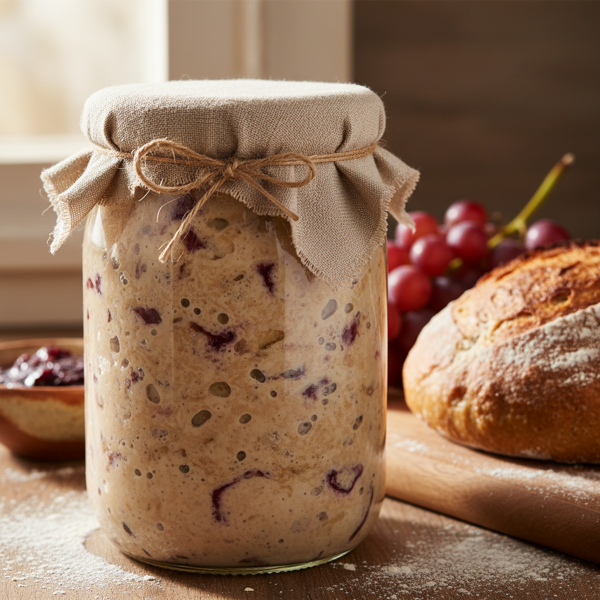
Inspired by Nancy Silverton’s renowned technique, this Artisan Grape Fermented Sourdough Starter harnesses the natural yeasts found on the skins of unwashed organic grapes. This recipe is both straightforward and quick, allowing you to create a vibrant starter that will elevate your baking projects, from traditional sourdough bread to delectable pancakes and waffles. The combination of grape sweetness and tangy fermentation infuses your baked goods with a unique flavor profile, while also celebrating a centuries-old method of wild fermentation. After a nurturing three-day feeding period, your starter will be ready to give rise to beautifully tangy loaves, perfecting the art of sourdough at home. Join the movement of artisanal baking with this starter that reflects both tradition and innovation.
N/A
Servings
N/A
Calories
3
Ingredients
Ingredients
Bread Flour
2 cups (Measure out into a mixing bowl.)
Water, unchlorinated
2.5 cups (Ensure it's at room temperature.)
Organic Red Grapes
1/2 lb (Unwashed and stemmed; crush gently.)
Instructions
1
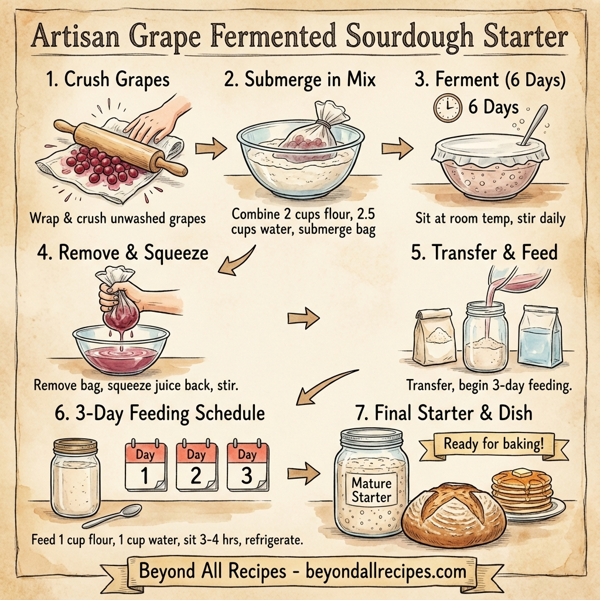
Begin by washing the cheesecloth thoroughly. Wrap the unwashed organic red grapes in the cleaned cheesecloth, tying it tightly to form a bag. Using a rolling pin, gently crush the grapes to help release their natural sugars and yeasts, akin to traditional winemaking methods.
2
Combine 2 cups of bread flour and 2.5 cups of unchlorinated water in a bowl. Submerge the cheesecloth bag of crushed grapes into this mixture, ensuring it's fully immersed.
3
Cover the bowl tightly with a lid or plastic wrap secured with a rubber band. Allow the mixture to sit at room temperature for six days, stirring gently once or twice each day to incorporate air and promote fermentation.
4
Throughout the six days, observe the bag of grapes; it will inflate as fermentation occurs, and a liquid will begin to separate from the flour and water. The color and aroma will evolve, becoming fruity as the fermentation reaches its peak. By day six, the bag should have deflated, and the mixture will take on a yellow hue with a pleasantly sour taste.
5
Carefully remove the grapes from the mixture and squeeze the juice back into the starter, discarding the solids. Stir the mixture thoroughly to combine everything.
6
Transfer the starter into a clean container. Although it can be used immediately after this first feeding, allowing it to mature through subsequent feedings will enhance its strength and flavor.
7
For the next three days, feed the starter by mixing 1 cup of bread flour and 1 cup of unchlorinated water into the container each day. After blending well, allow the starter to sit uncovered at room temperature for 3 to 4 hours until it becomes bubbly. Then cover and refrigerate. Repeat this feeding on the second and third days.
8
Store your starter tightly covered in the refrigerator. It will remain viable for 4 to 6 months. After this period, consider discarding all but 2 cups and feeding again. Prior to baking, always return to the three-day feeding schedule to rejuvenate your starter and balance its acidity.
Nutrition Information
Frequently Asked Questions
Frequently Asked Questions
What is Artisan Grape Fermented Sourdough Starter?
It is a wild yeast starter made by capturing the natural yeasts found on the skins of organic grapes through a fermentation process with bread flour and water.
Who is the inspiration for this sourdough starter method?
This recipe is inspired by the techniques of the renowned baker Nancy Silverton.
Why are grapes used in this sourdough recipe?
Natural yeasts reside on the skins of unwashed organic grapes, providing a wild fermentation source that infuses the starter with a unique flavor profile.
Do I need to wash the grapes before using them?
No, you must use unwashed grapes because washing them would remove the wild yeasts necessary for fermentation.
What kind of grapes work best for this starter?
Organic red grapes are recommended for this recipe to ensure a healthy and vibrant fermentation.
How much bread flour is required for the initial mixture?
The initial mixture requires 2 cups of bread flour.
What type of water should I use for the starter?
You should use unchlorinated water at room temperature to avoid inhibiting the growth of wild yeast.
How do I prepare the grapes for the starter?
Place 1/2 lb of stemmed, unwashed organic red grapes in a clean cheesecloth bag and crush them gently with a rolling pin.
How long does the initial fermentation take?
The initial fermentation phase lasts for six days at room temperature.
How often should the starter be stirred during the first six days?
The mixture should be stirred gently once or twice each day to incorporate air and promote the fermentation process.
What happens to the grape bag during fermentation?
The grape bag will inflate as fermentation gases are produced and then eventually deflate by the sixth day.
What are the visual signs that the fermentation is successful?
The mixture will take on a yellow hue, and you will see liquid separating from the flour and water as it reaches its peak.
What should the starter smell and taste like after six days?
It should have a fruity aroma and a pleasantly sour taste.
What do I do with the grapes once the initial fermentation is complete?
Squeeze the juice from the cheesecloth bag back into the starter and then discard the grape solids.
Can the starter be used immediately after the first six days?
While it can be used after removing the grapes, allowing it to mature through a three-day feeding period will enhance its strength and flavor.
How do I feed the starter during the maturation phase?
Feed the starter daily for three days by mixing in 1 cup of bread flour and 1 cup of unchlorinated water.
How long should the starter sit out after each feeding?
After each feeding, let the starter sit uncovered at room temperature for 3 to 4 hours until it becomes bubbly.
How should the sourdough starter be stored?
Store the starter in a clean, tightly covered container in the refrigerator.
How long does the starter stay viable in the refrigerator?
The starter will remain viable for 4 to 6 months if kept tightly covered in the refrigerator.
How do I rejuvenate a starter that has been refrigerated for a long time?
Discard all but 2 cups of the starter and return to the three-day feeding schedule to restore its activity and balance acidity.
What is the purpose of the three-day feeding schedule before baking?
It rejuvenates the starter, ensures the yeast is active, and balances the acidity for better baking results.
What types of recipes can I make with this starter?
It is ideal for traditional sourdough bread, pancakes, waffles, and other artisanal baked goods.
Why is bread flour used instead of all-purpose flour?
Bread flour has a higher protein content which helps create a stronger structure for the fermentation process.
Does the starter need to be covered during the initial six days?
Yes, the bowl should be covered tightly with a lid or plastic wrap secured with a rubber band.
Is it normal for liquid to separate in the starter?
Yes, liquid separation is a normal part of the fermentation process during the initial six-day period.
How many ingredients are needed for this recipe?
The recipe requires three main ingredients: bread flour, unchlorinated water, and organic red grapes.
What is the benefit of using cheesecloth for the grapes?
The cheesecloth keeps the grape solids together for easy removal while allowing the juices and yeasts to interact with the flour mixture.
What flavor profile does this starter create?
It produces a unique flavor profile that combines a tangy fermentation with a subtle grape sweetness.
Can I use tap water for my starter?
It is best to use unchlorinated water because chlorine can kill the wild yeasts you are trying to cultivate.
Is this a traditional sourdough method?
Yes, it is a centuries-old method of wild fermentation that celebrates artisanal baking traditions.