Artisan Crusty French Bread
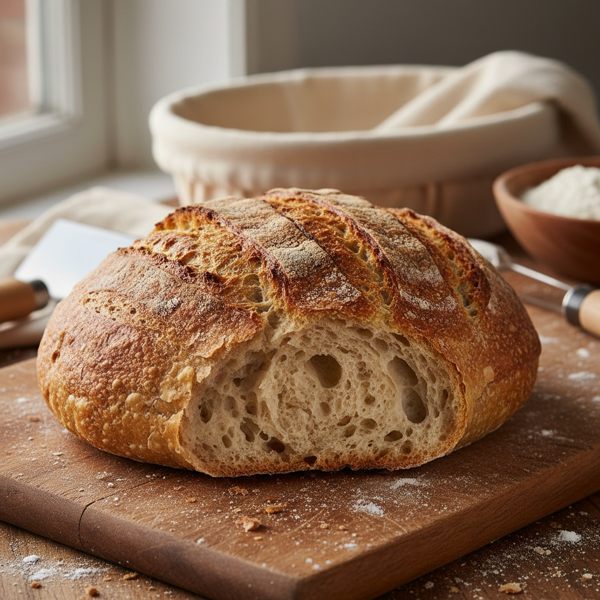
Elevate your homemade bread game with this Artisan Crusty French Bread recipe. Each loaf is a masterpiece, crafted to produce a crunchy, golden crust and a chewy, airy interior that far exceeds anything you'll find at the store. Perfect for sandwiches, garlic bread, or simply enjoying with a pat of butter, these loaves are sure to impress friends and family alike. Follow this detailed guide to create two gorgeous loaves that will fill your kitchen with irresistible aromas. Embrace the art of bread making and bring the flavors of a Parisian bakery to your home.
2
Servings
N/A
Calories
6
Ingredients
Ingredients
warm water
2 cups (heated to 110 degrees Fahrenheit)
active dry yeast
1 tablespoon (instant or active dry)
vegetable oil
1 tablespoon (no preparation needed)
sugar
1 tablespoon (no preparation needed)
salt
2 teaspoons (no preparation needed)
bread flour
5 to 5.5 cups (sifted)
Instructions
1
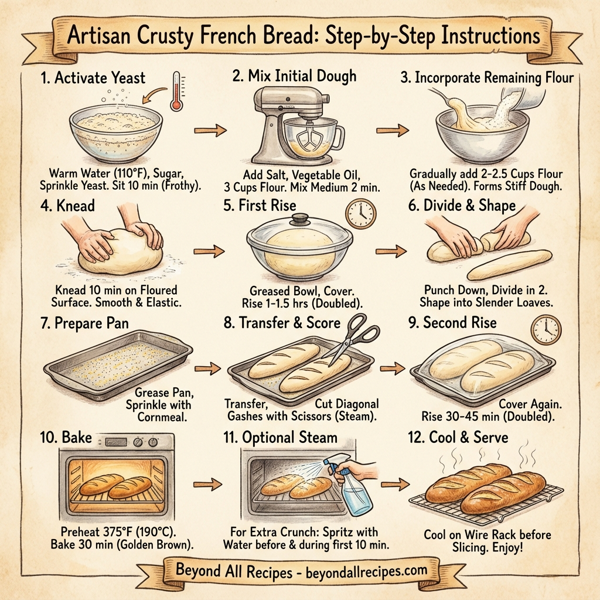
In a large mixing bowl, combine warm water (110°F) and sugar, then sprinkle the yeast on top. Allow the mixture to sit for about 10 minutes, or until it becomes frothy.
2
Once the yeast is activated, add the salt, vegetable oil, and 3 cups of bread flour to the bowl. Using a wooden spoon or a stand mixer fitted with a paddle attachment, mix on medium speed for about 2 minutes until well combined.
3
Gradually incorporate the remaining 2 to 2.5 cups of bread flour (as needed) to form a stiff dough. The dough should start to pull away from the sides of the bowl.
4
Turn the dough out onto a lightly floured surface and knead for approximately 10 minutes, or until the dough becomes smooth and elastic.
5
Place the kneaded dough in a large greased bowl, turning to coat all sides. Cover with a damp cloth or plastic wrap and let it rise in a warm place until it has doubled in size, about 1 to 1.5 hours.
6
Once the dough has risen, punch it down to release the air. Divide the dough into two equal portions and shape each portion into a long, slender loaf.
7
Prepare a French bread pan or a large baking sheet by greasing it and sprinkling with cornmeal to prevent sticking.
8
Transfer the shaped loaves to the prepared pan or sheet. Using kitchen scissors, carefully cut diagonal gashes across the tops of each loaf to help steam escape during baking.
9
Cover the loaves again and let them rise until doubled in size, approximately 30 to 45 minutes.
10
Preheat your oven to 375°F (190°C). Once the loaves have risen, place them in the oven and bake for about 30 minutes, or until they are golden brown.
11
For an extra crunchy crust, you can spritz the loaves with water before and during the first 10 minutes of baking.
12
Remove from the oven and allow to cool on a wire rack before slicing.
Nutrition Information
Frequently Asked Questions
Frequently Asked Questions
What is Artisan Crusty French Bread?
It is a handcrafted bread featuring a crunchy golden crust and a chewy, airy interior that mimics a Parisian bakery style.
How many loaves does this recipe make?
This recipe is designed to produce two long, slender loaves of French bread.
What is the ideal temperature for the water used to activate the yeast?
The water should be heated to approximately 110 degrees Fahrenheit.
How long should I let the yeast mixture sit?
Allow the warm water, sugar, and yeast to sit for about 10 minutes until it becomes frothy.
What type of yeast is recommended?
The recipe specifies 1 tablespoon of active dry yeast, though instant yeast can also be used.
Can I use a stand mixer for this recipe?
Yes, you can use a stand mixer fitted with a paddle attachment or mix the ingredients with a wooden spoon.
How much bread flour is required?
The recipe requires between 5 and 5.5 cups of sifted bread flour.
How long should I knead the dough?
The dough should be kneaded for approximately 10 minutes on a lightly floured surface.
How do I know when the dough has been kneaded enough?
The dough is ready when it becomes smooth and elastic.
Where is the best place to let the dough rise?
Let the dough rise in a warm place, inside a large greased bowl covered with a damp cloth or plastic wrap.
How long is the first rise period?
The first rise should take about 1 to 1.5 hours, or until the dough has doubled in size.
What is the purpose of punching down the dough?
Punching down the dough releases trapped air before shaping the loaves.
How should I shape the loaves?
Divide the dough into two equal portions and shape each into a long, slender loaf.
What prevents the bread from sticking to the pan?
Greasing the pan and sprinkling it with cornmeal prevents the bread from sticking during baking.
Why are diagonal gashes cut into the top of the bread?
The gashes are cut with kitchen scissors to help steam escape while the bread bakes.
How long is the second rise?
The second rise lasts approximately 30 to 45 minutes, or until the loaves have doubled in size again.
What temperature should the oven be set to?
The oven should be preheated to 375 degrees Fahrenheit (190 degrees Celsius).
How long does the bread take to bake?
The loaves bake for about 30 minutes or until they are golden brown.
How can I get a crunchier crust?
Spritz the loaves with water before putting them in the oven and again during the first 10 minutes of baking.
What is the best way to cool the bread?
Remove the loaves from the oven and allow them to cool on a wire rack before slicing.
Can I use all-purpose flour instead of bread flour?
While bread flour is recommended for the best texture, all-purpose can be used, though the interior may be less chewy.
What category of bread does this fall under?
This recipe is classified under the Yeast Breads category.
What ingredients are used to activate the yeast?
Warm water and one tablespoon of sugar are used to activate the yeast.
How much salt is included in the recipe?
The recipe calls for 2 teaspoons of salt.
What type of oil is used?
The recipe uses 1 tablespoon of vegetable oil.
Is this bread suitable for garlic bread?
Yes, these loaves are perfect for making garlic bread or sandwiches.
What is the serving size for this recipe?
The recipe makes 2 servings, representing the 2 loaves produced.
Do I need a special pan for this?
You can use either a specific French bread pan or a standard large baking sheet.
Can I add sourdough tags to this?
The recipe is tagged as sourdough in the data, though it primarily uses commercial active dry yeast.
What is the preparation for the flour?
The bread flour should be sifted before being incorporated into the dough.