Artisan Country French Bread
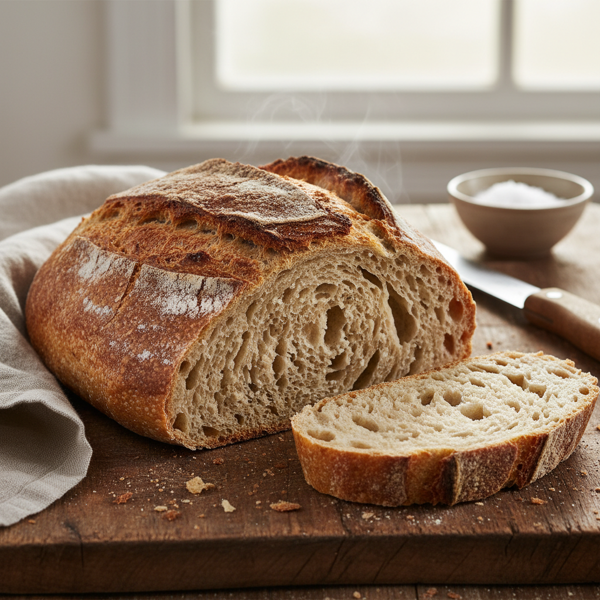
Experience the charm of rustic French baking with this Artisan Country French Bread recipe. Gifted alongside a Williams-Sonoma French bread pan, this recipe has become a family favorite. Boasting a golden, crusty exterior that encases a soft, chewy inside, each loaf offers a delightful texture and taste. The unique technique ensures exceptional results, and while some practice is required, the outcome is worth every step. Ideal for serving with butter, dipping in olive oil, or accompanying cheeses, this bread promises to elevate any meal. Please note, printing this recipe double-sided is advised to conserve paper.
8
Servings
N/A
Calories
6
Ingredients
Ingredients
Water
2 (cups, warm (110°F / 43°C))
Sugar
1 (teaspoon)
Active Dry Yeast
3.25 (teaspoons)
Flour
5.5 (cups, plus extra for dusting)
Salt
2.5 (teaspoons)
Egg White
1 (lightly beaten with a pinch of salt)
Instructions
1
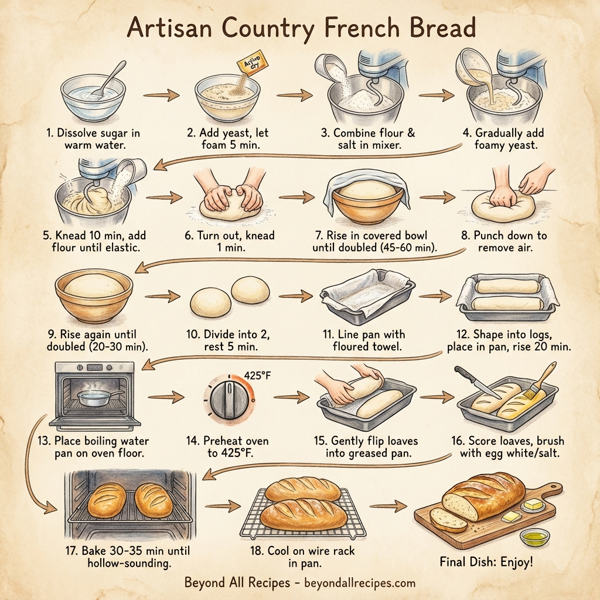
1. Combine warm water and sugar in a small bowl, stirring until dissolved.
2
2. Sprinkle active dry yeast over the water mixture and leave it until foamy, approximately 5 minutes.
3
3. In an electric mixer bowl fitted with a dough hook, combine 4 cups of flour and salt. Mix on low speed until just combined.
4
4. Gradually add the foamy yeast mixture to the flour mixture. Mix on low for about 1 minute to incorporate.
5
5. Increase mixing speed to medium-low and beat for 10 minutes, adding additional flour, 1/4 cup at a time, until the dough becomes elastic and detaches from the bowl sides.
6
6. Turn the dough onto a floured surface, kneading for an additional minute.
7
7. Shape the dough into a ball, dust with flour, and place in a lightly floured bowl. Cover with plastic wrap and let rise in a warm space until it doubles in size, about 45-60 minutes.
8
8. Punch down the dough on a floured surface and knead briefly to remove air.
9
9. Form the dough back into a ball, returning it to the bowl to rise again, covered, until doubled in size, about 20-30 minutes.
10
10. Divide the dough into two equal portions. Shape each piece into a ball and rest for 5 minutes.
11
11. Line a French bread pan with a clean kitchen towel. Dust with flour lightly.
12
12. Roll each ball into a log matching the pan's length. Place on the towel in the pan. Cover with towel edges and let rise in a warm area for 20 minutes.
13
13. Position an oven rack at the lowest level and place a baking pan with boiling water on it.
14
14. Preheat the oven to 425°F (220°C).
15
15. Carefully lift the towel with loaves from the pan and set on the counter. Spray the pan with non-stick spray. Gently flip each loaf into its section using the towel as a guide, ensuring loaves don't touch.
16
16. Remove excess flour from loaves. With a sharp knife, make 3-5 diagonal cuts about 1/4 inch deep on each loaf.
17
17. Brush each loaf with the egg white and salt mixture.
18
18. Bake loaves on the oven's center rack until hollow-sounding when tapped, about 30-35 minutes.
19
19. Cool loaves on a wire rack in the pan until reaching room temperature.
Nutrition Information
Frequently Asked Questions
Frequently Asked Questions
What is the main characteristic of the Artisan Country French Bread?
This bread features a golden, crusty exterior with a soft and chewy interior.
What type of yeast is used in this recipe?
This recipe requires 3.25 teaspoons of active dry yeast.
What is the recommended water temperature for the yeast?
The water should be warm, specifically around 110°F (43°C).
Why is sugar included in the recipe?
Sugar is dissolved in the warm water to help activate the yeast.
How long should the yeast mixture sit before adding it to the flour?
It should sit until foamy, which takes approximately 5 minutes.
What mixer attachment is best for this dough?
An electric mixer fitted with a dough hook is recommended.
How much flour is used in total?
The recipe uses 5.5 cups of flour, plus extra for dusting and adjusting consistency.
How long should I mix the dough on medium-low speed?
You should beat the dough for 10 minutes at this speed to develop elasticity.
When is the dough considered ready to stop mixing?
It is ready when it becomes elastic and detaches from the sides of the bowl.
Is hand kneading necessary?
Yes, after machine mixing, you should knead the dough by hand on a floured surface for an additional minute.
How long does the first rise take?
The first rise takes about 45 to 60 minutes in a warm space until the dough doubles in size.
What is the purpose of punching down the dough?
Punching down the dough after the first rise helps remove excess air.
How long is the second rise?
The second rise lasts about 20 to 30 minutes until the dough doubles in size again.
How many loaves does this recipe yield?
This recipe is designed to make two equal-sized loaves.
What equipment is needed for shaping the loaves?
A French bread pan and a clean kitchen towel are used for the final shaping and rising.
How long is the final rise in the pan?
The final rise in the pan takes about 20 minutes.
Where should the oven rack be placed?
The oven rack should be positioned at the lowest level.
Why is a pan of boiling water placed in the oven?
The boiling water creates steam, which is essential for developing a crusty exterior.
What is the preheat temperature for the oven?
The oven should be preheated to 425°F (220°C).
How should the French bread pan be prepared?
The pan should be sprayed with non-stick spray before placing the dough in it.
How do you transfer the dough to the pan?
Use the towel as a guide to gently flip each loaf into its section of the pan.
What should I do before scoring the bread?
You should remove any excess flour from the loaves before making cuts.
How many cuts should be made on each loaf?
Use a sharp knife to make 3 to 5 diagonal cuts about 1/4 inch deep.
What is the purpose of the egg white wash?
Brushing the loaves with a mixture of egg white and salt helps achieve a golden finish.
How long does the bread bake?
The loaves bake on the center rack for 30 to 35 minutes.
How can you tell if the bread is finished baking?
The bread is done when it sounds hollow when tapped.
Where should the bread cool?
Cool the loaves on a wire rack while they are still in the pan until they reach room temperature.
What serving suggestions are provided?
The bread is ideal for serving with butter, dipping in olive oil, or accompanying cheeses.
Is a specific brand of pan mentioned?
The recipe mentions a Williams-Sonoma French bread pan was gifted with the original recipe.
How many servings does this recipe provide?
This recipe yields approximately 8 servings.