Artisan Asiago Baguette
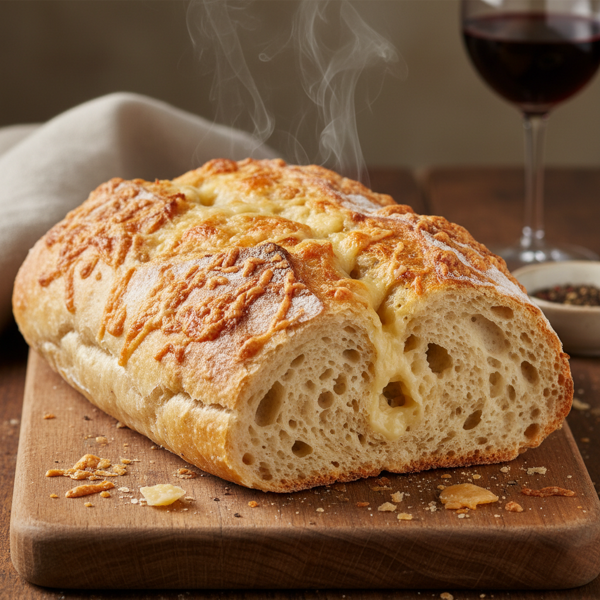
Savor the rich and aromatic flavors of this Artisan Asiago Baguette, a quintessential yeast bread that harmonizes the earthy undertones of aged Asiago cheese with the comforting warmth of freshly baked bread. Perfect as a sophisticated base for bruschetta or as a delightful addition to your favorite appetizers, this bread is surprisingly uncomplicated to craft. With plenty of passive rising time, it's ideal for budding bakers exploring the world of cheese-infused breads. Whether you're hosting a dinner party or enjoying a simple yet exquisite slice with a spread, this recipe promises to impress.
2
Servings
N/A
Calories
9
Ingredients
Ingredients
flour
3 3/4 cups (divided)
dry yeast
1/4 ounce (envelope)
salt
1 1/2 teaspoons (none)
sugar
1 teaspoon (none)
black pepper
1/4 teaspoon (ground)
milk
1 1/4 cups (none)
butter
2 tablespoons (cut up)
asiago cheese
1 1/4 cups (shredded)
egg
1 large (beaten)
Instructions
1
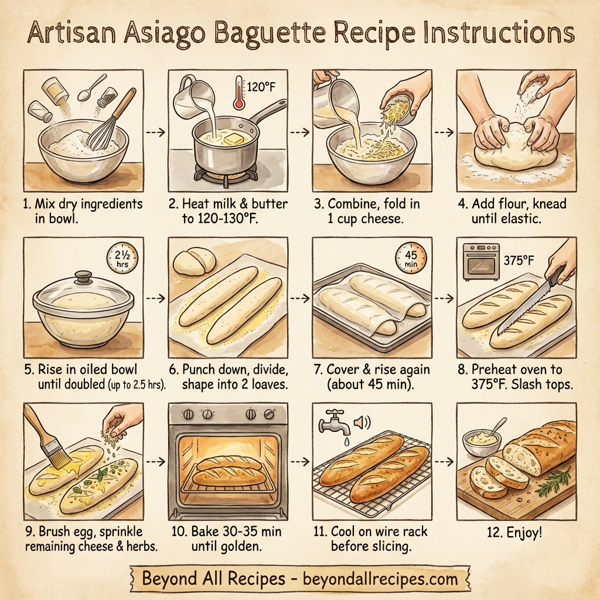
In a large mixing bowl, combine 1 1/2 cups of flour, the dry yeast, sugar, salt, and pepper. Set aside.
2
In a small saucepan, combine the milk and butter. Heat gently until the butter has melted, and the mixture reaches a temperature of 120-130°F (49-54°C).
3
Pour the warmed milk and butter mixture into the dry ingredients and stir until smooth. Then, fold in 1 cup of the shredded Asiago cheese until evenly distributed.
4
Gradually add around 2 more cups of flour, stirring continuously to form a soft and cohesive dough.
5
Knead the dough either by hand or using a mixer until it becomes smooth and elastic, adding more flour if necessary to prevent sticking.
6
Lightly oil a large bowl. Place the kneaded dough inside, turning it over to coat the surface. Cover the bowl with a damp, clean towel and let the dough rise in a warm area until it doubles in size. Be patient, as this can take up to 2 1/2 hours.
7
Once risen, punch down the dough to deflate. Divide it in half and shape each portion into a long, thin loaf.
8
Prepare a baking sheet by spraying it with non-stick spray and, if desired, sprinkling it with cornmeal for extra texture. Alternatively, use baguette pans.
9
Place the loaves on the prepared baking sheet or pans. Cover them and let rise again until doubled, about 45 minutes.
10
Preheat your oven to 375°F (190°C). Use a serrated knife to make slashes on the top of each loaf for an artisanal appearance.
11
In a small bowl, beat the egg lightly and brush it over the tops of the risen loaves. Sprinkle the remaining 1/4 cup of Asiago cheese evenly across the top. Optionally, add a dash of basil or parsley for a hint of color and aroma.
12
Bake in the preheated oven for 30-35 minutes, or until the loaves are golden brown and sound hollow when tapped underneath.
13
Remove the loaves from the oven and cool on a wire rack before slicing.
Nutrition Information
Frequently Asked Questions
Frequently Asked Questions
What is an Artisan Asiago Baguette?
It is a savory yeast bread that combines the earthy flavors of aged Asiago cheese with a classic baguette structure, ideal for appetizers or bruschetta.
How much flour is required for this recipe?
The recipe calls for a total of approximately 3 3/4 cups of flour, added in stages.
What type of yeast should I use?
You should use one 1/4 ounce envelope of dry yeast.
What is the ideal temperature for the milk and butter mixture?
The milk and butter should be heated until they reach a temperature between 120-130°F (49-54°C).
How much Asiago cheese is needed?
A total of 1 1/4 cups of shredded Asiago cheese is required.
How much cheese goes inside the dough versus on top?
Fold 1 cup of cheese into the dough and save the remaining 1/4 cup to sprinkle on top before baking.
How long does the first rise take?
The first rise takes approximately 2 1/2 hours, or until the dough has doubled in size.
What is the duration of the second rise?
After shaping into loaves, the dough should rise a second time for about 45 minutes.
At what temperature should the oven be preheated?
Preheat your oven to 375°F (190°C).
How long do the baguettes need to bake?
Bake the loaves for 30-35 minutes until golden brown.
How many loaves does this recipe make?
This recipe makes two long, thin baguette loaves.
Do I need to score the bread?
Yes, use a serrated knife to make slashes on top of each loaf for an artisanal appearance before baking.
What is the purpose of the egg in this recipe?
One large beaten egg is used as a wash to brush over the risen loaves before adding the cheese topping.
Can I add herbs to this bread?
Yes, you can optionally add a dash of basil or parsley on top for extra color and aroma.
How do I know when the bread is finished baking?
The loaves are done when they are golden brown and sound hollow when tapped on the bottom.
What should I do with the dough after the first rise?
You should punch down the dough to deflate it and then divide it in half to shape the loaves.
Is there pepper in this bread?
Yes, the recipe includes 1/4 teaspoon of ground black pepper for flavor.
What should I use to prevent the bread from sticking to the pan?
Spray the baking sheet with non-stick spray and optionally sprinkle it with cornmeal for texture.
How should the butter be prepared?
The 2 tablespoons of butter should be cut up before being added to the milk for heating.
How do I knead the dough?
You can knead the dough by hand or use a mixer until it becomes smooth and elastic.
What type of milk is used?
The recipe specifies 1 1/4 cups of milk.
How much sugar is in the dough?
The recipe uses 1 teaspoon of sugar.
How much salt is required?
You will need 1 1/2 teaspoons of salt.
Where should the dough rise?
The dough should rise in a warm area, covered with a damp, clean towel.
Can I use a baguette pan?
Yes, you can use either a standard baking sheet or specialized baguette pans.
Should I cool the bread before eating?
Yes, it is recommended to cool the loaves on a wire rack before slicing.
What is the first step of the instructions?
Combine 1 1/2 cups of flour with the dry yeast, sugar, salt, and pepper in a large mixing bowl.
What is the texture of the dough before kneading?
The dough should be soft and cohesive after gradually adding the remaining flour.
Does the dough need to be coated in oil?
Yes, place the dough in a lightly oiled bowl and turn it over to coat the surface before the first rise.
Is this recipe suitable for beginners?
Yes, the recipe is described as surprisingly uncomplicated and ideal for budding bakers.