Aromatic Emirati Yellow Chicken Broth
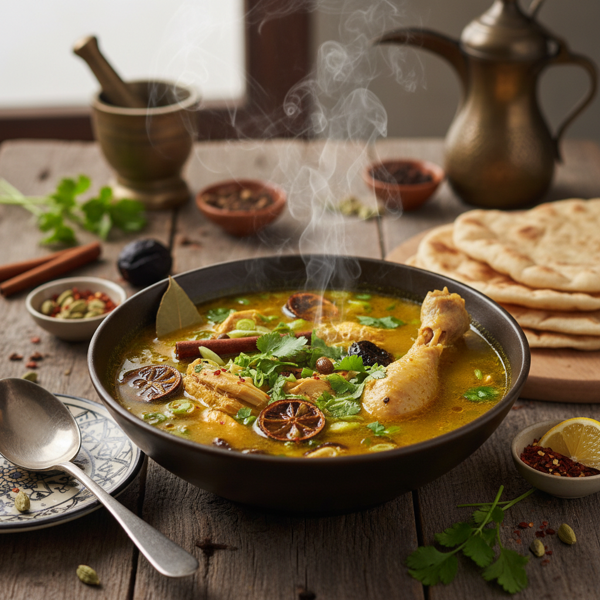
This flavorful Emirati-style yellow chicken broth is a staple in Middle Eastern cuisine, perfect for enriching soups and stews. The use of baby chickens enhances the broth's delicate flavor and aroma, while the unique blend of spices such as turmeric, cardamom, and black lemon imparts a vibrant color and warmth. This broth serves as a wonderful base for various traditional dishes, adding depth and richness. Enjoy a bowl of comfort with this recipe, which can be used in multiple culinary creations, masha Allah.
N/A
Servings
240
Calories
12
Ingredients
Ingredients
baby chickens
2 - 3 (approximately 600 grams each, cleaned)
turmeric powder
2 tablespoons
dried black lemon (loomi aswad)
1 (poked)
cloves
4
cardamom pods
5 (partially opened)
black pepper balls
7
whole cinnamon bark
1 tablespoon
salt
2 tablespoons
onions
2 (peeled and halved)
carrots
2 (cut in chunks (optional))
celery stalks
2 ((optional))
water
enough to cover chickens
Instructions
1
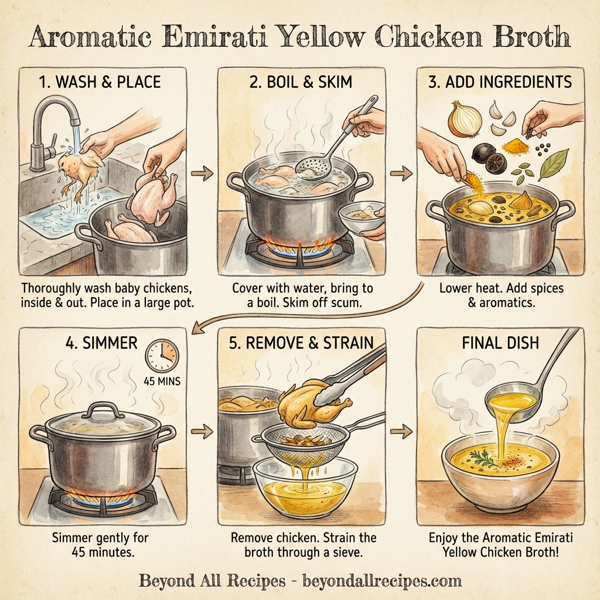
Begin by thoroughly washing the baby chickens under cold running water, ensuring to clean both inside and out. Place the washed chickens in a very large pot.
2
Add enough water to the pot to fully cover the chickens, then bring the water to a rolling boil over high heat. Once boiling, skim off any scum that forms on the surface during this initial phase.
3
Lower the heat to a gentle simmer and add all of the remaining ingredients to the pot.
4
Allow the broth to simmer for about 45 minutes, or until the chickens are fully cooked and tender.
5
Carefully remove the cooked chickens from the pot, and set them aside for another use. Strain the stock through a fine sieve into a clean container to remove any solid spices and vegetable pieces.
Nutrition Information
12g
Fat
6g
Carbs
24g
Protein
Frequently Asked Questions
Frequently Asked Questions
What is Aromatic Emirati Yellow Chicken Broth?
It is a traditional Emirati-style chicken stock characterized by its vibrant yellow color and warm spice profile, commonly used as a base for Middle Eastern soups and stews.
What gives the broth its distinct yellow color?
The vibrant yellow color is primarily derived from the addition of two tablespoons of turmeric powder.
Why are baby chickens used in this recipe?
Baby chickens, weighing approximately 600 grams each, are used to enhance the broth's delicate flavor and aroma compared to larger, older chickens.
What is Loomi Aswad?
Loomi Aswad is the Arabic term for dried black lemon, which adds a unique citrusy and slightly smoky depth to the broth.
How should I prepare the dried black lemon before cooking?
The dried black lemon should be poked with a sharp object to allow the liquid to circulate through it and release its flavor.
How many baby chickens do I need for this recipe?
The recipe calls for 2 to 3 baby chickens, each weighing about 600 grams.
What are the key spices included in the broth?
The spice blend includes turmeric, cloves, cardamom pods, black pepper balls, and whole cinnamon bark.
Why is it important to skim the surface of the boiling water?
Skimming the scum that forms on the surface during the initial boil ensures a cleaner, clearer broth with a better taste.
How long does the chicken broth need to simmer?
The broth should simmer for approximately 45 minutes, or until the chickens are fully cooked and tender.
Do I need to leave the vegetables and spices in the final broth?
No, the stock should be strained through a fine sieve into a clean container to remove all solid spices and vegetable pieces before use.
What vegetables are recommended for this broth?
The recipe suggests using onions, and optionally, carrots and celery stalks for added depth.
How should the onions be prepared?
The two onions should be peeled and cut into halves before being added to the pot.
What do I do with the chickens once the broth is finished?
After cooking, carefully remove the chickens from the pot and set them aside to be used in another dish.
How many calories are in a serving of this broth?
There are approximately 240 calories per serving of this chicken broth.
What is the protein content per serving?
Each serving contains approximately 24 grams of protein.
How much fat is in this recipe?
There are 12 grams of fat per serving.
How many carbohydrates are in a serving?
There are approximately 6 grams of carbohydrates per serving.
What should I do with the cardamom pods before adding them?
The 5 cardamom pods should be partially opened to better release their aromatic flavor into the water.
Is salt included in this recipe?
Yes, the recipe uses 2 tablespoons of salt for seasoning.
Can I use ground cinnamon instead of cinnamon bark?
The recipe specifies 1 tablespoon of whole cinnamon bark to keep the broth clear while providing flavor.
What kind of black pepper is used?
The recipe calls for 7 whole black pepper balls rather than ground pepper.
How much water is required?
You should use enough water to fully cover the chickens in a very large pot.
Is this broth suitable as a soup base?
Yes, it is specifically described as a wonderful base for various traditional soups and stews.
Does this broth contain fiber or sugar?
No, the nutritional data indicates that there is no fiber or sugar in this recipe.
How many ingredients are needed in total?
The recipe requires 12 ingredients including the optional vegetables and water.
What is the cultural origin of this recipe?
This recipe is Emirati in origin, reflecting traditional Middle Eastern culinary practices.
Should the carrots and celery be chopped finely?
No, the carrots should be cut into chunks, and the celery stalks can be added whole or in large pieces as they will be strained out later.
How should I wash the baby chickens?
The chickens should be thoroughly washed under cold running water, both inside and out, before cooking.
What is the first step of the cooking process?
The first step is washing the chickens and placing them in a very large pot covered with water to bring to a boil.
Can this broth be stored for later use?
Yes, after straining the stock into a clean container, it can be refrigerated or frozen to be used in multiple culinary creations.