Argentinian Matambre: Savory Stuffed Flank Steak
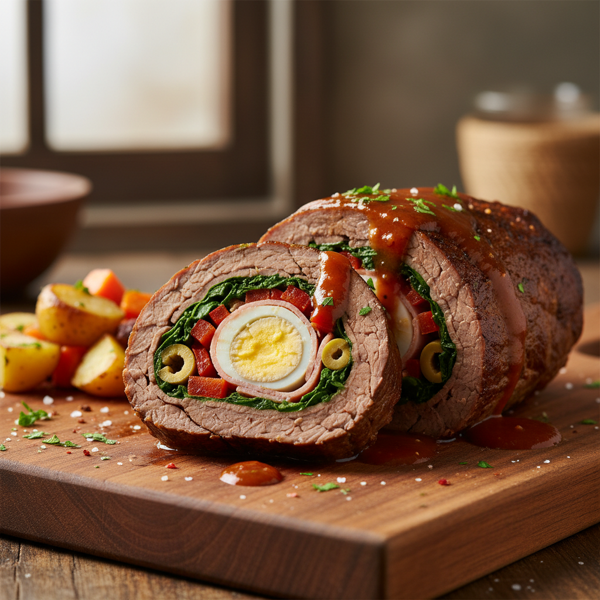
Discover the bold flavors of Argentina with this delicious Matambre, a traditional stuffed flank steak recipe handed down from my beloved mother figure, Irma Ramirez, in Yuma, Arizona. This dish features tender, butterflied flank steak layered with vibrant spinach, crunchy baby carrots, and rich hard-boiled eggs, all rolled together and slow-cooked to fork-tender perfection. The added touch of smoked bacon and caramelized onions elevates this dish, creating a stunning centerpiece for gatherings. Serve it with buttery boiled potatoes, rice, or noodles for a meal that’s sure to impress.
N/A
Servings
N/A
Calories
14
Ingredients

Ingredients
Flank steaks
2-3 lbs (butterflied and pounded thin)
Cajun seasoning
1 tablespoon (for seasoning)
Garlic
1 1/2 tablespoons (minced)
Spinach leaves
18 leaves (washed and dried)
Baby carrots
18 (halved lengthwise)
Hard-boiled eggs
3 (sliced 1/4 inch thick)
Crushed red pepper flakes
1/2 teaspoon (for seasoning)
Deli bacon
3 slices (cut into 1/4 inch wide pieces)
Onion
1 (thinly sliced)
Garlic
1 tablespoon (minced)
Bay leaves
2 (whole)
Fresh thyme
1 tablespoon (chopped)
Red wine
1 cup (for deglazing)
Beef stock
3 cups (for simmering)
Instructions
Nutrition Information
Frequently Asked Questions
Frequently Asked Questions
What is Argentinian Matambre?
Matambre is a traditional Argentinian dish consisting of a thin, butterflied flank steak that is stuffed with vegetables and hard-boiled eggs, rolled up, and slow-cooked.
What does the name 'Matambre' mean?
The name is a portmanteau of the Spanish words 'matar' (to kill) and 'hambre' (hunger), literally meaning 'hunger killer'.
What cut of meat is best for this recipe?
This recipe specifically uses 2-3 lbs of flank steak, which is butterflied and pounded thin to allow for easy rolling.
How do you butterfly a flank steak?
To butterfly the steak, slice it horizontally through the middle, being careful not to cut all the way through, then open it like a book.
Why do I need to pound the meat thin?
Pounding the meat ensures an even thickness, making it easier to roll tightly and ensuring the steak cooks uniformly.
What are the primary fillings in this Matambre?
The fillings include fresh spinach leaves, halved baby carrots, sliced hard-boiled eggs, and seasonings like garlic and red pepper flakes.
How do I prevent the roll from falling apart?
While the recipe instructions are summarized, typically Matambre is secured tightly with kitchen twine or toothpicks before searing and simmering.
Can I substitute the Cajun seasoning?
Yes, you can use a mix of paprika, garlic powder, onion powder, and cayenne, or a traditional Argentinian Chimichurri rub.
What role does the bacon play in this recipe?
The deli bacon adds a smoky depth of flavor and extra richness to the beef as it slow-cooks.
Is the red wine necessary for the recipe?
The red wine is used for deglazing the pan and adding acidity; however, you can substitute it with extra beef stock and a splash of red wine vinegar.
How long should I cook the Matambre?
It should be slow-cooked or simmered until the meat is fork-tender, which usually takes several hours depending on the thickness of the steak.
What should I serve with Matambre?
It pairs beautifully with buttery boiled potatoes, steamed rice, or noodles to soak up the savory sauce.
Can I prepare this dish ahead of time?
Yes, Matambre is excellent when prepared a day in advance and reheated, as the flavors develop more over time.
How should I slice the finished steak?
Once cooked, let it rest, then slice it into rounds to reveal the beautiful spiral of colorful vegetables and eggs.
What kind of beef stock is recommended?
A high-quality, low-sodium beef stock is recommended to control the saltiness while providing a rich base for the sauce.
Are the hard-boiled eggs traditional?
Yes, hard-boiled eggs are a hallmark ingredient in traditional Argentinian Matambre, providing a distinct look and texture.
Can I use frozen spinach?
It is best to use fresh spinach leaves as they are easier to layer, but if using frozen, ensure it is completely thawed and squeezed dry.
What is the purpose of the bay leaves?
The bay leaves add a subtle herbal depth to the simmering liquid, enhancing the overall savory profile of the beef.
Is this recipe spicy?
It has a mild kick from the Cajun seasoning and crushed red pepper flakes, but it is generally considered savory rather than hot.
Can I cook this in a slow cooker?
Yes, after searing the rolled steak, you can transfer it and the liquids to a slow cooker on low for 6-8 hours.
How do I store leftovers?
Store leftovers in an airtight container in the refrigerator for up to 3 to 4 days.
Can Matambre be served cold?
While this version is slow-cooked and served warm, Matambre is often served cold as an appetizer in Argentina.
How do I ensure the carrots are soft?
Halving the baby carrots lengthwise ensures they cook through during the simmering process without being crunchy.
Can I add other vegetables to the filling?
Common additions include bell pepper strips, olives, or even ham, depending on regional variations.
What is the best way to reheat it?
Reheat slices gently in a pan with a bit of the leftover braising liquid to keep the meat moist.
Is this recipe gluten-free?
The core ingredients are gluten-free, but always check your beef stock and Cajun seasoning labels for hidden gluten.
Who is Irma Ramirez?
Irma Ramirez is the mother figure from Yuma, Arizona, who handed down this specific family recipe.
Why use fresh thyme instead of dried?
Fresh thyme offers a brighter, more floral aroma that complements the red wine and beef stock better than dried.
Does the meat need to be marinated?
No marination is required as the slow-cooking process in the stock and wine provides plenty of flavor and tenderness.
What makes this a 'comfort food'?
The combination of slow-cooked meat, rich gravy, and hearty fillings makes it a warm, satisfying meal perfect for family gatherings.