Apricot-Balsamic Glazed Chicken Breasts
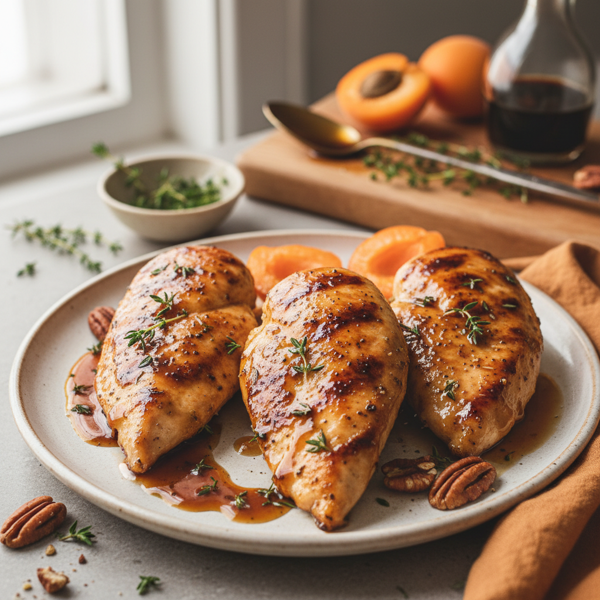
On a glumpie Sunday afternoon, as a gentle mist enveloped Longmeadow Farm, I sought to create a delightful dish that would warm both heart and soul. With the vibrant colors of fall fading and the anticipation of winter settling in, the cozy gathering of family and friends inspired me to step outside my culinary comfort zone. While rummaging through my pantry, I stumbled upon a jar of sweet apricot jam paired with the last drizzles of rich balsamic vinegar. Intrigued, I decided to infuse our chicken with these unexpected flavors. Adding fresh thyme to the mix transformed an ordinary meal into a spectacular feast that perfectly balances sweetness and tang. As we savored the tender glazed chicken together, surrounded by laughter and stories, I realized that food, like life, is meant to be shared. I hope this recipe brings you the same joy, whether you are entertaining guests or enjoying a peaceful meal alone.
N/A
Servings
N/A
Calories
6
Ingredients
Ingredients
Chicken Breasts
4 (Bone-in, trimmed and skin removed or boneless, skinless.)
Salt
1/4 teaspoon (To taste)
Pepper
1/8 teaspoon (To taste)
Dried Thyme
1 teaspoon (Divided)
Apricot Jam
1/4 cup (No preparation needed)
Balsamic Vinegar
2 tablespoons (No preparation needed)
Instructions
1
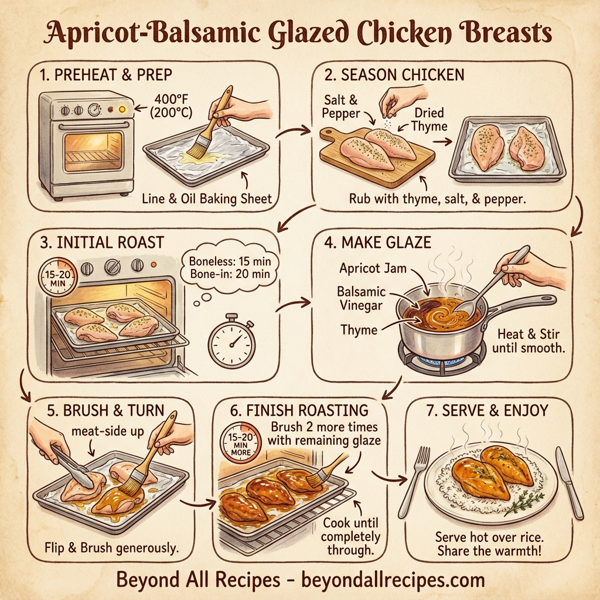
Preheat your oven to 400°F (200°C). Line a baking sheet with foil and lightly oil it or coat it with nonstick spray to prevent sticking.
2
Prepare the chicken by seasoning both sides with salt and pepper. Rub half a teaspoon of dried thyme over the chicken to infuse it with flavor. Arrange the chicken pieces bone-side up in a single layer on the prepared baking sheet.
3
For boneless chicken breasts, roast for 15 minutes; for bone-in pieces, roast for 20 minutes.
4
While the chicken is roasting, prepare the glaze by combining the apricot jam, balsamic vinegar, and the remaining half teaspoon of thyme in a small saucepan. Heat this mixture over medium-low heat, stirring until the jam melts and the glaze is smooth. Season with a pinch of salt and pepper, then remove from heat.
5
Once the initial roasting time is up, carefully turn the chicken meat-side up. Generously brush the chicken with the jam glaze, making sure to coat it thoroughly.
6
Return the chicken to the oven and continue roasting, brushing it with the remaining glaze two more times, until the chicken is completely cooked through. This will take about 15 more minutes for boneless chicken, and about 20 minutes for bone-in pieces.
7
When done, serve the glazed chicken hot over a bed of fluffy brown or white rice. Enjoy the flavors and warmth of this delightful meal with loved ones!
Nutrition Information
Frequently Asked Questions
Frequently Asked Questions
What is the name of this chicken recipe?
The recipe is for Apricot-Balsamic Glazed Chicken Breasts.
What oven temperature is required for roasting?
The oven should be preheated to 400 degrees Fahrenheit or 200 degrees Celsius.
How many chicken breasts does this recipe call for?
This recipe requires 4 chicken breasts.
Can I use bone-in chicken for this recipe?
Yes, you can use bone-in, trimmed chicken with skin removed, or boneless skinless breasts.
How should I prepare the baking sheet?
Line the baking sheet with foil and lightly oil it or coat it with nonstick spray.
What seasonings are used for the chicken meat?
The chicken is seasoned with salt, pepper, and half a teaspoon of dried thyme.
How do I initially arrange the chicken on the baking sheet?
Arrange the chicken pieces bone-side up in a single layer.
How long do boneless chicken breasts roast in the first step?
Boneless chicken breasts should roast for 15 minutes initially.
How long do bone-in chicken pieces roast in the first step?
Bone-in chicken pieces should roast for 20 minutes initially.
What are the ingredients for the glaze?
The glaze consists of apricot jam, balsamic vinegar, and half a teaspoon of dried thyme.
How do I prepare the apricot-balsamic glaze?
Combine the ingredients in a small saucepan over medium-low heat until the jam melts and the glaze is smooth.
Do I need to season the glaze?
Yes, season the glaze with a pinch of salt and pepper before removing it from the heat.
What do I do after the initial roasting time is up?
Carefully turn the chicken meat-side up and brush it generously with the jam glaze.
How many times should I brush the chicken with glaze in total?
The chicken should be brushed with glaze a total of three times: once when flipped and twice more during the final roasting period.
What is the second roasting time for boneless chicken?
Boneless chicken needs about 15 more minutes of roasting after being glazed.
What is the second roasting time for bone-in chicken?
Bone-in chicken needs about 20 more minutes of roasting after being glazed.
What side dish is recommended with this chicken?
The chicken is best served over a bed of fluffy brown or white rice.
How much dried thyme is used in total?
A total of 1 teaspoon of dried thyme is used, divided into two half-teaspoon portions.
How much apricot jam is needed?
The recipe requires 1/4 cup of apricot jam.
How much balsamic vinegar is needed?
The recipe requires 2 tablespoons of balsamic vinegar.
How much salt is recommended for seasoning?
Use 1/4 teaspoon of salt, or adjust to your personal taste.
How much pepper is recommended for seasoning?
Use 1/8 teaspoon of pepper, or adjust to your personal taste.
What is the flavor profile of this dish?
The dish features a perfect balance of sweetness from the apricot and tanginess from the balsamic vinegar.
Is this recipe suitable for a quick weeknight dinner?
Yes, it is tagged as an easy dinner and family meal.
Can I leave the skin on the chicken?
The recipe suggests using chicken with the skin removed for the best results with the glaze.
What should I do if the jam hasn't melted?
Continue stirring the glaze over medium-low heat until it becomes completely smooth and the jam is fully melted.
Is this recipe part of a specific seasonal category?
Yes, it is categorized under fall recipes and comfort food.
What is the main entity of the meal?
The main entity is chicken breasts glazed with an apricot and balsamic mixture.
How many ingredients are required for this recipe?
There are 6 primary ingredients: chicken, salt, pepper, thyme, apricot jam, and balsamic vinegar.
Should the chicken be served hot?
Yes, the recipe specifies serving the glazed chicken hot.